
The Potential of Propolis in Supporting the Immune System and the Management of Metabolic Syndrome
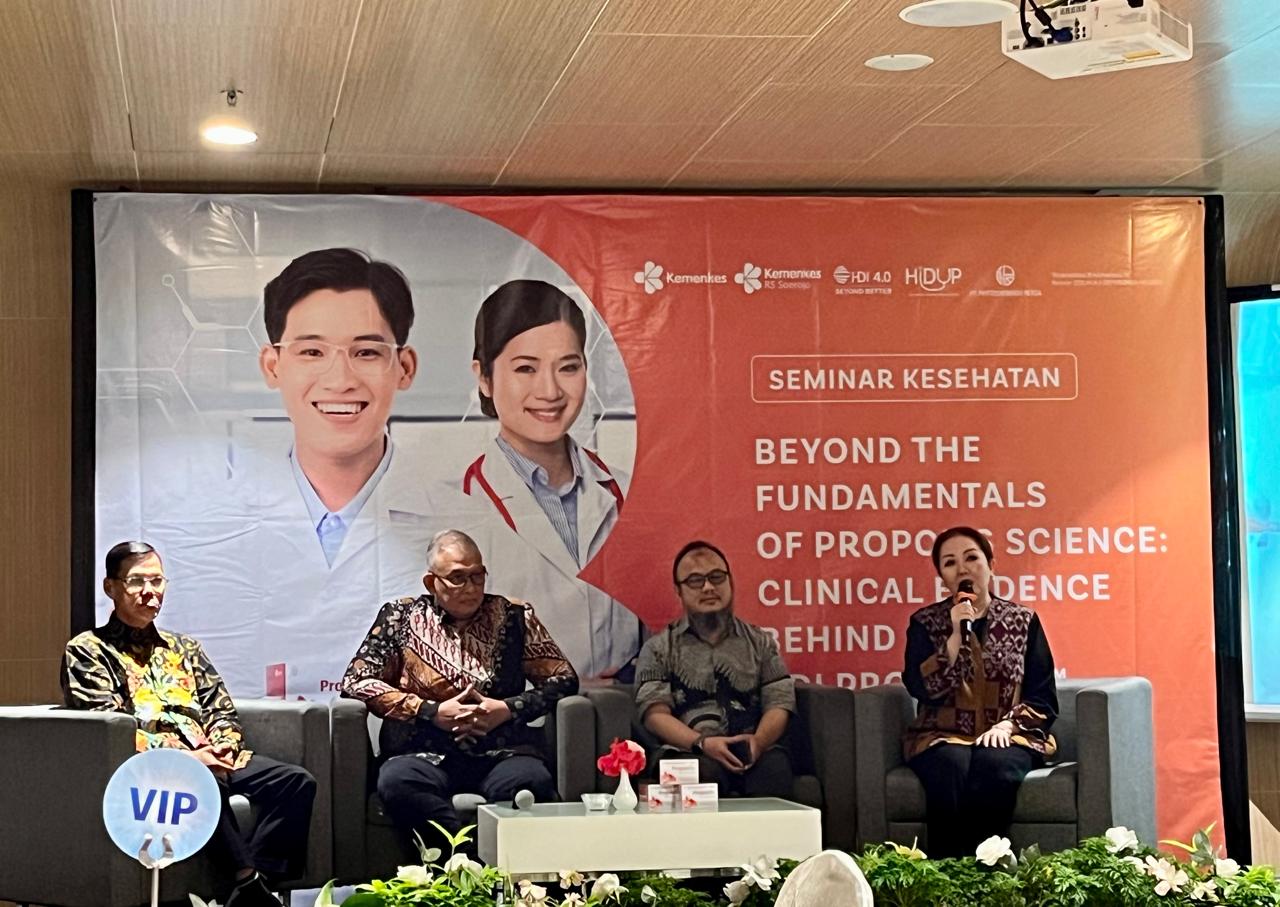
The use of natural substances as health supports continues to attract attention in the medical world. One of the substances increasingly studied is propolis, a natural compound produced by bees, known to contain various bioactive components with potential to support the immune system and the management of metabolic syndrome. Recent clinical research on propolis was among the topics raised at the National Health Seminar organised by HDI in Jakarta on Saturday (7/3). The seminar, titled Beyond the Fundamentals of Propolis Science: Clinical Evidence Behind HDI Propoelix, served as the 25th clinical research publication for the HDI Propoelix propolis product.
The product studied is HDI Propoelix, a propolis extract formulation developed by HDI through purification and standardisation processes to support the immune system. The research was conducted at one of the tertiary hospitals under the Ministry of Health, RS Soerojo Magelang. The study involved adult patients with metabolic conditions such as diabetes, obesity, and hypertension.
The head of the Clinical Research Unit (CRU) at RS Soerojo Magelang and the study’s principal investigator, Dr. H. Harli Amir Mahmudji, Sp.PD-KEMD, explained that the results indicated potential benefits of propolis in supporting immune balance and several metabolic parameters.
“The results of this study indicate that consumption of HDI Propoelix under medical supervision provides potential benefits of propolis in supporting immune balance and certain metabolic parameters, particularly in patients with metabolic conditions. Most importantly, all interventions were conducted under medical supervision with good safety outcomes,” he explained.
In the study, propolis was used as part of an adjunct approach to the medical care patients were receiving. The study results showed that regular propolis consumption potentially helps maintain immune balance, support metabolic parameters, and aid the body’s resilience to stress.
Metabolic conditions such as diabetes, obesity, and hypertension themselves represent part of the health challenges that are increasing in Indonesia. The three conditions are often linked in metabolic syndrome, a cluster of risk factors such as impaired glucose regulation, high blood pressure, overweight, and dyslipidaemia that can raise the risk of cardiovascular disease.
During the seminar, academics and clinicians discussed the importance of scientific evidence in the use of natural substances to enable responsible application in modern medical practice.
Academics and researchers from Universitas Indonesia, Dr. Muhamad Sahlan, explained that propolis has a very high complexity of bioactive compounds, thus requiring standardisation and robust scientific research.
“Propolis is one of the natural substances with very high complexity of bioactive compounds. The challenge is how to ensure standardisation and scientific validation so that it can be accepted in modern medical practice. Efforts such as those undertaken by HDI are important to bridge basic science with clinical application,” he said.
Meanwhile, Dr. Ivan Hoesada of the HIDUP Expert Panel regarded evidence-based medicine as the key in developing health products based on natural substances.
“In clinical practice, an evidence-based approach is crucial. Natural-substance-based products like propolis have great potential but must be supported by robust clinical data to be used responsibly as complementary therapy,” said Ivan.
The clinical research presented at the forum is also part of a collaboration that began with HDI’s health support programme in 2025. At that time, HDI donated propolis products to frontline health workers in collaboration with the Ministry of Health, which subsequently developed into scientific partnerships and hospital-based clinical evaluations.
Through this seminar, HDI hopes that the findings from the research conducted with the Ministry of Health’s vertical hospitals can enrich the national scientific literature and strengthen Indonesia’s ecosystem of natural-substance-based health research.