
The Porter's Tale During the Mudik Season: When Trolleys and Lifts Cannot Replace Human Labour
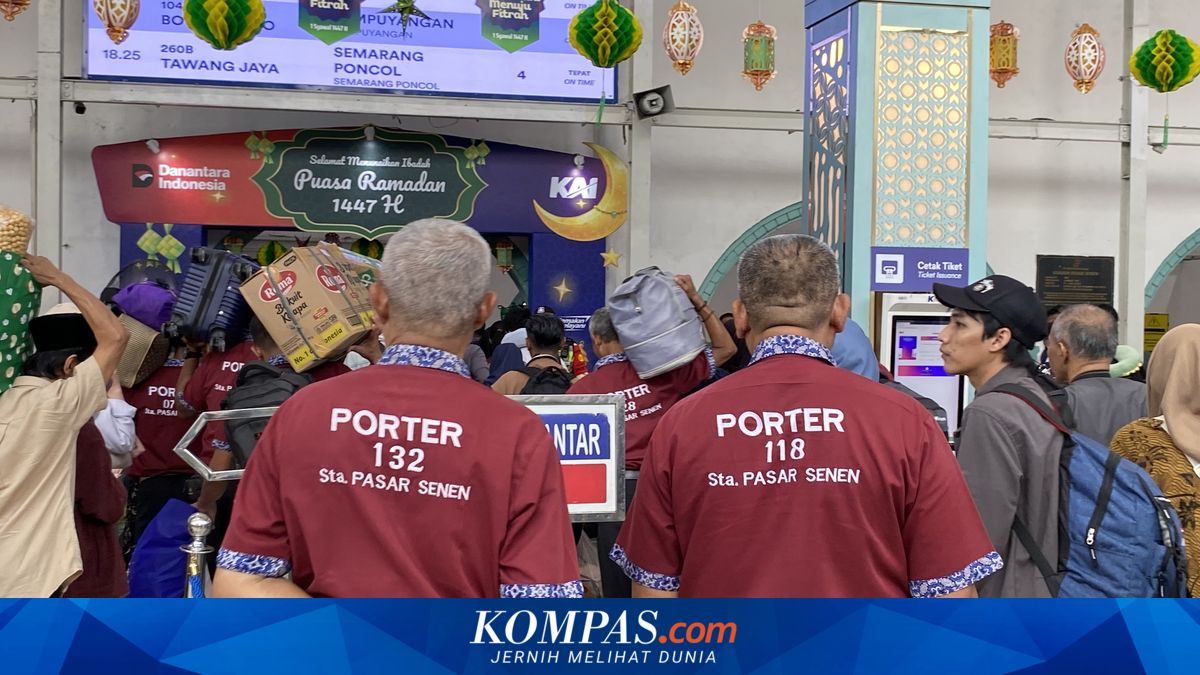
Jakarta — As the Lebaran mudik season approaches, railway stations are once again crowded with passengers carrying various items for their journeys home. Large suitcases, shopping bags and cardboard boxes line the departure areas. Despite increasingly modern station facilities—including trolleys, escalators and lifts—the presence of porters remains an important part of passenger mobility.
Transport observer Deddy Herlambang believes that porter services at railway stations remain necessary, particularly for certain groups of passengers. According to him, the role of porters goes beyond simply carrying luggage; it also serves an important social function within the transport system.
He explained that the function of porters is not merely related to transport activities. Rather, their presence relates more to social function than transport function. “They help people who need assistance whilst creating employment opportunities for people living around the station,” he said.
Herlambang noted that porters at railway stations today are more professional than in the past. He suggested that all porters should ideally be officially registered within the human resources management system of transport operators. Through such a system, porter services can be monitored whilst providing passengers with certainty regarding service standards.
“For good governance, all transport operators should provide a complaints channel if there are any issues related to porters,” he said.
Amongst the crowds at Pasar Senen Station, Slamet (38), a porter wearing badge number 182, could be seen carrying a cardboard box of mineral water on his shoulder whilst pulling a passenger’s suitcase. He has worked as a porter at Pasar Senen Station for nearly five years. According to Slamet, porters work according to a shift schedule arranged by the porter coordinator.
“Usually there’s a shift schedule. We work according to the allocation given by the coordinator,” said Slamet.
With this system, porters remain available at the station throughout the day to assist passengers who need help. The number of porters at Pasar Senen Station is quite substantial, so they work on a rotating basis. When passenger numbers increase, such as before Lebaran, porters must move faster to serve customers. He noted that the luggage passengers carry is sometimes quite heavy.
Nevertheless, he said the mudik atmosphere always provides a different experience for porters. “People seem happy to go home to their villages,” he said.
Through an application system, porter service tariffs have been determined transparently. According to him, the porter service rate is approximately Rp38,000 for one instance of assistance carrying luggage from the station area to the platform or vice versa.