
The Persian–Roman War: Why Do Muslims Support the Roman Victory?
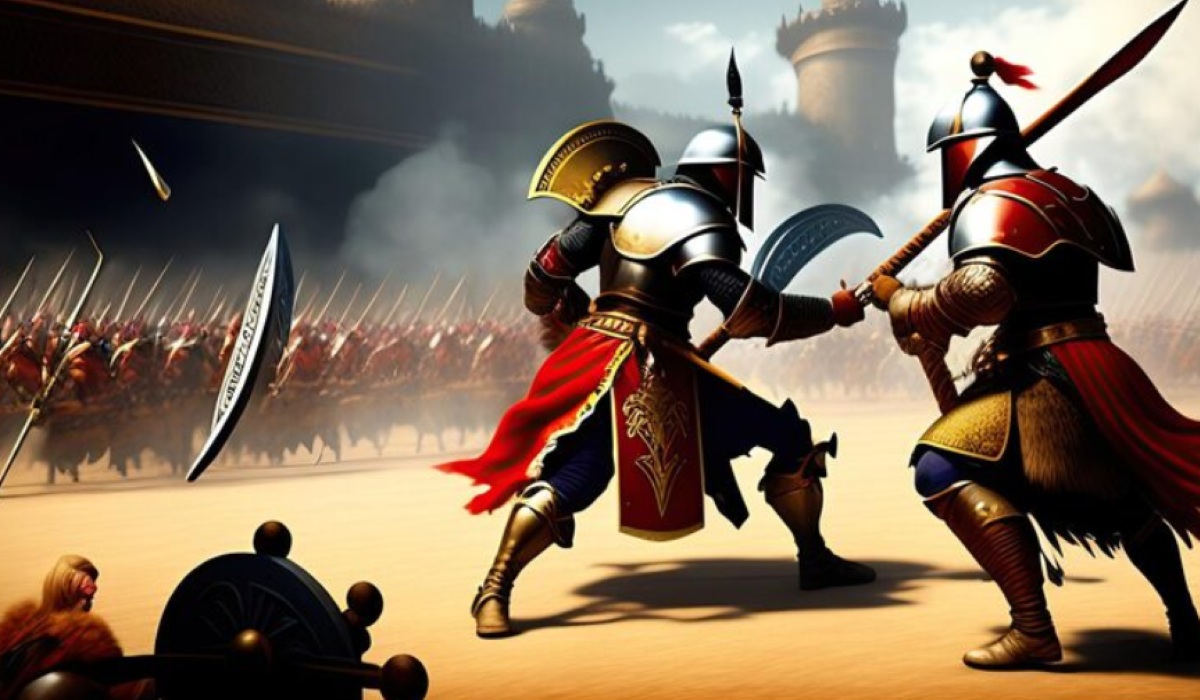
During the 7th century CE, the map of world politics was defined by the clash between two giant empires: the Byzantine Empire (Eastern Roman Empire) and the Sassanid Persian Empire. In the midst of this conflict, Muslims, then in Mecca, openly aligned with Rome. Why was this so?
The fundamental reason for the Muslims’ support for Rome was theological. The Romans at that time followed Christianity, which in the Qur’an is referred to as Ahl al-Kitab (the People of the Book). They shared the same monotheistic roots with Islam—the faith brought by the prophets from the line of Ibrahim (Abraham).
Conversely, the Persian Empire followed Zoroastrianism, which worships fire. For Muslims, a Persian victory was seen as a victory of paganism over monotheism. This was why Prophet Muhammad SAW and the companions felt emotionally closer to a Roman victory.
The war between these two great powers created polarisation in Mecca. The Quraysh polytheists celebrated the Persian victory. They felt that if the fire-worshippers could defeat the People of the Book, they too could destroy the Islamic mission brought by the Prophet Muhammad.
When the Romans suffered a crushing defeat in the Levant in 613–614 CE, the Quraysh mocked the Muslims, saying, ‘As our brothers (Persia) defeated your brothers (the Romans), we will defeat you as well.’
The Roman defeat in 613–614 CE was severe. They lost the territories of Syria, Egypt, and Jerusalem. Yet at a time when many believed Rome would collapse, the Qur’an revealed Surah Ar-Rum, verses 1–5: ‘The Romans have been defeated in the nearest land, and after their defeat they will triumph within a few years.’ The term bi’di-sinin in that verse refers to a period of 3 to 9 years. Indeed, in 624 CE, Emperor Heraclius managed to turn back the Persian armies. This victory coincided with the Muslims’ victory at Badr against the Quraysh, multiplying the joy of the Muslims.
The Muslims’ support of Rome against Persia proves that from the outset Islam had a sharp geopolitical consciousness. The Roman triumph was not merely a military victory but a validation of the Qur’anic prophecy that reinforced the faith of the companions under Quraysh pressure.