
The Paradox of Multilateralism and World Peace
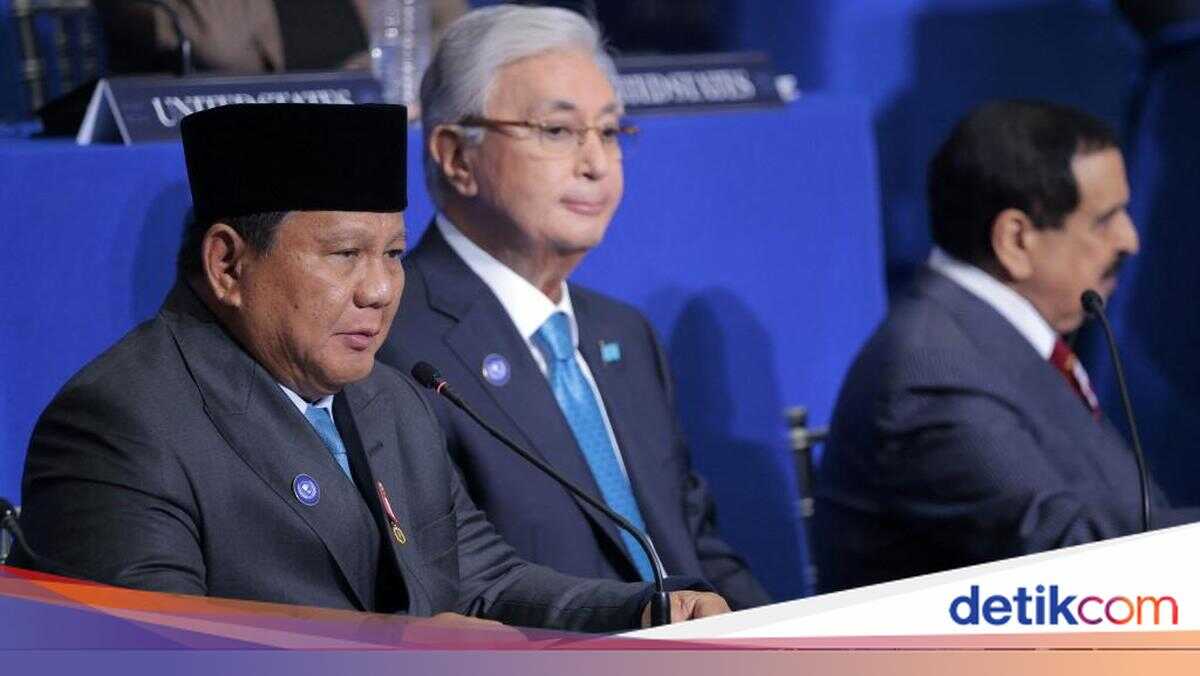
Drawing from reflections on fundamental principles in international diplomacy and the historical experience of Indonesia’s independence struggle, the Indonesian Government’s decision to join the Board of Peace initiated by United States President Donald Trump presents a compelling discourse worthy of deeper scrutiny.
According to an official statement from the Ministry of Foreign Affairs, Indonesia, alongside several other nations, welcomed the invitation with the aim of “promoting an end to violence, protecting civilians, and expanding access to humanitarian assistance for Palestinian residents in Gaza,” whilst claiming this effort aligns with humanitarian mandates and Indonesia’s commitment to Palestinian liberation in realising a two-state solution based on international law and UN resolutions.
From various statements and reports examined, the Indonesian Government affirms that its involvement remains consistent with long-term commitments to Palestinian liberation and support for a two-state solution based on international law and UN resolutions. Conceptually, this argument appears coherent and consistent with Indonesia’s free and active foreign policy.
However, empirical experience demonstrates that not all multilateral forums operate according to the principles of inclusivity and equality that form the foundation of ideal multilateralism. The question thus emerges: to what extent does multilateralism truly serve as a mechanism for just peace rather than merely an instrument of geopolitical stabilisation laden with asymmetrical interests?
Solidarity in Indonesia-Palestine Relations
The effort to promote “peace” recalls the profound historical roots of Indonesia-Palestine relations built upon anti-colonial solidarity. In 1944, Palestine, through its leader Sheikh Muhammad Amin al-Husaini, openly declared support for Indonesia’s independence struggle, which can be understood as a de facto recognition of Indonesia’s legitimacy in its struggle against colonial rule.
Conversely, Indonesia’s de jure recognition of the Palestinian State in 1988 affirmed Indonesia’s position in supporting Palestinian self-determination. This reciprocal relationship demonstrates that Indonesia and Palestine have mutually supported each other during crucial phases of their respective histories, whilst jointly upholding anti-colonial principles across various international forums.
Indonesia’s decision to join the Board of Peace requires deeper analysis, particularly regarding Palestinian political representation. A principal criticism of various global peace initiatives is their tendency to overlook equal participation of those directly affected by conflict.
In academic literature, Richmond (2022) emphasises that peace processes lacking legitimate representation from communities experiencing conflict risk producing elite, skewed, and unsustainable solutions. This criticism gains relevance when Trump invited Israel to join the Board of Peace whilst Palestine did not obtain an equal position.
The Board of Peace becomes increasingly problematic when linked to Indonesia’s continuing non-recognition of Israel in diplomatic relations. From an international law perspective, Palestine’s status as a non-member observer state at the UN since 2012 reflects collective international recognition of Palestine’s existence as a political entity.
The right to self-determination constitutes a fundamental principle guaranteed in the UN Charter and various General Assembly resolutions. According to Cassese (2019), denial of this principle not only violates international law but also erodes the moral legitimacy of every peace process claiming neutrality.
The dimension of international humanitarian law reinforces the urgency for caution in Indonesian diplomacy. The 1948 Genocide Convention explicitly prohibits acts intended to destroy, in whole or in part, a national, ethnic, racial, or religious group.
The Independent International Commission of Inquiry on the Occupied Palestinian Territory, including East Jerusalem, and Israel report released in September 2025 states there are strong indications that four of five elements of genocide have been met in Israeli military actions in Gaza.
When linked to Indonesia’s decision to join the Board of Peace, a philosophical question emerges: how can Indonesia, which has consistently affirmed commitment to international law and defence of peoples who have experienced grave human rights violations, constructively advance authentic solutions for the Palestinian people without compromising these principles?
Participation in a forum involving parties with questionable legal records regarding genocide allegations also raises doubts whether this step strengthens Indonesian foreign policy’s legitimacy or risks obscuring the historical moral position built over decades.
Furthermore, historical perspective positions Indonesia-Palestine relations as a symbol of defence for independence that is not merely rhetorical but a diplomatic reality continuously pursued in international forums.
The decision to join the Board of Peace should not merely constitute a pragmatic strategy to expand humanitarian assistance access but should be integrated with concrete efforts respecting Palestinian aspirations for unconditional independence and affirming support for conflict resolution that honours the fundamental rights of the Palestinian people, including rights to land, security, and full sovereignty.
The Moral Consistency of Indonesian Diplomacy
In my assessment, Indonesia’s diplomatic step in joining the Board of Peace fundamentally demands the highest standards of consistency in defending the principles upon which the nation was founded.