
The Paradigm of Civil-Military Revolution in the Iran vs US-Israel War
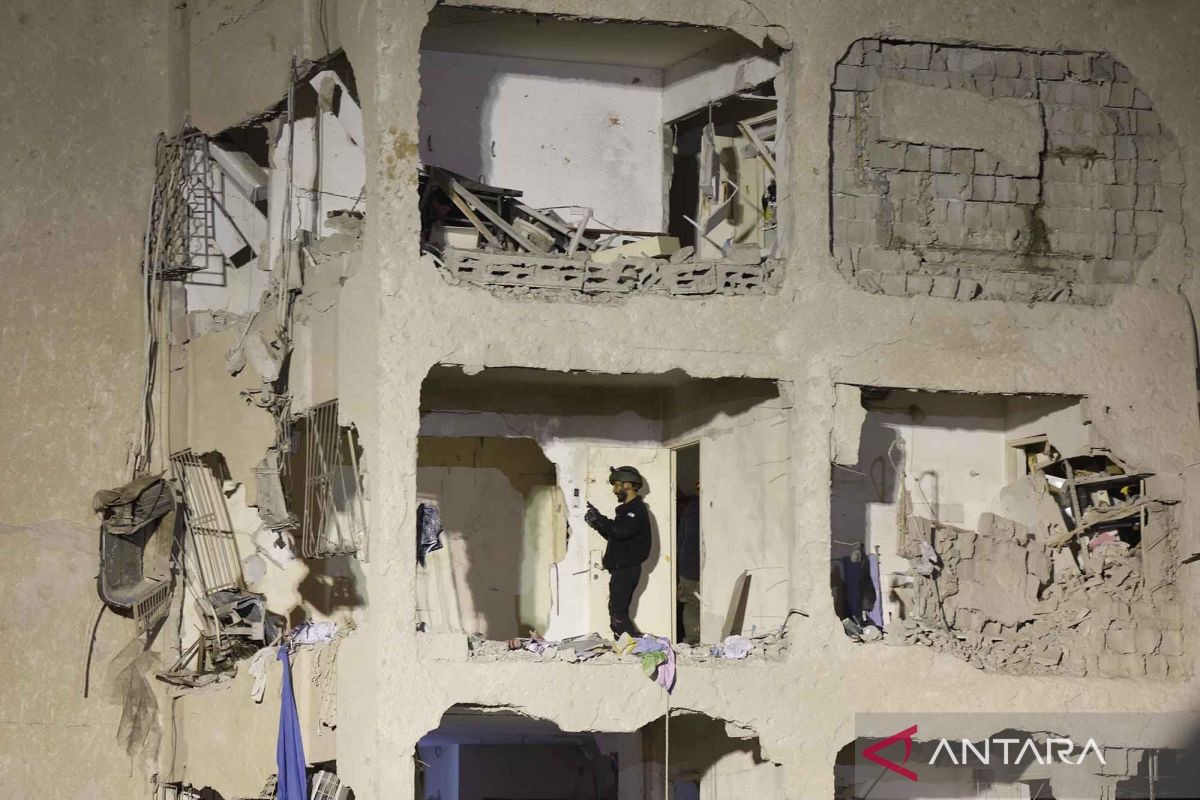
Rather than relying on expensive exclusive weapon systems, Iran is developing mass production of drones and missiles based on domestic industrial self-reliance. Jakarta (ANTARA) - The world has long viewed warfare as a contest of weapon sophistication. Since the end of the Cold War, the dominant narrative has positioned technology as the determinant of victory in warfare. Nations with the most advanced satellites, stealth fighters, and precise missiles are believed to always hold the upper hand. In the context of warfare, this perspective is known as the Revolution in Military Affairs (RMA). RMA has become a doctrine that has developed rapidly in the hands of Western powers, particularly the United States (US). In that doctrine, war is understood as a matter of the speed of sensors detecting threats and repelling them, the intelligence of command systems processing data, and the precision of weapons striking targets. Fast, accurate, and decisive. However, recent history shows a far more complex reality. Technological superiority does indeed bring extraordinary destructive power, but it does not always yield victory and dominance. Modern battlefields instead reveal the paradox that military dominance often becomes trapped in prolonged, costly, and exhausting wars that erode a nation’s political legitimacy in the eyes of world leaders. Victory is no longer determined by who strikes the hardest, but by who is most prepared to endure. This approach is evident in the strategy of the Islamic Republic of Iran. The country recognises the reality that they cannot win if they fight in an arena designed by the superpower US and its ally, Israel. Iran does not possess aircraft carrier fleets, does not command global air supremacy, and does not enjoy free access to cutting-edge military technology supply chains like the US and Israel. The long sanctions imposed on Iran have instead limited the space for conventional modernisation. However, limitations do not always mean strategic weakness. They are not pursuing spectacular lightning wars, but rather prolonged conflicts that drain the opponent’s endurance. This shift in perspective leads us to a broader concept, namely the Revolution in Civil-Military Affairs (RCMA). If RMA speaks of technological revolution and combat doctrine, RCMA goes further. RCMA views war as the total orchestration of all state instruments, namely military, economic, diplomacy, industry, information, even public psychology. The boundary between civilian and military becomes blurred. The state no longer fights only with its army, but with its entire ecosystem of power. It is this kind of approach that is gradually shaping the character of Iran’s strategy. Through the Islamic Revolutionary Guard Corps (IRGC) and its external unit, the Quds Force, Iran has built a network of influence that does not resemble conventional military structures. Relations with non-state actors in various conflict zones are woven into flexible, adaptive resistance nodes that are difficult to map with traditional war logic, thus creating strategic stalemates. Defence lines are pushed far beyond national borders, known as Forward Defense. With this strategy, Iran can deny direct involvement in attacks on neighbouring countries. At the same time, Iran can also claim to be a legitimate target in every retaliatory strike on the grounds that the target was used as a base for attacks by the US and Israel. There is no single centre of gravity that can be destroyed to end the conflict. When one point is pressed, another ignites. When one group is weakened, its network remains alive. Conflict transforms into a shadow battlefield. The enemy feels real, but is difficult to touch decisively. General Qasem Soleimani