
The Mystery of Synchronously Flashing Fireflies Finally Revealed
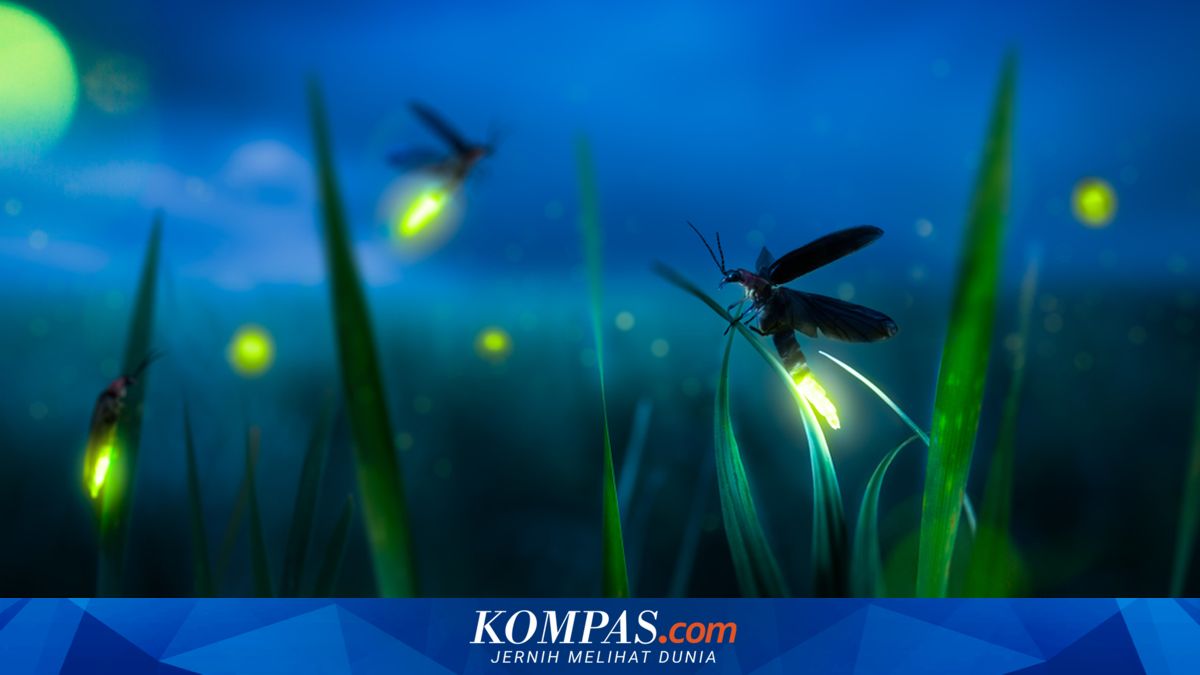
Every May, a swampy area of Congaree National Park in South Carolina, United States, transforms into a sight that feels like it comes from another world. In the darkness of an ancient forest filled with cypress and tupelo trees hundreds of years old, thousands of male fireflies flash almost simultaneously, creating a remarkable display of light.
This phenomenon occurs in the Photuris frontalis species. The thousands of small insects appear to follow the same rhythm, like concert audiences clapping in unison.
For years, scientists and nature enthusiasts have wondered: how could such simple insects move so harmoniously?
A recent study by engineers at the University of Colorado Boulder has finally uncovered the answer. They have discovered the simple mathematical rules that help fireflies synchronise their light flashes.
According to Orit Peleg, associate professor in the Department of Computer Science and BioFrontiers Institute at CU Boulder, the phenomenon is truly remarkable.
“It feels like magic. At certain times in the evening, the entire group of fireflies has one rhythm, and they are incredibly precise,” Peleg said.
The research findings were presented at the American Physical Society Global Physics Summit 2026 in Denver and were published early on the bioRxiv preprint server.
The researchers captured male fireflies one by one, then brought them into a completely dark tent that was isolated from outside light.
Inside the tent, scientists activated dim LED lights that functioned as “artificial fireflies”.
The experiment was led by Owen Martin, the lead author of the research who completed his doctorate at CU Boulder in 2025. He spent several summers conducting direct observations at Congaree.
Martin described the location as a primordial landscape.
“This place makes me imagine what parts of Earth looked like before humans existed. There is a strong sense that everything is very ancient,” he said.
Under natural conditions, fireflies typically flash approximately one to two times per second. For this reason, researchers adjusted the LED to flash at various speeds—from once per second to every 300 milliseconds.