
The Mystery of Germany's Most Spectacular Bank Robbery
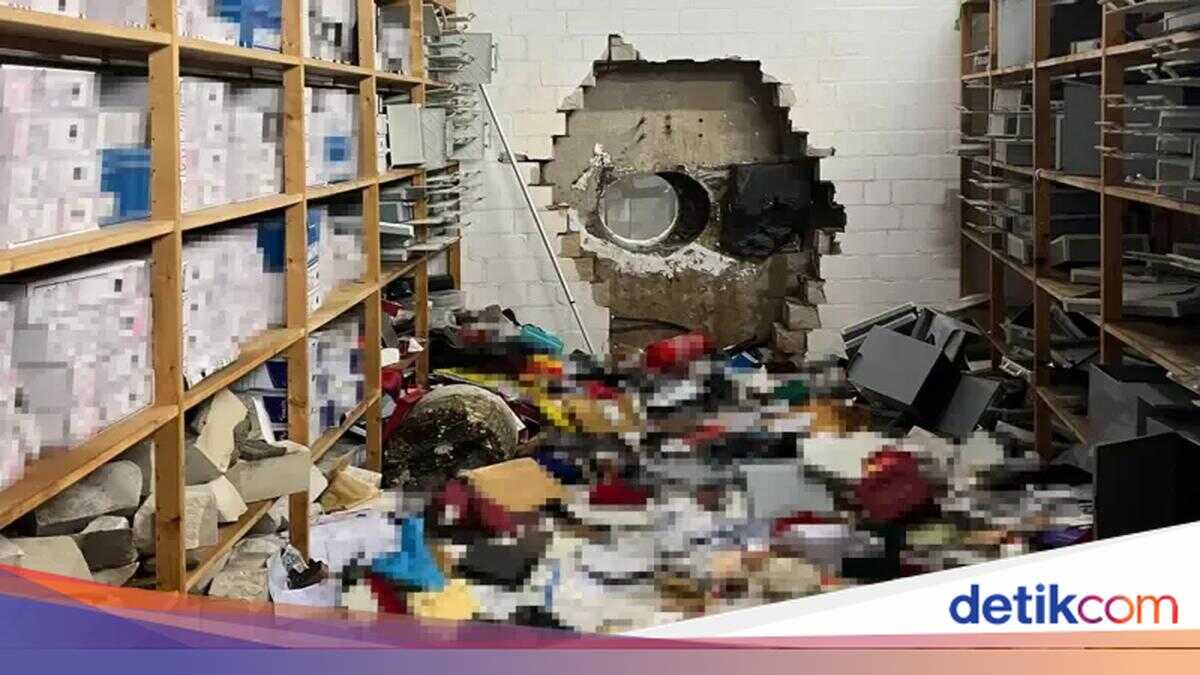
The robbery has been described as the most spectacular bank heist in Germany in recent years.
On a quiet weekend after Christmas, a group of individuals robbed a bank on a main street in Gelsenkirchen, Germany, by drilling through its wall. They looted more than 3,000 safety deposit boxes and made off with millions of euros.
More than a month later, police have still not apprehended the perpetrators.
The bank’s customers are furious, bewildered and in shock. Several have reported losing their life savings, jewellery and precious family heirlooms.
The incident has also sparked a crisis of confidence in official institutions.
The case has raised a number of difficult questions, including those posed by Herbert Reul, the Interior Minister of the state of North Rhine-Westphalia.
Why did no one notice what was happening? Was this an inside job? Why did no one hear the sound of drilling, and how did the thieves know exactly where the vault was located? Were the bank’s security systems too weak?
Police believe the thieves entered the bank building through an adjacent car park.
Gelsenkirchen police have so far appealed to the public for witness testimony.
Investigators believe the thieves likely entered the Sparkasse bank building on Nienhofstrasse through a multi-storey car park located nearby. They believe the perpetrators may have tampered with an exit door between the car park and the bank.
Under normal circumstances, the door cannot be opened from the outside, but the thieves forced it to remain open.
This action enabled the thieves to “access the Sparkasse building from the car park without any obstruction.”
From there, police believe the group bypassed several security systems and accessed an archive room adjacent to the vault in the bank’s basement.
The thieves drilled a 40-centimetre-wide hole through the wall leading to the bank’s vault, where the safety deposit boxes were kept.
The robbery took place between Saturday 27 December and Monday 29 December, according to the authorities. The thieves are believed to have nearly been caught shortly before reaching the vault.
Shortly after 6:00am on 27 December, fire services in Gelsenkirchen and a private security firm received a fire alarm from the bank, likely triggered by the gang’s activities.
Police and 20 firefighters arrived at the bank at 6:15am “but found no signs of damage,” police said in a statement.
The fire alarm originated from the vault, Herbert Reul revealed. However, the firefighters were unable to enter as the vault was sealed shut.
Reul said they observed “no smoke, smell of fire, or damage,” and therefore concluded it was a false alarm, which he noted was not unusual.
He told the state’s parliamentary committee that the police had no authority to search the bank at that time, as the premises fell under the jurisdiction of the fire department. To conduct a search, they would have required a court order.
After gaining entry to the vault, the thieves opened nearly all of the 3,250 safety deposit boxes. They took cash, gold and jewellery.
Reul stated that the bank’s computer system showed the first safety deposit box was forced open at 10:45am and the last at 14:44 on 27 December 2025. It remains unclear whether they managed to open the majority of boxes within four hours or whether the technology stopped recording data.
A number of witnesses subsequently told police they had seen several men on the car park staircase carrying large bags on the evening of 28 December.
The authorities do not know the precise amount stolen, but several German media outlets have estimated that the thieves made off with up to €100 million (approximately Rp2 trillion).
Police later released photographs and video footage from CCTV cameras in the car park showing masked men and two vehicles: a black Audi RS 6 and a white Mercedes Citan. Both were fitted with false number plates.
The robbery was only discovered on 29 December, when another fire alarm sounded at 3:58am on the Monday. Firefighters returned to the bank and found the premises in a state of devastation.
Herbert Reul said the scene resembled a rubbish tip, with more than 500,000 items strewn across the floor — the contents of safety deposit boxes that the thieves had left behind.
Police stated that many items had been damaged after the thieves doused them with water and chemicals.
Officers have since been sifting through the debris, searching for clues and attempting to determine the owner of each item.
As details of the robbery emerged, approximately 200 customers gathered outside the Sparkasse, demanding to be allowed inside. Police arrived with several patrol cars and secured the entrance.
Joachim Alfred Wagner, 63, said he had lost not only gold worth tens of thousands of euros but also jewellery belonging to his father and grandparents.
He had rented a safety deposit box after several burglaries at his flat, believing his valuables would be safe there.
“And now I am crying with anger,” he said.
The bank stated that the contents of safety deposit boxes are typically insured for