
The Mysterious Light Before Ramadan Captures Foreign Scientists' Curiosity
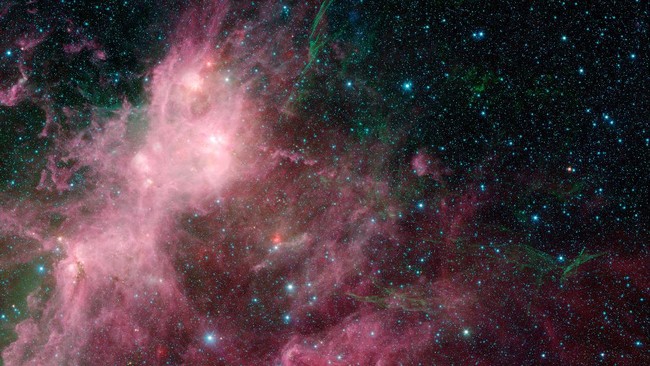
An unusual celestial event was recorded in the lead-up to Ramadan that sparked curiosity among scientists across the globe, from Europe to China. More than 1,000 years ago, Muslim scientist Ali ibn Ridwan documented his observations of what he termed a “stellar explosion”. At the time, Ridwan was an 18-year-old Egyptian scholar who compiled remarkably detailed observational records that would become essential references for modern astronomers studying Supernova 1006.
Ridwan’s full name was Abu ’l Hasan Ali ibn Ridwan Al-Misri. He became renowned as a physician and astronomer with a prolific writing career. In 1006, Ridwan was beginning his medical studies, yet he had long been fascinated by astrology and astronomy. He described Supernova 1006 as a “new star”, observing that it first became visible from Earth on 17 Sha’ban 396 AH or 30 April 1006 CE.
The light remained visible throughout the summer season. However, by mid-August, its position had grown too close to the Sun, becoming observable only during daylight and thus difficult to detect. Ridwan’s supernova observations were recorded in his book commentating on Ptolemy’s Tetrabiblos. He described: “I shall describe an event I witnessed at the beginning of my studies. This phenomenon appeared in the region of the constellation Scorpio, opposite the Sun. At that time, the Sun was 15 degrees from Taurus and the phenomenon was 15 degrees from Scorpio. This phenomenon was a great circle, approximately 2.5 to 3 times larger than Venus.”
He recounted that the sky shone brightly due to the supernova’s light, with intensity comparable to about one-quarter of the Moon’s brightness. Its position remained fixed but moved daily with its constellation until the Sun reached a sextile aspect (60 degrees) with it in Virgo. “At that point,” he reported, “[the phenomenon] directly disappeared.”
Ridwan then documented the positions of the Sun, Moon, and planets with precision, including their degrees and minutes in each constellation sector when the supernova first appeared. His detailed records helped modern astronomers determine when SN 1006 occurred and pinpoint its location in the sky. Astronomers only named the “new star” witnessed by Ridwan as a supernova thousands of years after his death—a supernova being a massive explosion marking a star’s death.
Besides Ridwan, other observers across the globe recorded the 1006 supernova event. A monk in Switzerland wrote: “The phenomenon sometimes expanded, sometimes faded, and sometimes disappeared.” Chinese astronomical records stated that the supernova’s position lay east of the constellation Lupus, south of Di, and one degree west of Centaurus, with its light intensity equivalent to about half the Moon’s radiance.
From these various records, modern astronomers have concluded that SN 1006 remained visible for four months before being obscured by sunlight. Approximately seven months later, a similar phenomenon appeared in the dawn sky between 24 November and 22 December 1107.