
The Multiplying Risks of Measles
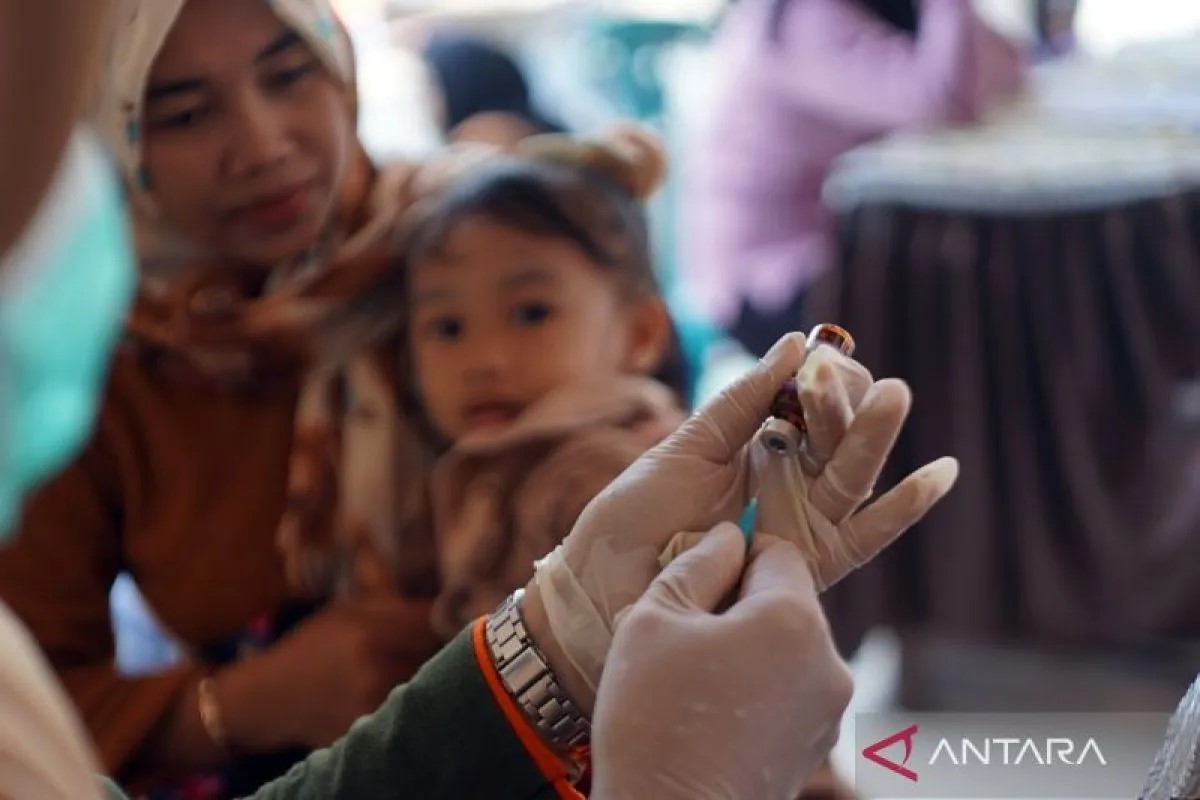
The government faces a policy dilemma with no truly comfortable solution. Measles cases continue to occur in Indonesia, affecting all ages, both children and adults. However, protection through vaccination is primarily promoted for children only, whereas adults also require vaccination. Some adults may have suboptimal protection if their childhood immunisation status is incomplete or evidence of immunity is unclear. This results in an immunity gap or disparity in immunisation coverage, creating opportunities for cases among adults.
Professor Iris Rengganis from the Department of Internal Medicine at FKUI-RSCM explained that adults’ habits, such as high mobility including travel, dining out, and international trips, increase the transmission of the measles virus. “At the age of 18 and above, there is waning immunity. All antibodies from childhood vaccinations decline, which is why vaccination for adults is necessary because immunity is limited,” said Iris during the UI Medicine webinar on Wednesday (1/4).
Exposure to measles in adults can also be dangerous and high-risk. Risks of complications in adults include encephalitis, thrombocytopenia, brain inflammation, long-term immune disorders in vulnerable individuals, or pneumonia, as pneumonia is the most common and dangerous complication, which can even cause death.
It is known that the measles vaccine consists of two types: the MR vaccine (Measles and Rubella) and the MMR vaccine (Measles, Mumps, Rubella) for adults. The MMR vaccine is a live attenuated vaccine, with contraindications for pregnancy, as it cannot be given, and also for severe immunodeficiency. The MMR vaccine is administered twice to adults with a 28-day interval.
“Live vaccines must not be given less than 28 days apart, as it would interfere with the first dose. For optimal protection, high-risk groups are generally recommended to receive two doses with a minimum interval of 28 days, not less,” she stated.
Iris also explained that high-priority adult groups for measles vaccination include women of childbearing age, who should be immunised before planning pregnancy because the current measles vaccine, MMR, is a live attenuated vaccine. Thus, it cannot be given to pregnant women. “So if they feel their childhood vaccination was incomplete or unclear, it should be done before pregnancy, as planned,” said Iris.
Other adult groups that need high priority include healthcare workers, who should receive at least one vaccination. Additionally, people living in dormitories or dense environments, as transmission is very rapid through droplet infection.
MEASLES IN PREGNANCY
Measles during pregnancy is associated with increased risks of miscarriage, premature birth, and maternal complications. Therefore, vaccination is recommended at least one month before planning pregnancy.
“Because antibodies generally form 14 days after vaccination. If not yet immune, vaccination can be considered postpartum according to clinical assessment. So preparation for pregnancy is at least one month, but ideally 2-3 months beforehand,” she emphasised.
The measles vaccine for adults is generally injected subcutaneously in the upper arm. After that, observation for 15-30 minutes post-injection to monitor for rapid reactions such as anaphylaxis.
The measles vaccine should not be given during pregnancy, severe immunodeficiency, or to those with severe allergies. Meanwhile, adverse events following immunisation (AEFI) from the measles vaccine include mild fever or small rashes, usually 7-12 days after vaccination. Rare effects include severe allergic reactions and anaphylaxis, which are very uncommon.
By administering the measles vaccine, herd immunity or group immunity can be formed. A 90% immunisation coverage target is needed to help stop measles transmission.
“The fewer vulnerable people, the harder it is for the virus to spread in the community. So immunisation coverage is very important; for highly contagious diseases, herd immunity is expected to be over 95% to achieve group immunity,” she stressed.
At the same occasion, Professor Erni Juwita Nelwan from the Department of Internal Medicine at FKUI-RSCM explained why someone can contract measles despite being vaccinated: the previous vaccination may not have been effective. Possible causes include vaccine quality or administration method. Although the vaccine has very good efficacy and is very safe, vaccination failure can occur, resulting in no protection formed.
“That’s why people who think they have been vaccinated but still get sick, known as waning immunity—the vaccine worked, but the protective effect wanes, usually around six years after vaccination, hence the need for a booster,” she clarified.
The symptoms are the same as other measles cases, but due to waning immunity, they are usually milder than in unvaccinated individuals, and the transmission risk is also lower. “People who have been vaccinated but whose protection has declined are not 100% unprotected, but their illness course may not be severe,” she said.
Measles has returned to attention after the Ministry of Health of the Republic of Indonesia warned that infants under nine months are at very high risk of infection.
A strong immune system is the frontline defence against infection. At every moment, various microbes have the opportunity to invade.
Measles in adults can be…