
The Mudik Wave: Between Longing, Strategy, and the National Economic Engine
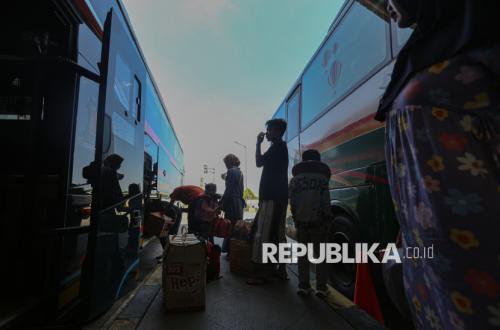
Queues of vehicles at the Tangerang toll entrance towards Merak were already stretching hundreds of metres before 10 a.m., with travellers sitting patiently behind the wheel under the scorching sun. Amidst the rumble of engines and vehicle exhaust fumes, children’s laughter could be heard from the rear seats, their cheerful voices indifferent to the length of the journey. This is the face of mudik, an annual ritual that, however exhausting, never truly deters people from undertaking it.
This year’s Idul Fitri mudik is far more than a mass movement. It is a national event involving nearly half of Indonesia’s population in a coordinated journey towards their hometowns. The Transportation Policy Agency of the Ministry of Transportation projects that 143.92 million people, or approximately 50.6 per cent of the entire Indonesian population, plan to travel during the 1447 H Idul Fitri holiday period.
This figure may even be conservative, as Deputy Minister of Transportation Suntana believes actual realisation on the ground will exceed survey projections. In the previous year, actual figures reached 154 million people, far surpassing the initial prediction of 146 million. It seems longing invariably exceeds expectations.
Distinctive Features of This Year’s Mudik
What distinguishes this year’s mudik from previous years is its traffic pattern divided into two waves. The first wave is estimated to occur on 14 to 15 March, whilst the second wave occurs several days later, on 18 to 19 March 2026. This division of traffic flow is no coincidence, but rather the result of carefully designed policy.
The government has implemented a Work From Anywhere policy on 16 and 17 March for the outbound journey and 25 and 26 March for the return journey, following approval from the President and the Ministry of State Apparatus Empowerment and Bureaucratic Reform.
This policy essentially provides a breathing space between two peak congestion periods, allowing millions of civil servants and flexible private sector workers to begin their journey without having to compete for space on the same day. The government has also activated command posts for 18 days, from 13 to 30 March 2026, to ensure optimal coordination across different transportation modes.
In West Java, this two-wave strategy has received serious attention from security personnel. The peak of the return flow is predicted to fall on H+6, or Friday, 27 March 2026, and this mass movement coincides with the Nyepi holiday on 19 March and the joint Nyepi leave on 20 March.
The Nyepi factor indirectly encourages some travellers to depart earlier, thereby forming a sufficiently significant first wave. Two major celebrations converge within one week, and the flow of humanity becomes stronger than usual.