
The MSCI Shadow: How Severe Is the Impact of Foreign Investor Inflows and Outflows?
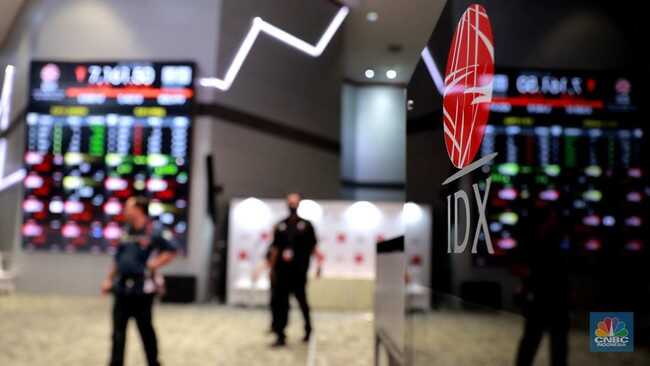
Jakarta – Indonesia’s capital market has just passed through a turbulent month. Extreme fluctuations since late January have their roots in a crisis of confidence from the global index body, Morgan Stanley Capital International (MSCI).
MSCI’s decision to freeze index changes for Indonesian securities was triggered by doubts over market integrity, particularly concerning free float below 5% which is considered vulnerable to price manipulation practices.
This fundamental issue directly dictated the direction of foreign capital flows and the performance of the Composite Stock Price Index (IHSG) throughout February.
As known, the Indonesian stock exchange began shaking from the MSCI issue since late January 2026. On Wednesday trading (28/1/2026), the IHSG plummeted with a correction of 7.35% to the level of 8,320.56 or fell 659.67 points at market close. At its lowest level, the IHSG even collapsed more than 8%, prompting the Indonesia Stock Exchange (IDX) to implement a temporary trading halt.
Another trading halt was imposed on 29 January 2026 because the IHSG dropped sharply.
Dynamics of Foreign Capital Inflows and Outflows
MSCI’s sharp scrutiny of transparency in share ownership structure was met with aggressive asset disposal by global fund managers. Exchange transaction data recorded massive net outflows immediately after the sanctions were announced.
On 28 January, the exchange recorded an outflow of Rp6.17 trillion. This outflow continued relentlessly with a value of Rp4.63 trillion on 29 January and Rp1.53 trillion on 30 January.
This fund withdrawal trend continued to dominate the first half of February, peaking again at Rp2.02 trillion on 13 February.
However, capital movements began to find a turning point alongside tactical measures from the Financial Services Authority (OJK) which planned regulatory reform raising the minimum free float threshold to 15%, and strategic intervention from entities such as Danantara. This commitment to structural improvement gradually succeeded in restoring foreign investor confidence.
An accumulation phase or net inflow began to look solid from 18 February, where the exchange recorded foreign capital inflows of Rp1.44 trillion. This momentum held very consistently. The exchange successively recorded thick net buying positions, including Rp1.14 trillion on 23 February and Rp1.37 trillion on 24 February.
The peak of this foreign liquidity recovery occurred on 25 February with inflow reaching Rp2.74 trillion, indicating that global institutional investors began repositioning their portfolios in the domestic market following regulatory clarity.
It can therefore be concluded that since the MSCI issue was raised to Indonesia, the Indonesia Stock Exchange (IDX) still experienced a net outflow of Rp11.28 trillion with relatively modest inflow momentum until market close yesterday on Thursday 26 February.
IHSG Performance Fluctuations Following Announcement
The pressure on foreign capital flows was directly proportional to the IHSG’s performance. Before the MSCI decision was released, the composite index was in a very strong position at the level of 8,980 on 27 January 2026. The freeze sanction immediately pressured the index down to 8,320 the next day.
Persistent selling pressure forced the IHSG to breach the psychological 8,000 level, reaching the lowest point of the month at 8,922 on 2 February trading.
Although the index appeared to strengthen on several trading days in the first and second weeks of February, this movement was not a fundamental reversal of direction.
The increase was driven more by a brief rebound from a relatively deep correction, given that cumulatively foreign capital flows continued to record a net selling position from the exchange during that period.
True index stability only began to form when foreign liquidity returned in the third week. Coinciding with fund inflows on 18 February, the IHSG successfully closed stronger at the 8,310 position. Since then, daily volatility began to ease and the index moved consistently away from vulnerable territory.
By the end of the data period on 26 February, the IHSG managed to maintain its position and closed at the 8,235 level.
This series of events over the past month has become an indicator that transparency and regulatory changes simultaneously are a crucial foundation for maintaining market valuation stability both in the long term and to return to touch the 9,000 level.