
The Miracle of Zakat: From the Centre of Government to Rawa Buaya
In a quiet corner of West Jakarta, specifically at Winsar Learning House in Rawa Buaya, Cengkareng, Dwi Handayatun was receiving a long-awaited special gift. Eighty packets of five-kilogramme rice were neatly arranged, ready to be distributed to persons with disabilities and disadvantaged families whom she has been supporting.
“I felt like I was struggling alone for years searching for assistance for disabled children here,” said Dwi, who is also the mother of two disabled children. “Since getting to know Baznas, I felt truly embraced. Baznas is genuinely present within disadvantaged communities like ours, not just going through the motions.”
The assistance arrived at a critical moment. Twice in the past month, this densely populated residential area had been flooded. Residents, mostly employed as waste pickers and labourers, were struggling to rebuild their lives. Finding money for daily meals was difficult, let alone buying rice after the floods.
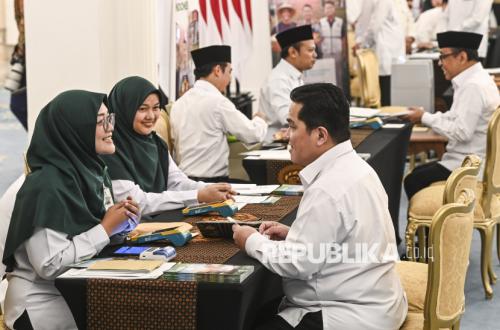
Meanwhile, at a vastly different location, the State Palace in Jakarta, a historic moment was unfolding. On Friday, 13 March 2026, this year’s Palace Zakat distribution recorded the highest amount across all 11 years of implementation: Rp4.3 billion collected from 111 zakat payers comprising the President, Vice President, cabinet ministers, and military personnel.
Two different scenes. Two points on a single straight line called zakat.
Leadership by Example from the Top
The figure of Rp4.3 billion is not merely an administrative achievement. It is a reflection of growing consciousness. Baznas Indonesia chairman Sodik Mudjahid noted that zakat collection from state officials continues to increase: from Rp636 million in 2022, rising to Rp753 million in 2023, then Rp1 billion in 2024, jumping to Rp2 billion in 2025, and finally reaching Rp4.3 billion in 2026.
“We express gratitude for the support from the President, Vice President, and all cabinet members who have paid zakat through Baznas. This carries immense value for us. Beyond of course increasing zakat receipts, what matters more is the moral support,” said Sodik.
He emphasised that this leadership example had significant influence in raising public awareness to fulfil zakat through official institutions. “This leadership example is highly effective in encouraging the public to pay zakat through trusted and accountable institutions. Its influence can even be stronger than the campaigns we conduct,” he said.
President Prabowo Subianto and Vice President Gibran Rakabuming Raka were not alone. Several cabinet ministers also fulfilled their zakat obligations through Baznas, including the Coordinating Minister for Infrastructure and Regional Development Agus Harimurti Yudhoyono, Coordinating Minister for Law, Human Rights, Immigration, and Corrections Yusril Ihza Mahendra, Coordinating Minister for Human Development and Culture Pratikno, and the President’s Special Envoy for Youth Generation Development and Arts Workers Raffi Ahmad.
Also present were the Minister of Youth and Sports Erick Thohir, Coordinating Minister for Community Empowerment Muhaimin Iskandar, Minister of Energy and Mineral Resources Bahlil Lahadalia, Minister of Home Affairs Tito Karnavian, and Military Commander Agus Subianto.