
The Middle East at a New Flashpoint
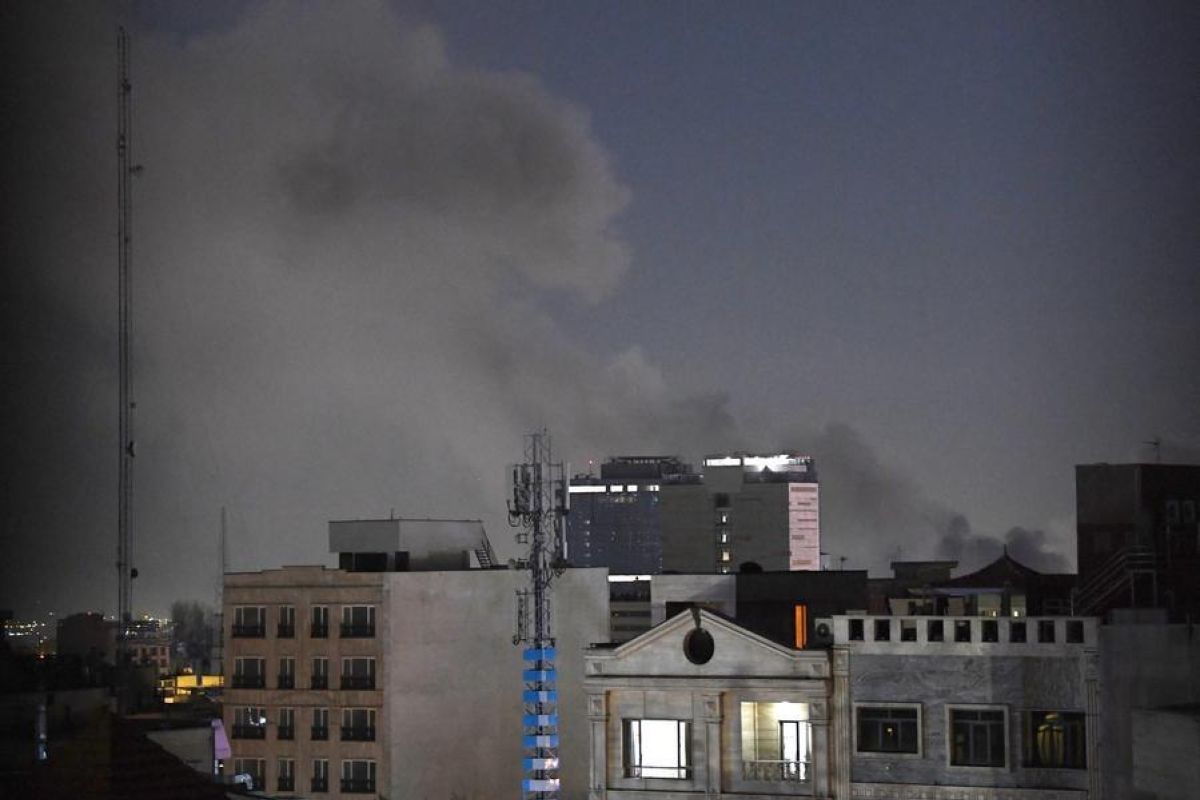
Jakarta (ANTARA) – Tensions between the United States-Israel versus Iran finally reached a critical point on Saturday, 28 February, when the United States officially launched attacks on the country.
United States President Donald Trump stated that the US military had begun major combat operations in Iran to defend the American people by eliminating direct threats from the Iranian regime.
Earlier that day, Israel had launched a preemptive strike against Iran, following an initial attack on Iran in June 2025. In retaliation, Iran launched missile attacks on Israeli territory and US military facilities in the Middle East region.
The US-Israeli attacks caused significant damage and casualties, including the death of Iran’s Supreme Leader Ayatollah Ali Khamenei, who had the longest tenure among Middle Eastern leaders. He became Iran’s Supreme Leader in 1989 after serving as President from 1981 to 1989.
Diplomatic Stalled
On the eve of ‘execution day’, precisely on 26 February, Oman’s Foreign Minister Sayyid Badr bin Hamad bin Hamood Albusaidi stated that Iranian and US delegations concluded a new round of negotiations in Geneva “following significant progress in the talks”.
The meeting marked the third round of indirect nuclear negotiations between Iran and the US under Omani mediation. The Iranian delegation was led by Foreign Minister Seyed Abbas Araghchi, whilst US presidential envoy Steve Witkoff and Trump’s son-in-law Jared Kushner represented Washington in the negotiations.
Of course, this meeting was regarded as a positive signal and fresh hope for moving away from military options. However, regrettably, Trump’s decision to attack Iran shocked most people and became the direct trigger for escalation.
United Nations Secretary-General Antonio Guterres expressed concern that the attack on Iran demonstrated that the diplomatic opportunity from the ongoing nuclear negotiations had been “squandered”.
During an emergency meeting of the UN Security Council on Iran at UN headquarters in New York on Saturday, Guterres highlighted that the US-Israeli attack occurred following the third round of indirect negotiations between the US and Iran mediated by Oman.
“I deeply regret that this diplomatic opportunity has been squandered,” he said.
Timeline of Escalation
Last weekend’s US-Israeli air and sea attacks struck multiple targets in Iran, including the capital Tehran and Shajareh Tayyebeh Girls’ Primary School in the city of Minab, Hormozgan Province in southern Iran. Iranian local media, citing a spokesman from the Foreign Ministry, Esmaeil Baghaei, reported that approximately 160 people were killed in the US attack on the educational institution.
Iran did not remain passive. Iran immediately launched retaliatory strikes against the US-Israel with volleys against all major US and Israeli facilities in the region, including in Qatar, the United Arab Emirates, and Saudi Arabia.
The Islamic Revolutionary Guards Corps (IRGC) announced the beginning of “the most brutal offensive operation in the history of Iran’s armed forces” following the death of the martyr Supreme Leader Ayatollah Ali Khamenei. A new wave of missile attacks was launched by Iran against Israel and US military bases in the Middle East.
The IRGC conveyed that attacks were directed at 27 targets, including Tel Nof airbase in central Israel, Israeli army headquarters, and a military industrial complex in Tel Aviv.
“The Armed Forces of the Islamic Republic of Iran will not allow the sirens to go silent in Israel and US bases, and we will launch stages of harsh retaliation through gradual strikes,” the IRGC statement said.
The US-Israel versus Iran conflict continues to unfold. The Middle East region remains ablaze. Still bleeding. According to the Iranian Red Crescent Society (IRCS) on Saturday, at least 201 people were killed and 747 others were injured in Iran due to US attacks.
Meanwhile, the IRGC on Sunday stated that at least 560 US military personnel were killed and wounded in Iranian attacks on American bases throughout the Middle East.
Beyond casualties and infrastructure, the current attacks in the region have also disrupted aviation and economic activities in many countries. Palestinian borders were also closed during the attacks. Neighbouring countries are suffering the consequences of what is happening in the Middle East region.
In several regional countries that host US bases and were not spared from Iranian attacks, there were also reports of casualties.
In response to the current situation, several foreign embassies and international organisations in Iran and neighbouring countries issued alerts to their citizens to take protective measures if the conflict escalates further. The alert level III was set to respond to the military escalation between the US-Israel and Iran.
IRGC Brigadier General Ibrahim Jabari also stated on Saturday that the Strait of Hormuz was closed amid the escalating situation in the region. “The Strait of Hormuz is currently being closed by IRGC forces following aggression against Iran,” he said.
Global Response
During the emergency meeting of the UN Security Council on Iran at UN headquarters in New York on Saturday, Guterres urged immediate de-escalation and cessation of hostilities in the Middle East, with all conflicting parties to return to the negotiating table.
“I call for immediate de-escalation and cessation of hostilities. If not, what will occur is a wider conflict with serious consequences for civilians and regional stability,” he said.
Meanwhile, Russia’s Ambassador to the UN Vassily Nebenzia demanded that the US and Israel immediately stop their aggressive actions against Iran. He viewed such actions as “unprovoked armed aggression” that violated the UN Charter and international law and risked causing serious humanitarian and economic disaster in the region.
Similar calls were also made by China, which expressed deep concern over the US-Israeli military attacks on Iran, adding that Iran’s sovereignty, security, and territorial integrity must be respected.