
The Meaning of Al-Afuw in Asmaul Husna: Evidence, Virtues of Dhikr, and How to Practice It
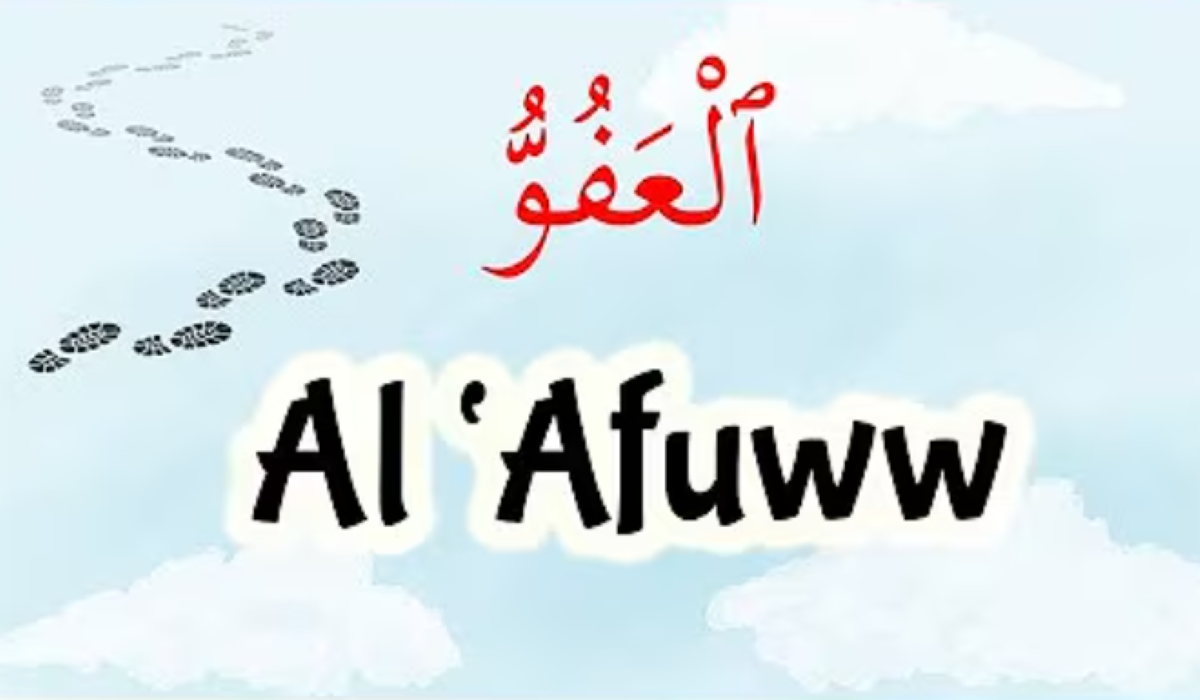
Understanding Allah through the Asmaul Husna is the first step toward inner peace. One mercy-filled name is Al-Afuw. Understanding Al-Afuw is not merely knowing that it means ‘the Forgiving’; it is to delve into how Allah erases every trace of a servant’s mistakes, so the blemish is wiped clean.
In linguistic terms, Al-Afuw comes from the root ’afw meaning to erase, obliterate, or remove traces. If you walk on sand and the wind blows away your footprints, that is the image of Afw.
In the divine context, Al-Afuw is the Entity who erases the sins of His servants down to their roots, so those sins do not reappear in the ledger of deeds and are not asked about on the Day of Resurrection.
Linguistically, Al-Afuw derives from ’afw meaning to erase or remove. If Al-Ghafur means covering sins (maghfirah), Al-Afuw means erasing them completely (al-mahwu).
Like writing on paper, Al-Ghafur is to hide the writing so it is not seen, whereas Al-Afuw is to erase the writing so the paper is returned white and clean with no trace of scribble.
Many ask how Al-Afuw differs from Al-Ghafur (the All-Forgiving). Islamic scholars explain: ‘Indeed Allah is truly Most Forgiving and Most Merciful.’ Also in Surah An-Nisa verse 149, Allah links the attribute of forgiveness with His Power (Al-Qadir), showing that God’s forgiveness comes from a position of strength, not weakness. There is also Qur’an Surah Al-Hajj: 60: ‘Indeed, Allah is Most Forgiving, Most Merciful.’
In Hadith, the Prophet Muhammad (peace be upon him) taught a special supplication during Lailatul Qadar: ‘Allahumma innaka ’afuwwun tuhibbul ’afwa fa’fu ’anni’ (O Allah, You are the Most Forgiving, You love forgiveness, so forgive me).’
Not the same as Al-Ghaffar (which emphasises repeated forgiveness); Al-Afuw emphasises total erasure of sins.
How to forgive someone who has hurt us deeply? Begin by realising we too often sin against Allah and hope for Afw from Him. By forgiving others, we invite the Forgiveness of the Creator.
This dhikr is highly recommended to be recited at all times, especially during the last third of the night and on odd nights in Ramadan (Lailatul Qadar).
Does forgiving mean we are weak? Not at all. Forgiving is a sign of spiritual strength. The Prophet Muhammad (peace be upon him) said that Allah does not increase for the forgiving person except in honour (Hadith in Muslim).
That is a natural human process. Continue to recite Ya Afuw so that Allah erases the traces of pain from your heart, just as He erases sins without a trace.
This article was prepared with the aid of artificial intelligence (AI) and has undergone editing and fact-checking by the editorial team.
Discover the deep meaning of Al-Muntaqim (the Avenger), Qur’anic evidence, the virtues of dhikr, and how to apply them in daily life. At-Tawwab means Allah the Most Accepting of Repentance. Explore the deep meaning, Qur’anic evidence, the virtues of dhikr, and how to practise them in daily life.
Understand the deep meaning of Al-Barru in Asmaul Husna. Find Qur’anic evidence, the benefits of dhikr, and how to implement the attribute of the Most Goodness of Allah in 2026.
Understand the deep meaning of Al-Muta’aalii as the 78th Asmaul Husna. Complete with Qur’anic evidence, benefits of dhikr, and ways to implement in life.
Learn the deep meaning of Al-Waali (The One Who Commands), Qur’anic evidence, dhikr practices, and the fundamental difference with Al-Waliy (The Guardian).
Find the deep meaning of the Lailatul Qadar prayer according to the guidance of the Prophet ﷺ to Sayyidah Aisha in Bulughul Maram. Erase sins without a trace with ’Afuww.