
The Martyrdom of Ali Larijani: The Path to Happiness and the Embedded Philosophy of Suluk
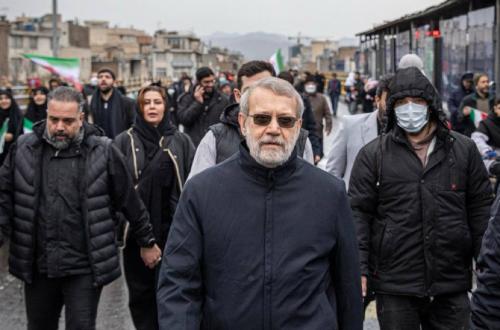
In a world increasingly governed by profit-and-loss calculations, where life is often reduced to mere survival, the death of Ali Larijani, Secretary of Iran’s Supreme National Security Council, presents a philosophical narrative that is hard to ignore.
Ali Larijani was not only a senior Iranian political figure and architect of Iran’s policy and military strategy, but also known as a philosopher who understood Islamic philosophy as well as the thought of Immanuel Kant.
In his final moments of life, he chose to affirm a worldview on life and death that is no longer common in the modern world.
The day before his death, on his X account, he wrote a quote from Imam Husain: “I do not see death except as happiness, and I do not see life with the oppressors except as humiliation.”
Amid real threats to himself, where the US had offered 10 million dollars for information about him, that sentence can no longer be read as mere rhetoric. It must be interpreted as an existential statement, a choice of position in the universe.
We live in an era inherited from the logic of Thomas Hobbes, who viewed humans as fundamentally striving to preserve their lives.
In this framework, it is said that the fear of death is the basis of social order. The state exists to protect life, and life itself becomes the highest value.
Thus, it is not surprising that in the modern world, almost all moral choices ultimately boil down to one question: does this make us safer to live longer?
However, what Larijani demonstrated, and long before him Imam Husain at Karbala, is that there is something higher than mere survival. There is a kind of life that loses its meaning when preserved at too high a price, namely the price of honour, the price of justice, and the price of truth.