
The Long Trail of War in Pursuit of 'Regime Change' by the U.S.
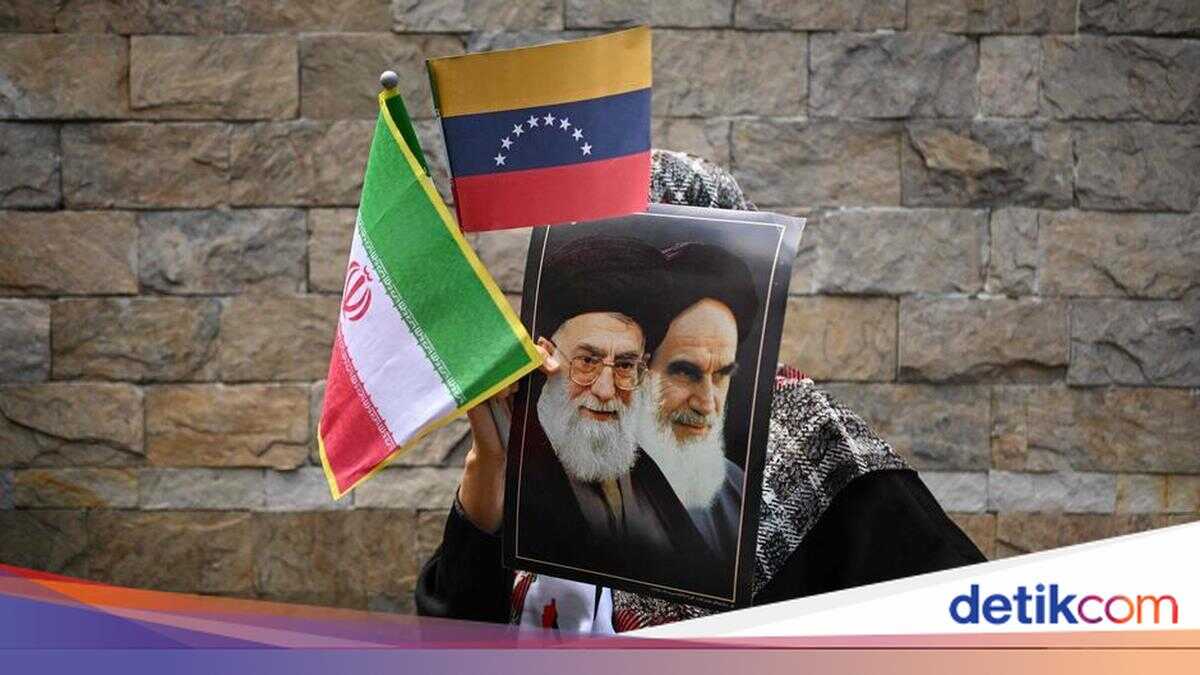
At the outset of the ongoing war, U.S. President Donald Trump laid out a clear objective: Iran must stop being a threat, both in terms of nuclear capabilities and conventional military power, and the weakened regime of the theocrats must be removed from power.
However, as the conflict has progressed, Washington’s message has begun to shift. A number of senior American officials have offered varying explanations for the aims of the joint U.S.-Israel air strikes against Iran.
Defence Secretary Pete Hegseth even insisted on Monday (03/02) that this conflict is not a ‘war of regime change.’ Nevertheless, given Washington’s track record, it is not surprising if Trump’s initial aim remains one of the motivations behind the military intervention.
Across modern history, Washington has had a long track record in operations often described as regime change—indeed more than any other nation.
According to a 2019 study, during the Cold War (1947–1989) the United States carried out 72 attempts to topple power abroad for its interests. Of these, 64 were conducted covertly by the intelligence services, with a success rate of about 40%. One of the best-known operations occurred in 1953, when the CIA, collaborating with Britain’s MI6, ousted Iran’s prime minister at the time, Mohammad Mossadegh.
That coup prolonged the Shah Mohammad Reza Pahlavi’s hold on power, who was later viewed by some as a ’ puppet of the U.S.’. Yet the monarchy’s rule ultimately collapsed in the 1979 Islamic Revolution, which produced a theocratic regime that is now again a target of air strikes.
History shows that even regime-change operations that appear to succeed can generate long-term problems. This article summarises a number of covert and overt operations involving the United States.
Libya 2011: The hopes of a revolution that ended in chaos
When the Arab Spring wave of 2011 sparked hopes of democracy across North Africa, pressure on Moammar Gadhafi, who had long been in power, intensified in Libya. The United States under President Barack Obama quickly took a side with the opposition group known as the National Transitional Council.
Together with France and the United Kingdom, the U.S. subsequently launched air strikes that soon fell under the coordination of Operation Unified Protector led by NATO. In October of the same year, a U.S. drone and French fighter jets attacked Gadhafi’s convoy before he was ultimately killed at the hands of National Transitional Council fighters.
Nearly 15 years later, Libya remains politically divided and beset by major instability, far from the peaceful transition that had seemed possible at the start of the revolution.
Iraq 2003: The toppling of Saddam and the protracted crisis
On 1 May 2003, just weeks after Saddam Hussein was toppled, U.S. President George W. Bush stated that the Iraq War had ended. On the deck of the aircraft carrier USS Abraham Lincoln, a large banner reading ‘Mission Accomplished’ hung as a symbol of victory. Bush insisted that the transition from dictator to democracy indeed takes time, but is worth pursuing.
‘Our coalition will remain in Iraq until the task is finished. After that we will go, and Iraq will be free,’ he said.
The reality was far more complex. The occupation did not bring the stability hoped for. State institutions remained fragile, while Iran expanded its influence by supporting Shia militias that later became involved in brutal clashes with Sunni groups.
In the power vacuum, the Islamist terrorist group ‘Islamic State’ (ISIS) emerged as a new dominant actor, destabilising Iraq, Syria, and the wider region. According to American historian Joseph Stieb, the gravest mistake America made at the time was the belief that liberal democracy values would automatically evolve after a regime was toppled. ‘They believed a regime like Iraq could be easily replaced once successfully toppled,’ Stieb said.
Afghanistan 2001: When regime change failed to change Afghanistan
Iraq War was not the only ‘regime change’ operation conducted by George W. Bush. Four weeks after the September 11 attacks, the U.S. launched Operation Enduring Freedom in Afghanistan.
The Taliban were quickly toppled, but the new government backed by Washington only lasted temporarily. As international forces, including Germany, began reducing their presence in 2014, the Taliban slowly clawed back territory and weakened the unity government.
Towards the end of his term, Donald Trump agreed to withdraw U.S. troops with security guarantees from the Taliban. Yet, after the final withdrawal under Joe Biden in 2021, the Taliban again took power and returned Afghanistan to the political order before the U.S. invasion.
Panama 1989: The end of Manuel Noriega’s rule
In the 1980s, Panama was under the rule of dictator Manuel Noriega. After years of acting as a informant and a recipient of CIA funds, Noriega was finally seen as a burden to Washington.
Under his leadership, Panama became a hub for drug-smuggling activity, while the United States feared losing its influence in its plans to expand the Panama Canal. In May 1989, opposition leader Guillermo Endara won the presidential election, but Noriega refused to recognise the result.
Political tensions continued to rise throughout the year until the then-U.S. President, George H. W. Bush, ordered the December military operation ‘Just Cause’ to remove Noriega. On 20 December 1989, Endara was inaugurated as president. Two weeks later, Noriega surrendered. He subsequently served various prison sentences in the United States, France, and Panama before dying in 2017.
Invasion of Grenada 1983: Cold War tensions on a small Caribbean island
Since 1979, Grenada had drawn closer to the Soviet bloc. When the Caribbean island experienced upheaval, the U.S. intervened militarily. (Note: The original end of text is cut off.)