
The Legacy of Wahid Hasyim: From Tebuireng to the Formulation of the State Foundations
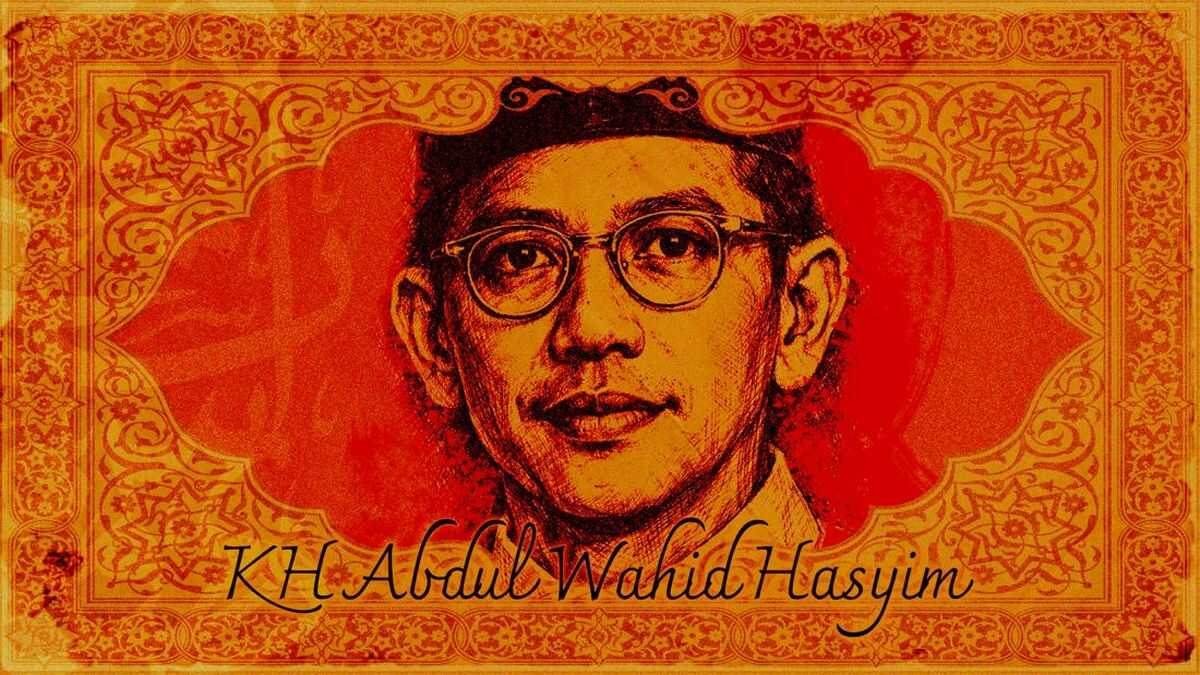
KH Abdul Wahid Hasyim, commonly known as Kiai Wahid, was one of Indonesia’s National Heroes who emerged from the ranks of Islamic scholars and clerics. Beyond his prominence in Islamic religious scholarship as the son of Nahdlatul Ulama (NU) founder Hadratussyaikh KH Hasyim Asy’ari, he played a significant role during Indonesia’s independence period. His eldest son, Abdurrahman Wahid (Gus Dur), also contributed substantially to Indonesia’s independence and post-reform era as General Chairman of PBNU, a leading reform figure, and Indonesia’s fourth President.
KH Abdul Wahid Hasyim was appointed a National Hero by Presidential Decree No. 206 of 1964, dated 28 April 1964. According to the Ministry of Religion website, Kiai Wahid had completed memorisation of the Qur’an at just seven years old. He also demonstrated proficiency in Latin script, Dutch, and English by age 15, despite having no formal colonial education.
KH Abdul Wahid Hasyim was born in Jombang, East Java, on 1 June 1914, into a prominent family. His father was Kiai Hasjim Asy’ari, founder of Tebuireng Islamic boarding school and NU, whilst his mother was Nyai Nafiqah, daughter of KH Ilyas, founder of Sewulan Pesantren in Madiun. Beyond studying Islamic knowledge at Pesantren Tebuireng, he also attended several other pesantren, including Lirboyo in Kediri, East Java.
In 1932, at eighteen years old, Kiai Wahid travelled to Mecca for the hajj pilgrimage and remained there until 1933 to deepen his knowledge of Islamic sciences, including Qur’anic exegesis, hadith, and jurisprudence. Upon returning from Mecca, he joined Pesantren Tebuireng as a teacher and implemented numerous improvements to the institution.
During Japanese occupation, all organisations were prohibited from operating, including NU. The only Islamic body permitted to function was the MIAI (Majlis Islam A’laa Indonesia/Supreme Council of Islam in Indonesia) under KH Wahid Hasyim’s leadership. This position placed him at the centre of Indonesia’s struggle against Japanese occupation, serving on the Chuo Sangi In. He subsequently participated in the BPUPKI (Investigative Body for Preparation of Indonesian Independence) and PPKI (Committee for the Preparation of Indonesian Independence).
Kiai Wahid was one of the Panitia Sembilan (Committee of Nine) who signed the Jakarta Charter, which formed the basis of the Preamble to the 1945 Indonesian Constitution and was the precursor to Pancasila.
After Indonesian independence, Kiai Wahid served as Minister of Religion in the Cabinet of the United States of Indonesia from 20 September 1949 to 6 September 1950, the Natsir Cabinet from 6 September 1950 to 27 April 1951, and the Sukiman-Suwiryo Cabinet from 27 April 1951 to 3 April 1952. The Sukiman-Suwiryo Cabinet marked his final term as Minister of Religion.
Throughout his tenure as Minister of Religion, Kiai Wahid introduced substantial reforms and innovations in his policies. One notable achievement was the establishment of Islamic Higher Education Institutions (PTAIN).
KH Abdul Wahid Hasyim died in a motor vehicle accident in Cimahi, Bandung, West Java, on 19 April 1953 whilst travelling to attend a Nahdlatul Ulama meeting in Sumedang, West Java, at the age of 39. Young Gus Dur, his son, was also in the vehicle. Gus Dur and the driver survived, but his father sustained grave injuries. As Gus Dur later recalled in his biography written by Greg Barton: “The driver and I managed to crawl out of the vehicle. My father suffered serious injuries, including a severe head wound and facial laceration. One side of his face and neck was torn and bruised.” The accident occurred around 1 p.m. local time, but emergency assistance did not arrive until approximately 4 p.m., during which time the young Gus Dur remained at the roadside watching over his incapacitated father.