
The Latent Dangers of "Geopolitical Shamans"
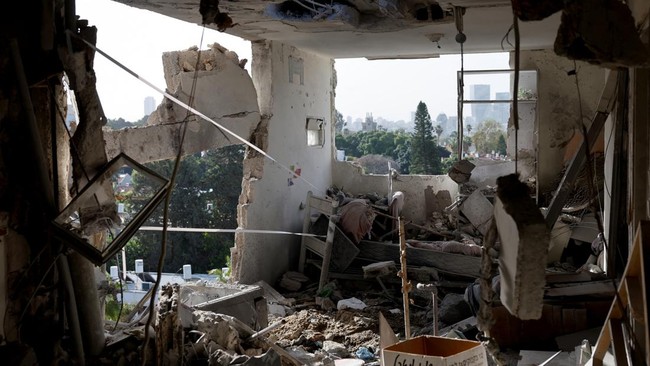
In today’s public discourse landscape, there is a dangerous tendency slowly eroding society’s critical reasoning: observers or analysts of Middle East issues are often positioned—or even position themselves—as a sort of “geopolitical shaman”.
They appear convincingly on various platforms, as if holding a crystal ball capable of foretelling the future of conflicts, determining war winners, and ensuring when global tensions will end. However, this perspective is not only epistemologically flawed but also damages the very foundation of thinking in International Relations (IR) studies.
First and foremost, it must be emphatically stated that Middle East regional studies form one of the frameworks of IR discipline based on scientific analysis, not mystical fortune-telling. An academic or analyst works by dissecting piles of historical data, unravelling tangled political variables, mapping economic dynamics, and reading complex social constructions.
When discussing bloody conflicts like those in Gaza or the hegemonic rivalry between Iran and Saudi Arabia, what is done is reading patterns and constructing probabilities, not guessing the future with certainty. The problem is that the public is often captive to a thirst for instant certainty.
In crisis situations—for instance, during terrifying armed escalations—a collective psychological urge emerges to seek quick answers: “Who will win?” or “Will World War III erupt tomorrow?” These questions are very human, yet they contain the erroneous assumption that there is a mathematical and singular answer in global affairs.
It is at this point that some observers slip. Instead of explaining historical complexity and overlapping interests, they simplify reality into loud-sounding predictive narratives that are actually speculative and empty. In fact, even state actors with the most advanced intelligence apparatus and unlimited espionage networks cannot predict the precise course of a conflict.
The outright failure of many Western think tanks in reading the eruption of the Arab Spring is clear evidence that geopolitics is not a space of certainty, but rather an arena of absolute uncertainty filled with unpredictable variables—from sudden regime changes, explosions of domestic pressures, to external intervention manoeuvres.
In a robust academic tradition, an analyst is required to build arguments based on methodology and tested theoretical frameworks, not mere bursts of intuition. When a future projection is made, it is conditional forecasting—projections tied to certain assumptions.
This is where the clear demarcation lies between an ethical observer and the “geopolitical shaman.” An analyst would say: “If embargo variables and domestic pressures persist, possibility X could occur.” In contrast, the “geopolitical shaman” rants: “X will definitely happen soon,” without revealing the logical basis of their analysis. One opens space for dialectics, while the other seals it tightly with false certainty.
Unfortunately, this geopolitical shamanism phenomenon is massively amplified by the social media ecosystem. Digital platform algorithms are designed to favour black-and-white, dramatic, and sensational statements over methodical and nuanced analyses.
As a result, pseudo-expert figures selling cheap “predictions” are often far more popular than genuine academics who dare to present uncertainty as part of scientific honesty. Herein lies the tragic paradox: those who simplify conflicts the most are seen as the most knowledgeable, while those who reveal complexity are accused of hesitation.
Reality Test: Prediction Failures in the Middle East
This inability to see complexity becomes particularly fatal when confronting the current reality of the Middle East region. Amid the clamour of geopolitical shamans busy foretelling the fate of countries, one fundamental phenomenon evades the public radar: today’s Middle East has radically transformed into a geopolitical flashpoint reshaping the world order.
What is happening is not merely a routine military cycle, but a fundamental shift from proxy war patterns to far more lethal asymmetric and conventional warfare.
For over two decades, conflict constellations were managed in the form of indirect wars. Iran played its role through networks of non-state actors (Axis of Resistance), while Israel relied on the doctrine of absolute military superiority and Western security umbrella. This fragile balance has now collapsed.
Direct military strikes between Iran and Israel involving barrages of hypersonic ballistic missiles and deadly drones show that the proxy war curtain has been torn. This is an overt confrontation between sovereign states.
Geopolitical shamans often fail to predict this escalation because they ignore the fact that classic rational calculations—where states are assumed to avoid open war due to its high costs—no longer fully apply. Ideological hatred, domestic political pressures, and the need to maintain deterrence instead drive these states to take irrational risks beyond limits.
Moreover, these instant forecasters are often trapped in religious romanticism narratives, thus failing to see the true reality of Islamic world’s fragmentation. Recent conflicts starkly reveal the iron law of geopolitics: pragmatic national interests will always stand above religious solidarity rhetoric.
Gulf monarchies find themselves in an ambiguous position; fiercely rejecting Iranian hegemony, but also not wanting open war that could destroy mega-projects.