
The Israel-US-Iran Conflict and the Challenge of Islamic Unity
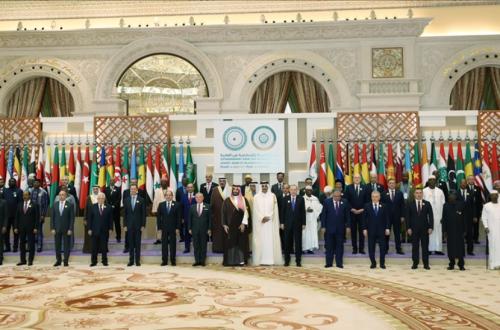
Geopolitical tensions in the Middle East have reached a critical juncture of concern. The escalating conflict involving the triangular power dynamics between Israel, the United States, and Iran is no longer merely a matter of diplomatic maneuvering but represents a tangible threat that risks igniting broader regional instability.
Amid missile strikes and increasingly heated military rhetoric, a fundamental question persists: what is the position of Islamic unity within this maelstrom?
The relationship between Israel and Iran has long been a flashpoint in the region. However, the active involvement of the United States as Israel’s principal supporter has added considerably greater complexity to the situation.
Retaliatory attacks, sabotage of nuclear facilities, and assassinations of key military figures are not merely matters of individual national security but manifestations of clashing ideological interests and hegemonic competition.
For Israel, Iran’s regional influence through proxy forces in Lebanon, Syria, and Yemen is viewed as an existential threat. For Iran, resistance against the “Little Satan” (Israel) and the “Great Satan” (the United States) forms part of the politico-religious doctrine it has pursued since the 1979 revolution. Yet behind this narrative of resistance, millions of Muslim civilians across the region bear the greatest cost.
Fragmentation of the Ummah: A Persistent Wound
The bitter reality is that the Islamic world remains fragmented. The question of Islamic unity is not merely a rhetorical slogan from pulpits but a formidable geopolitical challenge.
Differences in Islamic schools of thought, competing national economic interests, and the military dependence of several Muslim nations on Western support frequently obstruct the formation of a unified front.
We witness a phenomenon whereby Arab and Muslim nations are divided. On one side, some nations pursue pragmatism and normalisation of relations with Israel for economic stability and security against Iranian influence. On the other, some remain steadfast in confrontation and unwavering support for Palestinian independence as a non-negotiable principle.
Challenges Towards Consolidation
Building unity amid the flames of the Israel-US-Iran conflict requires far more than rhetoric. Several genuine challenges must be addressed:
First, increasingly acute sectarian sentiment. Adversaries of Islam frequently exploit Sunni-Shia divisions to sow discord. The Israel-Iran conflict is often artificially reframed in theological terms to fragment Muslim solidarity. This has created extreme polarisation at grassroots level, with intense debate emerging over whether Sunni Muslims should sympathise with Iran’s leadership.
At critical moments—such as the death of Iran’s supreme leader or key military figures—social media narratives have emerged dismissing such grief as “unnecessary sadness”. Some argue that sectarian ideological differences outweigh political solidarity against colonial oppression. This friction reveals how fragile the foundation of our unity truly is when internal animosity dominates over vigilance against genuine external threats.
Second, economic and military dependence. Many Muslim nations remain trapped in debt or reliance upon American military technology. This creates an extraordinary dilemma for Muslim leaders; they find it difficult to adopt firm positions opposed to Washington’s policies without jeopardising their own national economic stability.
Third, a crisis of authoritative leadership. The Islamic world yearns for a figure or institution capable of serving as an honest mediator and binding force of Islamic brotherhood without being driven by regional power ambitions. The absence of a unified voice renders the Organisation of Islamic Cooperation (OIC) often regarded merely as a “paper tiger”—capable of issuing resolutions but impotent in tangible field action.
The Urgency of Islamic Unity
Islam teaches that this ummah is “bunyan marshush”—a solid structure that mutually reinforces itself. In the context of this global conflict, Islamic unity should not mean uniting all nations under a single utopian political system but rather aligning strategic vision.
The Islamic world must be capable of placing the Palestinian issue and territorial sovereignty above narrow group interests or sectarian sentiment. Unity must be understood as independent economic cooperation, joint development of defence technology, and a single voice in diplomacy that cannot be dictated by external interests.
The conflict between Israel, America, and Iran must not become a pretext for further Islamic fragmentation through unproductive theological debate whilst ceasefire violations continue. Rather, this crisis should serve as a wake-up call.
If the Islamic ummah remains ensnared in internal conflict whilst external powers drain our resources and energy, history will record us merely as spectators upon our own land.
War is not merely about military victory. War is a test of ideological resilience and social cohesion.
The challenge of Islamic unity amidst Israel-US-Iran tensions represents a historical test that will determine whether we will rise as a balancing force in global affairs or continue to serve as pawns upon others’ chessboards. The time has come for Islamic brotherhood to transcend the boundaries of political maps and sectarian divisions for the wellbeing of all humanity.