
The Iran War and Indonesia's Energy Mitigation Needs
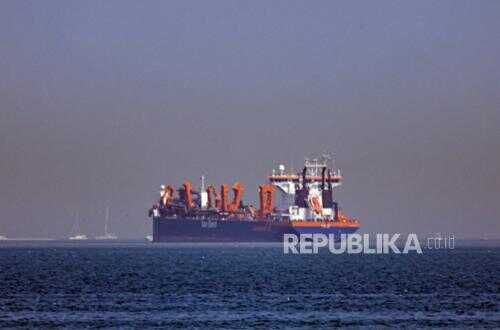
Disruption at the Strait of Hormuz is pushing the world toward a global energy crisis. About one-fifth of world oil trade, or around 18–20 million barrels per day, passes through this narrow strait. This makes the Strait of Hormuz the most important energy chokepoint in the global economic system (EIA, 2025). In an energy system that is highly integrated as it is today, disruption at a single narrow point in the Persian Gulf can quickly shake energy prices, inflation, and economic stability worldwide.
The war between the United States (US), Israel, and Iran must be understood in this risk context. Strategically, the conflict can unfold into three escalation scenarios: limited war, regional war, and global war. Academic literature on international security shows that wars often escalate gradually through escalation processes, especially when new actors are drawn in or when military objectives expand beyond initial targets.
The first scenario, limited war, is a limited conflict as seen currently. The war involves only Iran and its proxy network on one side and the US and Israel on the other. Military operations in this scenario are dominated by precision air strikes, the use of drones, and launches of ballistic missiles. This is logical given the geography; except between Israel and Hezbollah, one of Iran’s main proxies, there is no direct land border.
Iran possesses one of the largest missile arsenals in the Middle East. IISS (2025) estimates they had 2,000 to 3,000 ballistic missiles before the June 2025 conflict. In the 2025 War, Iran is reported to have launched more than 600 ballistic missiles and drones across several waves of attacks (IISS, 2025). With such intensity of use, Iran’s capacity to sustain large-scale attacks over the long term is relatively limited. Therefore, limited war is likely to last only a matter of weeks.
The second scenario is regional war. This scenario arises when the conflict expands with Gulf states involved. Iran’s relations with Gulf states have improved in recent years, but remain clouded by strong strategic rivalries. Attacks on energy facilities in Gulf countries can accelerate the war’s expansion. Currently, Iran has already carried out attacks on neighbouring states, albeit under the pretext of targeting US military bases in those states. However, some Gulf countries have voiced concerns because some attacks targeted civilian installations that do not correspond to US interests there.
In this scenario, global economic risk rises dramatically. The main energy routes from the Gulf region become vulnerable to military disruption. If the conflict escalates to this level, global energy markets would experience far larger shocks than the short-term price fluctuations seen in limited conflicts.
The third scenario is global war, which occurs when great powers are drawn in. Early indicators include increased European military presence in the Middle East, including the United Kingdom and France. Further escalation could occur if Russia or China decide to become directly involved, though the two countries have so far restrained themselves.
The key determinant of escalation is the deployment of ground troops into Iran. If the US and Israel decide to conduct a ground operation, the conflict is almost certain to become a prolonged asymmetric war. Literature on asymmetric warfare shows that direct military intervention against a country with a large militia mobilization capacity often yields wars that are long and costly politically and economically (Arreguín-Toft, 2005).
Beyond the military dynamics, this conflict has strategic significance because it surrounds two major chokepoints in the global economic system: the Strait of Hormuz and the Bab el-Mandeb Strait. The Strait of Hormuz is the main route for energy exports from the Gulf region. Nearly all energy exports from Saudi Arabia, Iraq, Kuwait, the UAE, Oman, and Bahrain to the global market, particularly Asia, depend on the strait’s stability. Therefore, the Strait of Hormuz is often described as the world’s most important oil chokepoint.
Meanwhile, the Bab el-Mandeb Strait has a different but no less important role. This strait connects the Red Sea with the Indian Ocean and provides access to the Suez Canal. This route is one of the main arteries of global trade linking Asia with Europe.
Disruptions in this region could force international ships to sail around the Cape of Good Hope in South Africa. IMF (2025) analysis of the Red Sea crisis following the October 7, 2023 attacks shows ships must add up to two weeks to travel time and substantially increase global logistics costs.
In a conflict involving Iran, both chokepoints could be disrupted simultaneously. Hormuz is vulnerable to direct military escalation between Iran and Gulf states, while Bab el-Mandeb is vulnerable to Iranian proxy activity, notably the Houthi groups in Yemen.
For Indonesia, the implications of this scenario are quite serious. Indonesia is a net oil importer and heavily dependent on the stability of global energy markets. Domestic oil production is only around 600,000 barrels per day, well below domestic needs (SKK Migas, 2025).
This vulnerability is further evident in Indonesia’s energy stockpile capacity. National fuel reserves would only last for about three weeks of consumption due to limited domestic storage facilities. This means that if regional conflict disrupts global oil supply for only a few weeks, Indonesia would langsu