
The Innate Nature that Sustains Fellow Humans
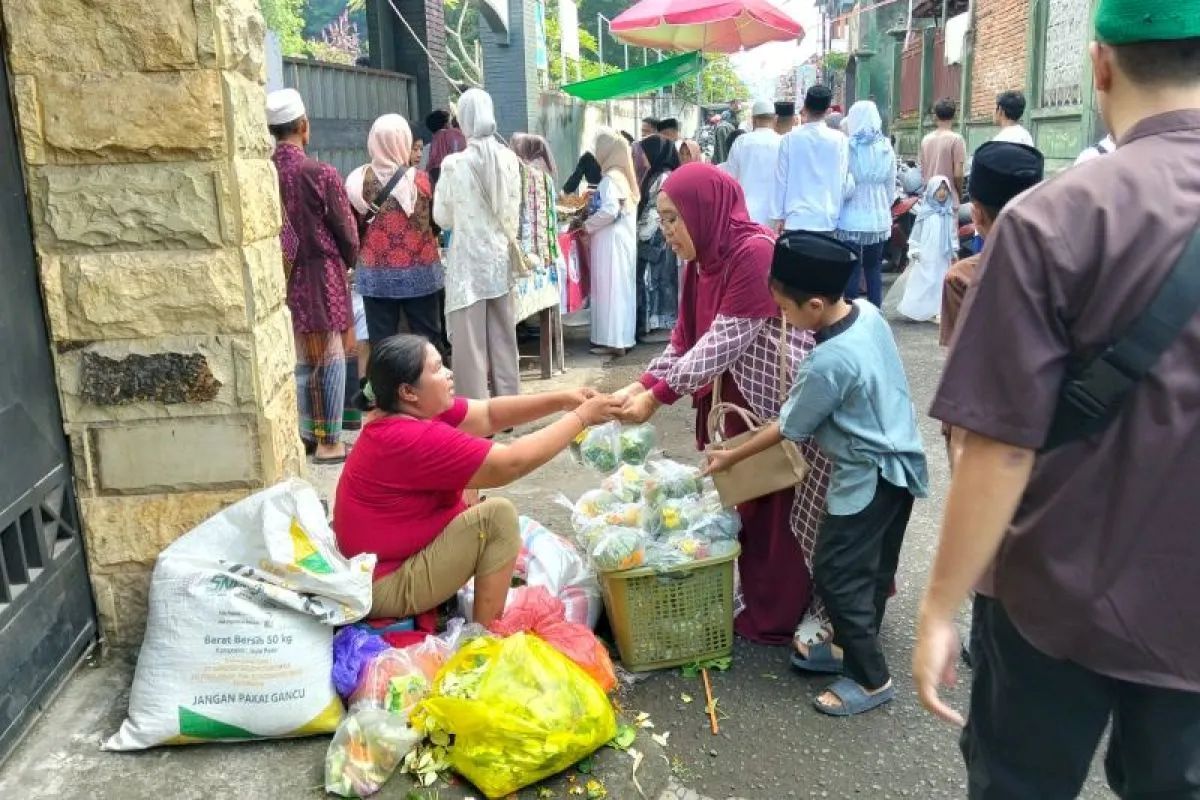
Mataram (ANTARA) - That morning, after the echoes of the takbir faded in the skies of Mataram, the flow of people did not immediately head home. Some proceeded to family homes, while others made their way to quieter places, public cemeteries. There, the tradition of grave visitation created a different atmosphere. Solemnity, prayers, and memories mingled in the slow steps of the visitors. Behind that serenity lay a small economic pulse that actually strengthened, bringing another dimension to Eid al-Fitr that is often overlooked. Eid in West Nusa Tenggara (NTB) is not merely a spiritual celebration. It is a space where religious values, social traditions, and grassroots economic dynamics intersect. At this point, the blessings of Eid al-Fitr find their most tangible form, not only in prayers and forgiveness, but also in the circulation of sustenance that supports many people. People’s Grave Visitation The tradition of visiting graves after Eid prayers has become a deeply rooted social practice in NTB. Thousands of residents flock to cemeteries to pray for deceased family members. This activity creates a seasonal economic ecosystem involving many layers of society. Floral offering vendors emerge as key players. During the Eid momentum in 2026, their turnover increases significantly. In just half a day, earnings can reach three to four times the usual amount. The price of one packet of floral offerings remains affordable as an adaptive strategy amid rising raw material costs due to weather factors and high demand. This phenomenon shows that grassroots economy possesses high flexibility. When material prices rise, vendors do not immediately hike selling prices drastically. Instead, they adjust the volume or contents of the product to remain accessible to buyers. This is a form of economic wisdom born from long experience surviving in the informal sector. Besides floral vendors, spontaneous support services also appear. The sale of clean water in reused bottles, for instance, becomes a practical solution for visitors who did not bring supplies from home. Such small things reflect the community’s ability to quickly read market needs. On the other hand, the profession of impromptu parking attendants also sees a surge in demand. At several cemetery points in Central Lombok, daily earnings for parking attendants can exceed Rp100,000, a meaningful figure for informal workers. This activity is indeed temporary, but it provides additional economic cushion for families. Thus, Eid creates an interesting multiplier economic effect. It opens space for micro-economy to move, even in a very short time. Behind it all, a question arises: to what extent can this potential be managed more systematically so that its benefits are not merely fleeting? Social Innate Nature The blessings of Eid al-Fitr in NTB are not only reflected in economic activities but also in strengthening social values. Eid prayers held in open fields and mosques become symbols of equality. Thousands stand in one row, without social status barriers, reaffirming the essence of human innate nature. This momentum then continues in the practice of mutual forgiveness. Traditions of halal bihalal, family visits, and community gatherings become spaces for social reconciliation. In the context of NTB’s diverse society, this moment holds important meaning in maintaining harmony. Further, solidarity values are also evident in state policies. The granting of remission to thousands of inmates in various correctional institutions in NTB becomes a symbol that Eid al-Fitr is a moment for second chances. More than a thousand prisoners receive sentence reductions, with some even immediately released and returning to their families.