
The Indo-Pacific and the Return of Submarine Politics
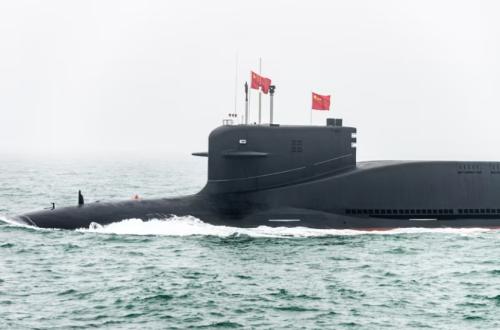
When discussing the rivalry between the United States and China in the Indo-Pacific, public attention usually focuses on aircraft carriers, trade wars, Taiwan, or diplomatic influence struggles. However, beneath the ocean’s surface, a far quieter competition is underway: the submarine race.
In recent years, submarines have once again become one of the most important instruments in global power balancing. An article in The Economist’s 9 May 2026 edition on the US-China submarine rivalry indicates that the deep sea has returned as a primary strategic arena, given that submarines remain one of the most difficult-to-detect military platforms in the modern era.
This is important because modern warfare is becoming increasingly transparent. Satellites, drones, radar, sensors, and artificial intelligence make military movements on land, sea, and air easier to monitor. In such a situation, the ability to “disappear” becomes highly valuable. This is where submarines regain their relevance.
The United States still holds a significant advantage in undersea warfare. The US nuclear submarine fleet, particularly the Virginia and Los Angeles classes, is considered quieter, more experienced, and possesses long-range operational capabilities that China has not yet fully matched.
The Virginia-class submarines, for example, are designed for multiple missions: hunting enemy submarines, attacking land targets with Tomahawk missiles, gathering intelligence, and supporting special forces operations. Their level of quietness makes these vessels extremely difficult to detect.
Meanwhile, the older Los Angeles-class submarines remain a crucial backbone of the American undersea fleet. Although some are ageing, these vessels have extensive operational experience since the end of the Cold War and are still regarded as highly lethal in undersea warfare. Guam itself serves as one of the key centres for US undersea operations in the Indo-Pacific.
In various Taiwan conflict simulations, US submarines are estimated to play a central role. Submarines can attack enemy naval fleets, blockade supply routes, launch long-range missiles, gather intelligence, and insert special forces. In fact, many analysts believe that submarines may be more decisive than aircraft carriers in the early phases of a major Pacific conflict.
However, this advantage does not put Washington at ease. China continues to accelerate the modernisation of its navy, including its submarine fleet and anti-submarine warfare capabilities. Beijing appears to understand that as long as the United States remains dominant underwater, China’s ability to control the areas around Taiwan and the South China Sea will always face significant obstacles.
The undersea power map of the Indo-Pacific is also becoming increasingly complex. The United States indeed still leads in global submarine operational capabilities, but China is rapidly expanding and modernising its fleet, including nuclear and diesel-electric submarines that are becoming quieter.
Beyond the US and China, Russia remains an important undersea power, particularly through its Pacific fleet based in Vladivostok. Although the Ukraine war is draining many of Russia’s resources, Moscow’s nuclear submarine capabilities continue to be a strategic factor that Washington takes into account.
Meanwhile, other Indo-Pacific countries are also strengthening their undersea capabilities. Japan possesses one of the world’s most advanced conventional submarine fleets. Australia, through AUKUS, is heading towards a nuclear-powered submarine era. India continues to develop its undersea fleet to counter China in the Indian Ocean. Even Southeast Asian countries like Indonesia, Singapore, and Vietnam are enhancing their submarine capabilities, albeit on a more limited scale.
Therefore, undersea rivalry has now become an important part of the broader US-China strategic competition. The rivalry is no longer just about trade or tariffs, but also about semiconductors, artificial intelligence, rare earths, outer space, and mastery of the deep sea.
Interestingly, the return of submarine politics also illustrates how the Indo-Pacific is increasingly resembling an arena of great power competition like during the Cold War era. The difference is that whereas the main focus was once on the Atlantic between the United States and the Soviet Union, the world’s geopolitical centre of gravity has now shifted to the Indo-Pacific.
The AUKUS agreement between the United States, the United Kingdom, and Australia also demonstrates the importance of this undersea dimension. Australia is even willing to invest enormous funds to acquire nuclear-powered submarines, something that might have been unimaginable a few years ago. This move shows that US allies are increasingly viewing undersea deterrence as a key part of their strategy to counter China.
For Indonesia, these developments need to be monitored seriously. Indonesia is not directly part of the US-China rivalry, but its geographical position is highly strategic. Indonesia’s sea lanes are one of the key connectors between the Pacific and Indian Oceans. In the context of undersea competition, Indonesia’s waters hold far greater strategic significance than is often realised by the public.
Therefore, Indonesia’s challenge is not merely to maintain diplomatic neutrality, but also to understand the changing strategic environment around it. Submarine rivalry is not a distant issue relevant only to Washington or Beijing. It is part of a major shift in Indo-Pacific geopolitics that will directly or indirectly affect Southeast Asia.
In the end, submarines are compelling not only because of their technology, but also because of their symbolism. They operate in silence, rarely seen by the public, but can significantly alter strategic balances. In many ways, the undersea riva