
The Importance of Verification Culture Amid Rising Misinformation
Jakarta (ANTARA) – Never before in human history has information moved as swiftly as it does today. Within seconds, a single post can spread across platforms, be read by millions, and shape public opinion before full facts are available.
Digital technology advances have broadened access to knowledge, but simultaneously introduced new challenges as the lines between fact, opinion, assumption, and speculation become increasingly blurred.
This has left society living in a paradox: information is abundant, yet comprehensive understanding is often harder to attain.
Many believe they understand an issue simply from reading snippets on social media, without grasping the full context.
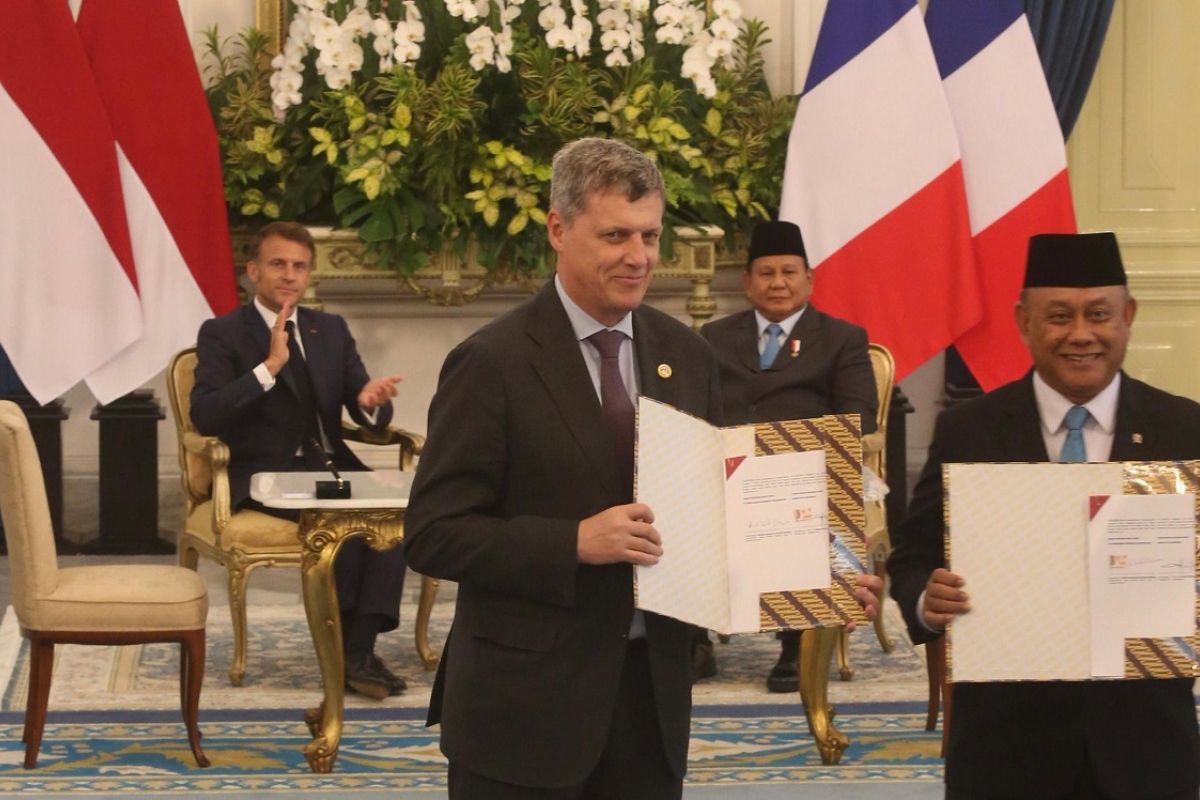
The phenomenon was evident recently in debates over a collaboration between the National Nutrition Agency (BGN) and PT Sarihusada Generasi Mahardhika, a Danone subsidiary, signed in May 2025. The agreement, witnessed by President Prabowo and French President Emmanuel Macron, focused on anaemia screening and nutritional education.
However, social media soon filled with speculation—from claims of infant formula supply contracts to allegations of business interests in the Free Nutritious Meals Programme (MBG).
Within a short time, digital spaces were flooded with interpretations far exceeding the actual scope of the collaboration.
Yet BGN Chief Dadan Hindayana clarified the partnership’s scope was limited to iron screening for iron deficiency anaemia risk monitoring, baseline anaemia risk mapping, and nutritional education along with clean and healthy living behaviour (PHBS).
The MBG programme, operational since January 2025, does not include infant formula products, including those from the French company, in its beneficiaries’ menus.
Regardless of the spreading narratives, this case illustrates how information can drastically expand in meaning when circulated online without proper context.
What occurred here is not an isolated incident. Over recent years, public issues spanning health, food, education, environment, and economics have repeatedly faced similar patterns.
An initial piece of information emerges, is reinterpreted, reinforced by unrelated fragments, then evolves into collective belief before verification is complete.
In the social media era, perception often outpaces verification. Once a narrative spreads, clarifications must work much harder to catch up with entrenched public beliefs.
Facts frequently arrive too late, after opinions have solidified and gained legitimacy through repeated sharing.