
The Importance of Resisting American Unilateralism
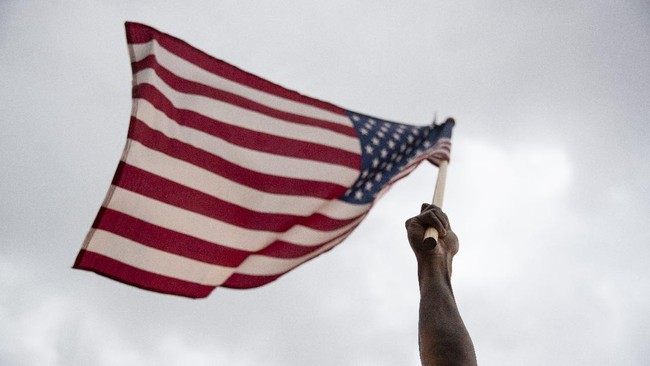
Since the end of the Cold War and the emergence of the United States (US) as the world’s sole superpower, various military operations have been launched alongside its allies. These events range from their invasions of Iraq and Afghanistan, the kidnapping of Venezuela’s president, to the recent aerial aggression against Iran.
These operations blatantly demonstrate not only the disregard for other nations’ sovereignty but also the US’s neglect of international law. The US positions itself as the embodiment of legal authority, where global rules are meant to discipline other countries while it remains immune.
This unilateral approach to punishing other nations cannot be denied as stemming from the indulgence of its arrogance, which has become internalised and manifested as a characteristic of its political policies. As a superpower, the US views itself—and is viewed—as the benchmark for progress and truth in every decision it makes.
There has been scant resistance to US foreign policies in the past. Even when it occurred, it was limited. This perception has gradually fostered a complacency that allows them to act freely in line with their interests, hiding behind the pretext of universal human rights (HR). Human rights are often weaponised to punish countries opposing their interests.
Unfortunately, the US’s self-perception as the world’s moral police seems poised to continue haunting and setting a dangerous precedent for global order if left unchecked. National sovereignty will be increasingly ignored, and international law will become a worthless ornament.
In truth, global order cannot be entrusted solely to one actor claiming unilateral exemption from all rules and constraints. To achieve a harmonious and peaceful world, the global order must be managed collectively in a fair multipolar framework, giving equal voice to both great and small nations.
Injustice and selective application of international law are the primary sources of post-Cold War global catastrophes. How can international law remain silent when the US openly displays its violations: assassinating foreign political elites, killing civilians from other nations, conducting kidnappings, invasions, embargoes, and partisan biases in various international political positions.
Such behaviours reflect the US’s unilateralism evident in its foreign policy attitudes and positions, resulting from continuous indulgence of its violations and lack of objectivity. Naturally, such indulgence cannot be sustained indefinitely.
Nations around the world must take a firm stance, demonstrating resistance to the blatant and deliberate arbitrariness on display. It is clear that the various violations shown by the US cannot be accepted under any rational pretext.
Killing millions of innocent people through various unclear war pretexts is an insult to the respect for human rights that the US itself often touts. Human lives are treated as mere playthings, to be taken and destroyed at will and whim. In such conditions, it is no wonder that unilateral global rules and order no longer hold meaning.
When law is no longer respected, when arrogance guides foreign policy, and when superpower status is seen as absolute authority to determine right and wrong, the world we inhabit no longer provides safety and comfort for its inhabitants.
Fear and anxiety in living have now multiplied. The problem is that coexisting with such reckless and arrogant power is a deeply worrying disaster. It is as if we are merely awaiting our turn to be annihilated.
Assassinating legitimate heads of government in other countries, engineering regime changes, kidnapping them, and attempting to uniformise the world through one form of government deemed ideal by unilateral perception [liberal democracy] represent the most illogical and irrational aspects of US foreign policy throughout decades of unilateralism.
The US cannot arbitrarily engineer social changes, whether through aggression or infiltration of other countries’ adopted governance systems. The world is a vast arena. Billions of people with diverse characters live within it. In this context, it is certainly unwise for any single party, whoever it may be, to monopolise lives through the coercion of its power.
Amid the vast expanse of planet Earth, its cultures are immensely diverse, lifestyles differ from one another, and histories vary. In such a world, it would be utterly foolish for the US to believe that uniformising everything will lead us to eternal peace.
As Mearsheimer rightly said, if the US respects and values human rights in its domestic life, is it so difficult to do the same: respecting differences and beliefs in the broader arena of varying political and cultural systems on a global scale.
There is no guarantee that applying the same governance system [liberal democracy], imposing similar social, economic, and political values, and encouraging people in other parts of the world to adopt a Western lifestyle will make the world more peaceful.
All of this is merely an illusion persistently maintained by many US elites. Uniformity does not equate to peace. Thus, it is no surprise, whoever the president