
The Hormuz Strait Crisis and Indonesia's Energy Resilience Test
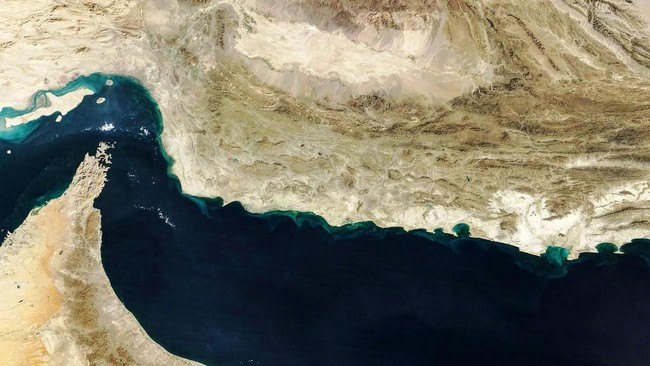
Disruptions in the Hormuz Strait once again underscore a fundamental truth: the global energy system is far more fragile than previously assumed. This route carries around 25% of the world’s oil. When disrupted, the impacts are immediate—energy prices rise, inflation is driven up, and economic pressures ripple across countries, including Indonesia.
Recent developments indicate that these pressures are no longer hypothetical. Global oil prices are now holding above USD 100 per barrel, with Brent in the range of USD 111-115 and WTI around USD 100 (oilprice.com, 31/03/2026).
This rise reflects a combination of supply disruptions, surging tanker insurance costs, and heightened geopolitical risk premiums. In other words, current oil prices do not merely reflect supply conditions but also the level of global uncertainty.
For Indonesia, however, the issue extends beyond external factors. The crisis reveals internal vulnerabilities that have long been masked by superficial stability. Fluctuations in energy prices have often been viewed as consequences of global dynamics.
This approach is not incorrect but becomes inadequate without accompanying structural improvements. As noted by the International Energy Agency (2024), global energy volatility will become more frequent amid rising geopolitical tensions and an energy transition that is not yet fully stable.
In this context, the Hormuz Strait is better understood as a trigger that accelerates pressure on an already vulnerable economic structure, particularly due to high dependence on energy imports. One of the most sensitive points in this structure is energy subsidy policy.
In stable conditions, subsidies serve as a buffer for purchasing power and an inflation controller. But when oil prices exceed USD 100 per barrel, the fiscal burden rises sharply, and policy room becomes increasingly limited.
Oil Price Increases as Triggers for Economic Pressure
The following table illustrates that every oil price increase does not have a singular impact but creates layered pressures on inflation, the state budget (APBN), and energy prices directly felt by the public.
The table confirms that oil price rises always create simultaneous pressures: on inflation, on the national fiscal position, and on energy prices directly affecting society. In the USD 100-110 per barrel range, the additional subsidy burden can exceed Rp 100 trillion, while inflationary pressures and fuel prices begin to feel significant.
World Bank findings indicate that developing countries with high energy subsidies tend to be more vulnerable to external shocks due to limited fiscal flexibility (World Bank, 2023). In this situation, budget space narrows further, while the need for productive spending continues to rise.
The impact of rising energy prices also extends to various economic sectors. Distribution costs increase, food prices are pushed up, and public purchasing power comes under pressure. The middle class, which has long supported domestic consumption, is among the most affected.
On the other hand, monetary policy has limitations in responding to structural pressures. As noted by the International Monetary Fund, energy shocks often trigger secondary effects that can deepen inflation and suppress economic growth (IMF, 2024).
This situation demonstrates that energy crises affect not only macroeconomic indicators but also the confidence of economic actors. Businesses tend to hold back on expansion, investors become more cautious, and households adjust consumption patterns.
The graph above reinforces that oil price increases trigger three pressure curves simultaneously: inflation, subsidies, and fuel prices. Rising energy costs quickly spread to transportation and food sectors, while the subsidy burden rises significantly at USD 100-110 per barrel levels. At the same time, fuel prices are technically and directly driven up, affecting households.
Thus, a single global shock simultaneously transforms into inflationary pressure, fiscal pressure, and pressure on public welfare. Consequently, energy crises impact not just macro figures but overall economic confidence.
If traced further, this pattern is not new. Each crisis provides lessons, but they are not always followed by adequate changes. As a result, the same vulnerabilities recur in every subsequent crisis cycle (Simatupang, 2026).
Conclusion
Our real problem is not the rising oil price. That is merely a symptom. The true issue is how every increase always turns into major pressure, as if we are never prepared.
We understand that global energy prices are volatile, that subsidies burden the fiscal position, and that import dependence is a risk. However, policy adjustments continue to be delayed. Every delay incurs costs—not small or short-term ones, but costs that emerge in the form of inflation, fiscal pressure, and simultaneous declines in purchasing power.
The Hormuz Strait does not create new problems. It merely accelerates the emergence of unresolved issues. As emphasised in Simatupang (CNBC Indonesia, 26/03/2026), our biggest problem is not the incoming crises but the reluctance to change before they occur.
If this pattern persists, the question is no longer whether the next crisis will come, but how much greater the cost we must pay simply because we choose to remain the same.