
The Future of Education After Davos
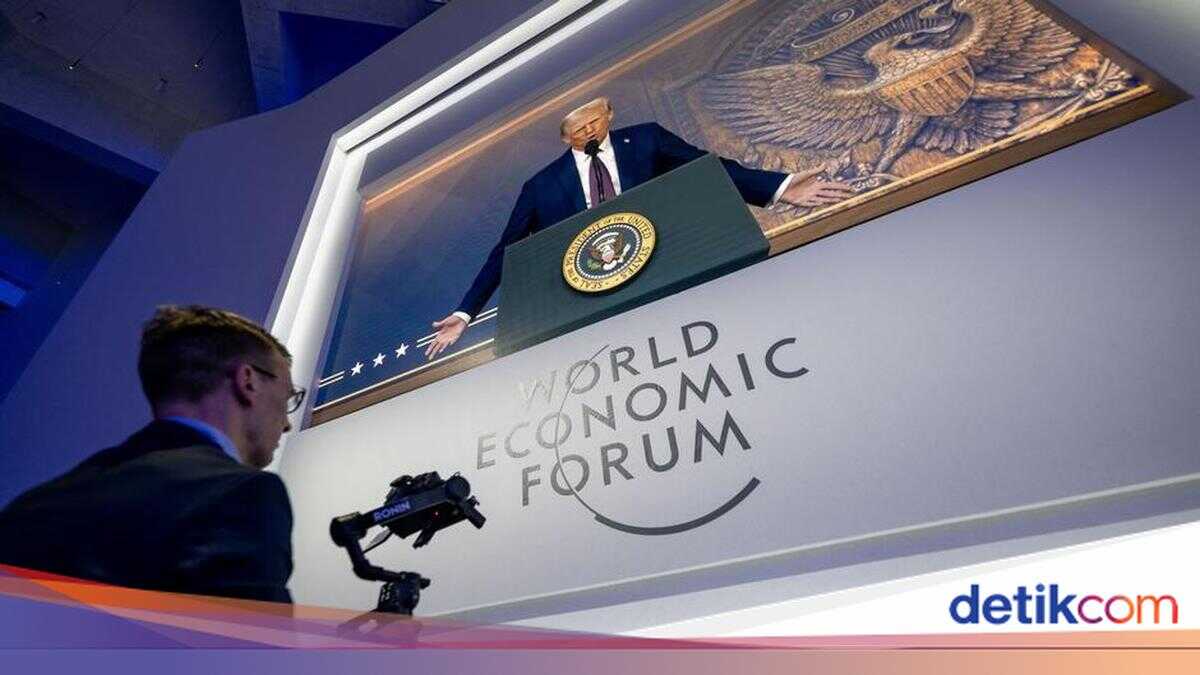
The 2026 World Economic Forum (WEF) meeting in Davos once again reflected the paradox of our times. On one hand, the gathering of some 3,000 leaders across nations and sectors brought optimism about technological leaps that hold promise for the future, particularly artificial intelligence (AI).
On the other hand, global anxieties have grown with the phenomenon of job uncertainty, geopolitical tensions, the climate crisis, and the erosion of trust between nations. Amid the euphoria of innovation, one fundamental question lingers: is our education system ready to face change of this magnitude?
From various forums in Davos, an important awareness emerged — that the future is not solely determined by technological sophistication, but by the quality of human resources navigating it. Education is not merely a matter of curricula or short-term employment absorption, but the foundation of civilisation amid global uncertainty.
The challenge is not only to produce skilled workers, but to form well-rounded human beings capable of thinking clearly, acting ethically, and standing firm to uphold national dignity amid the whirlpool of global change.
It is at this juncture that academic and vocational education must advance together, mutually reinforcing the depth of reasoning and the agility of practice, in order to produce individuals who are professional, productive, and champions on the global stage.
Policy Paradoxes
The first paradox becomes apparent when education is hailed as the key to the future, yet has not truly become a budgetary policy priority. It is proclaimed loudly in speeches, but falls silent in fiscal decisions. Education is described as a strategic investment, yet is often sidelined by short-term needs that are more political and yield more immediately visible results.
The second paradox emerges when the state moves swiftly to provide free meals for the stomach, yet is slow to strengthen free education for the future. Meeting nutritional needs is indeed important, but nourishing the intellect is equally urgent. Without expanding access and improving the quality of education, efforts to break the cycle of poverty will be lopsided. Addressing symptoms without strengthening the root of the problem merely postpones it to the next generation.
The third paradox is visible in plans to build 10 new universities, as announced at Davos, whilst many existing higher education institutions face excess capacity, declining student numbers, and deteriorating quality. Indonesia already has more than 4,000 higher education institutions.
Under such conditions, the push to add institutions risks overshadowing the agenda of consolidation and quality improvement. Quantity again takes precedence over quality, even though national competitiveness rests on the depth of knowledge, not merely the number of campuses.
The fourth paradox occurs when universities are expected to produce impactful research and social solutions, yet the supporting ecosystem remains inadequate. Limited funding, administrative burdens, and weak downstream innovation mean that higher education institutions are asked to sprint on an uneven track. Research is expected to be the locomotive of transformation, yet its fuel is often in short supply.
The fifth paradox surfaces when AI is promoted as the face of the future, whilst digital literacy and curriculum readiness remain uneven. Without a strong and equitable educational foundation, AI risks widening inequality rather than bridging it. Technology that should liberate may instead create new groups left behind.
National Sovereignty
These five paradoxes demonstrate that the main issue is not a lack of global discourse, but rather the disconnect between narrative and the courage of domestic policy. Technology may advance rapidly, but the direction of civilisation still rests on the quality of human resources. Education must cultivate systemic reasoning — the ability to understand interconnections between sectors, the long-term impact of innovation, and the ethical dimensions that accompany it.
For Indonesia, education is the primary space for building sovereignty. In a fragmented era, sovereignty is no longer merely about territory and resources, but about the clarity of collective reasoning and the strength of knowledge institutions.
Universities cannot merely serve as factories for the workforce; they must become centres of relevant ideas. It is there that critical and principled academic individuals are forged, innovative and transformative creators are shaped, and devoted public servants committed to delivering public welfare are formed.
Ultimately, the future of Indonesian education must be rooted in the values of Pancasila. Technological progress must be grounded in Faith in God, uphold Humanity, strengthen Unity, be guided by the wisdom of deliberation, and culminate in Social Justice. It is from the campus that these values are nurtured, internalised, and actualised through the tridharma of higher education.
Davos provides a global mirror, but the direction of our steps remains ours to determine. Education that is sovereign, equitable, and rooted in national values is a prerequisite for Indonesia to be not merely a market for technology, but a nation capable of directing technology for the benefit of humanity and the nation.
Machsus is Vice Rector II of Institut Teknologi Sepuluh Nopember (ITS).