
The First Animals on Earth Were Sea Sponges, MIT Researchers Present Evidence
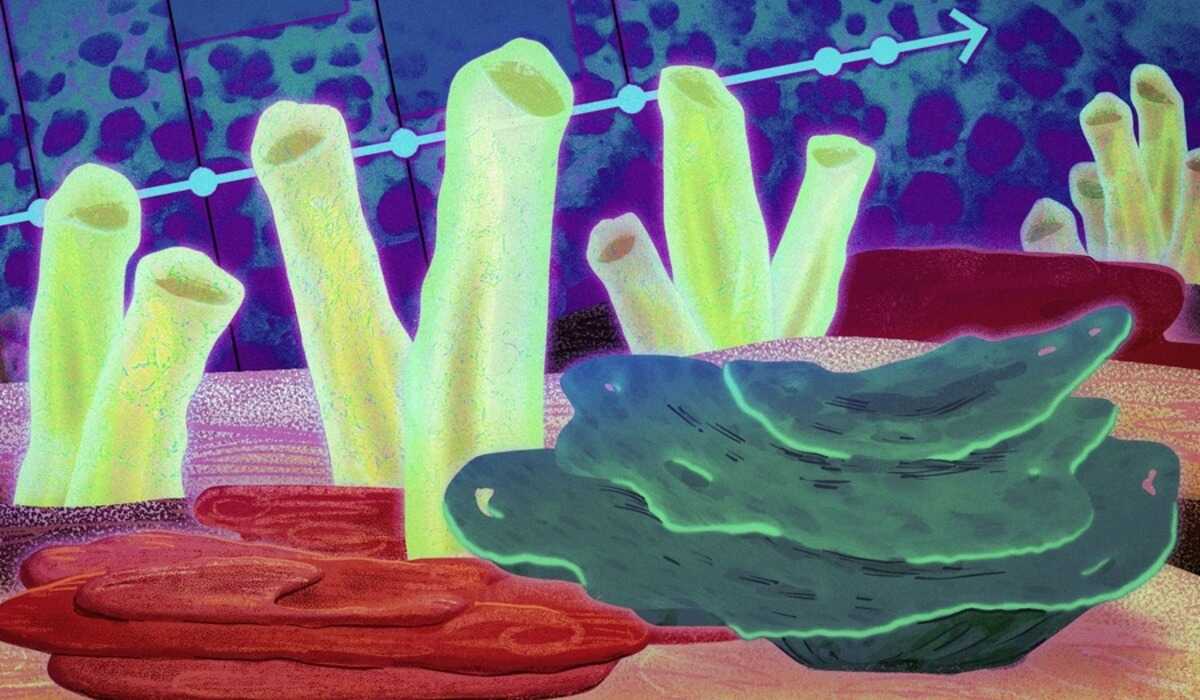
The puzzle surrounding the identity of the first animal on Earth has finally been solved. A team of geochemistry researchers at the Massachusetts Institute of Technology (MIT) has found strong evidence that the ancestors of modern sea sponges were pioneers of multicellular life in ancient oceans.
The study, led by MIT Emeritus Professor of Geobiology Roger Summons, together with researcher Lubna Shawar, revealed the presence of ‘chemical fossils’ in ancient rocks more than 541 million years old. The finding offers a new perspective that animal evolution began far earlier than previously estimated.
Unlike dinosaur fossils, which are bones, the first animals had very soft bodies leaving no clear physical traces. Instead, they left ‘molecular footprints’ known as chemical fossils.
The MIT team identified compounds called steranes, stable forms of sterols (such as cholesterol) found in membranes of complex organisms. These steranes were abundant in rocks from the Ediacaran Period (approximately 541-635 million years ago) collected from Oman, India, and Siberia.
Researchers found that sea sponges of the class Demospongiae possess a unique genetic capacity to produce a sterol with 31 carbon atoms (C31). In comparison, the rarity of the C31 molecule acts as a biological fingerprint, ensuring the compound in ancient rocks derives from living organisms rather than incidental geological processes.
Roger Summons explained that although we do not know precisely what the organism looked like, they certainly lived in the oceans and had very simple bodies. “They must have been soft-bodied, and we suspect they did not yet possess silica skeletons (spicules) as modern sponges do,” Summons said.
This explains why paleontologists rarely find intact sponge fossils from the pre-Cambrian era. Without hard body parts, the fatty molecules in cell membranes are the only evidence preserved for hundreds of millions of years.
To ensure the accuracy of the findings, the team used a three-pronged approach. The results showed that only two compounds precisely matched the C31 sterane found in the ancient rocks, all pointing to a lineage of sea sponges.
The findings prove that sea sponges existed on Earth at least 60 million years before the emergence of other major animal groups. Their presence in ancient oceans likely played a crucial role in altering ocean chemistry, making it richer in oxygen and more habitable for more complex life in the future.
Currently, the researchers plan to widen the search for chemical fossils in other regions to tighten the timeline of when exactly these first animals formed and how they endured past extreme climate changes.
(MIT News / Proceedings of the National Academy of Sciences (PNAS) / H-3)
The research was partly funded by the MIT Crosby Fund, the Distinguished Postdoctoral Fellowship Program, the Simons Foundation Collaboration on the Origins of Life, and NASA’s Exobiology Program.