
The Fed's New Boss Faces a Heavy Burden: Taming Blazing Inflation
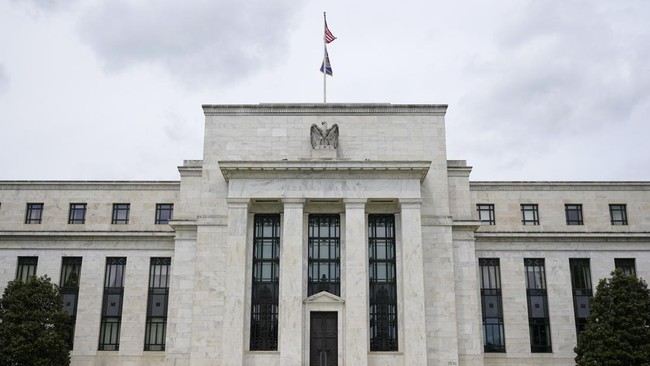
Becoming the Governor of the United States’ central bank, the Federal Reserve (the Fed), is generally regarded as one of the most crucial economic positions in the world. However, carrying out this role under the current dynamics of Washington politics presents far more complex challenges. Jerome Powell, the current Fed Governor, frequently faces intense pressure regarding the direction of his monetary policy. On the other hand, Kevin Warsh, who has been nominated to succeed Powell, is now confronted with a macroeconomic reality that makes it increasingly difficult to realise his plans for policy easing in the near term.
Fading Expectations for Interest Rate Cuts
At the beginning of this year, when Kevin Warsh’s nomination was announced, market participants still held a fairly strong consensus on the direction of monetary policy. There was widespread expectation that the Fed would implement at least one to two benchmark interest rate cuts before the end of 2026. This scenario was anticipated to bring the current interest rate level, which is held at 3.5-3.75%, to a gentler trajectory, though it might not yet reach the aggressive targets often voiced by executive leadership. However, as time has passed, the narrative of monetary easing has faded significantly. Drastic changes in the global macroeconomic conditions have led most market participants to no longer project any interest rate reductions this year. This shift in probability is particularly striking when observing market expectation data that continuously adjusts to the latest realities.
Energy Price Shocks and Geopolitical Impacts
The primary catalyst for this change in expectation direction is the escalation of geopolitical tensions in the Middle East, which has directly triggered a sharp surge in global crude oil prices. Based on official data released in the middle of this month, the US headline inflation rate was recorded to have risen to 3.3% year-on-year in March. This figure represents a fairly burdensome jump compared to the 2.4% inflation rate recorded in the previous month. Although there are currently tentative ceasefire efforts in the Gulf region, oil prices remain at high levels, around US$100 per barrel. This price level is a third higher than the period before the conflict heated up at the end of February. Historically, energy price shocks like this tend to spread and affect the price structure broadly across the entire economic system. Given that energy is a basic cost component for nearly all sectors, responding to this situation with monetary policy easing would be a highly risky move for the central bank.
Inflation Resilience in the Services Sector
The complexity of the Fed’s task does not only come from external factors but also from domestic conditions. Pressure on price stability in the United States has actually shown signs of deterioration even before geopolitical tensions intensified. Import tariff policies have indeed impacted rising goods prices, but the deeper structural challenge lies in services sector inflation. Inflation in the services sector is often considered a more accurate indicator for measuring how hot the economic engine is running, due to its stable and representative nature of domestic demand. Currently, the rate of decline in services sector inflation appears to have stalled. Excluding the housing component, prices for essential services—from haircuts and vehicle rentals to mobile telecommunications package rates—are rising faster than their historical averages. In the 2010s decade, when the inflation rate consistently hovered around the Fed’s 2% target, services prices did not show pressures as strong as they are now. Although the difference in the increases is not massively large, this serves as a strong signal that inflationary pressures have not been fully extracted from the US economy. This situation makes any additional monetary stimulus lose its rational foundation.
Clash of Views on the Impact of Artificial Intelligence
This inflation data reality delivers an empirical blow to Kevin Warsh’s plans for interest rate cuts. In addition, another challenge emerges from a theoretical perspective. Previously, Warsh built an argument that the productivity surge generated by AI developments could justify sharp interest rate reductions. However, this postulate is viewed as weak by several internal Fed circles. If AI indeed proves to make US workers far more productive in the near term, the theoretically appropriate monetary response would actually be to maintain or even raise interest rates. This is because the neutral interest rate—which neither stimulates nor restrains the economy—tends to move in line with the underlying potential economic growth. Moreover, the most tangible economic impact from the current AI boom is the wave of billions-of-dollars capital investments for building data centre infrastructure. This large-scale capital injection essentially stimulates economic activity, which in principle contradicts the urgency of interest rate cuts. This view is openly supported by several senior Fed officials. Fed Vice Governor Philip Jefferson stated that AI developments could potentially drive inflation in the short term and increase the neutral interest rate in the long term. Similar statements were made by Governor Michael Barr. Jerome Powell himself emphasised that the AI phenomenon cannot be used as an instant consideration for cutting interest rates. With this series of multidimensional factors, the Fed’s leader will face a heavy analytical task in navigating monetary expectations.