
The Fed Expected to Hold Interest Rates, Stagflation Risks Emerge
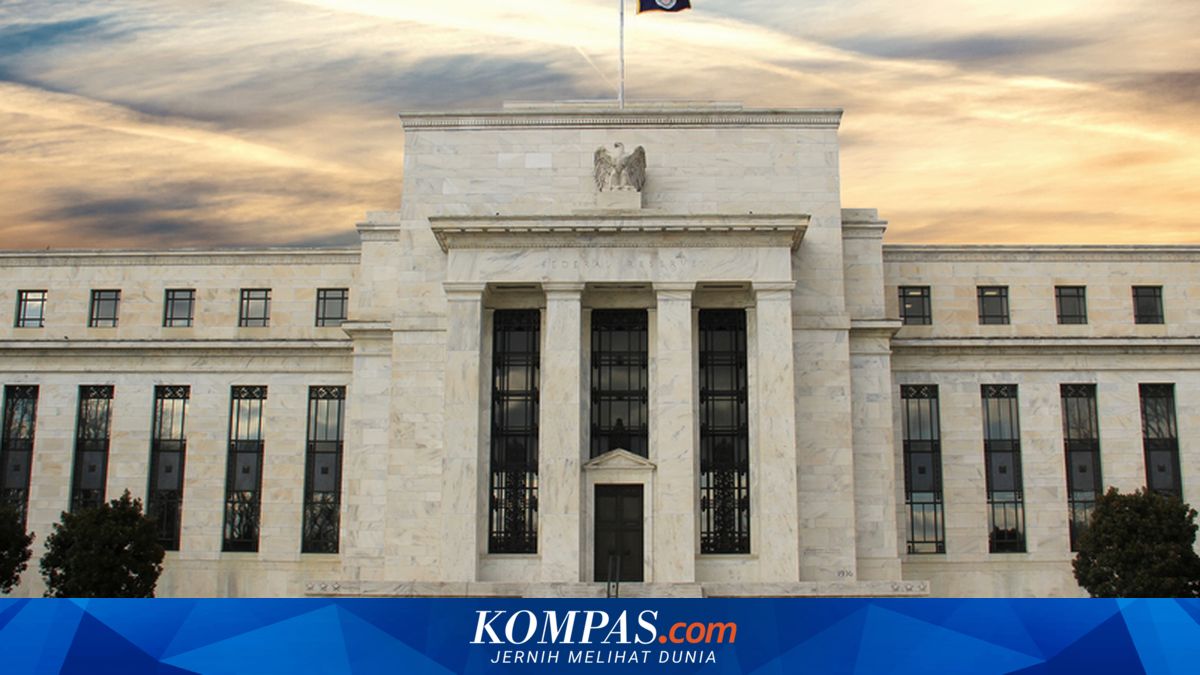
KOMPAS.com — The United States Federal Reserve, or central bank, is expected to hold interest rates steady during its meeting on Wednesday local time.
Market attention is focused on the forward direction of policy amid the impacts of the United States and Israel war against Iran.
The meeting is taking place less than three weeks since the conflict began. High uncertainty makes economic projections, inflation, and monetary policy difficult to ascertain.
Economists assess that the war’s impact depends on the conflict’s duration, the political direction in Iran, and oil price movements.
Oil prices above $100 US per barrel, or approximately Rp 1.69 million, have the potential to increase inflationary pressures. Prices below $80 US, or approximately Rp 1.35 million, are seen as having more limited impacts.
These figures are more than 25 percent higher compared to before the war, according to data from the American Automobile Association (AAA).
The impacts also extend to other sectors. Airlines are beginning to warn of fare increases due to rising jet fuel costs.
The United States government is also seeking alternative fertiliser sources to maintain domestic supplies.
Such conditions risk pressuring household consumption. The public may hold back on spending or reduce expenditures.
Pressure is also felt by the United States’ trading partners in Europe. The region faces risks of higher inflation.
The central bank will release the interest rate decision, policy statement, and latest economic projections after the two-day meeting.
Fed Chair Jerome Powell is scheduled to provide explanations in a press conference.
KPMG chief economist Diane Swonk assesses that policy direction is beginning to lean towards stagflation risks.
“Forecasts are being made amid uncertainty. I expect meeting participants to lower their assessments of growth, while they will raise estimates for inflation and unemployment,” said Swonk.
She assesses that interest rate projections will become more diverse within the central bank.
“The dot plot, which includes participants’ expectations for interest rate hikes or cuts, is likely to show a bit of both,” she stated.