
The Experience of Homeward Travel Across the Railway Bridge at Cirahong, Tasikmalaya
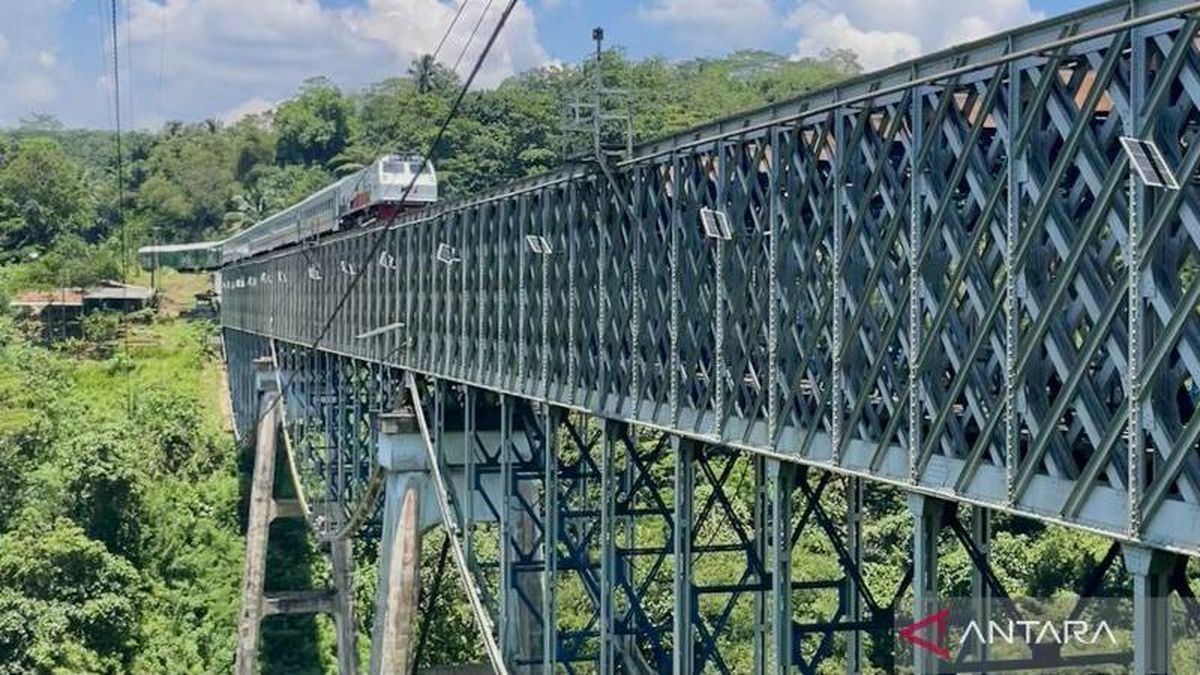
A number of motorcycle-riding homebound travellers have taken advantage of the alternative route via the Cirahong Bridge in Manonjaya District, Tasikmalaya Regency, West Java, to avoid traffic congestion on main roads during the Eid exodus.
Observations at the location showed two-wheeled vehicles traversing the bridge in alternating fashion due to the limited lane width. In reality, the route is a passage beneath the railway bridge.
A homebound traveller, Yudhi Sthianasaputra, said he chose to use the route because it was smoother compared to the main road.
“The route is pleasant and not congested. I departed around seven in the morning and the journey takes approximately five hours,” he said near the Cirahong Bridge on Monday (16 March), as quoted by Antara news agency.
Another homebound traveller, Ridwan, who travelled from Ciamis to Tasikmalaya also chose to traverse the route because it was considered faster.
“This is an alternative route. It’s easier and helps reduce congestion,” he said.
Meanwhile, a homebound traveller named Muliyadi said he frequently uses the route when travelling to Tasikmalaya.
“If you go through the city it’s usually more crowded. This way is faster,” he said.
According to the official social media of the Indonesian Ministry of Culture, the Cirahong Bridge is part of the Warung Bandrek-Cilacap railway line built in 1893 during the Dutch colonial era of the East Indies.
The Cirahong Bridge stands 66 metres above the Citanduy River. The bridge separates Tasikmalaya Regency and Ciamis Regency in West Java and spans approximately 202 metres, serving as a connector between the two regions.
The Cirahong Bridge features a unique dual traffic system, with the upper section serving as a railway line whilst the lower section functions as a motorised vehicle route.
Structurally, the bridge features a lattice steel frame shaped like the letter X forming parallelograms with concrete supports at both ends and two pillars in the middle section.
To date, the Cirahong Bridge continues to serve as a transportation route and remains one of the colonial-era infrastructure legacies still in use in the southern region of West Java.