
The Evolution of the Meaning of Housing for the "Propertyless Generation"
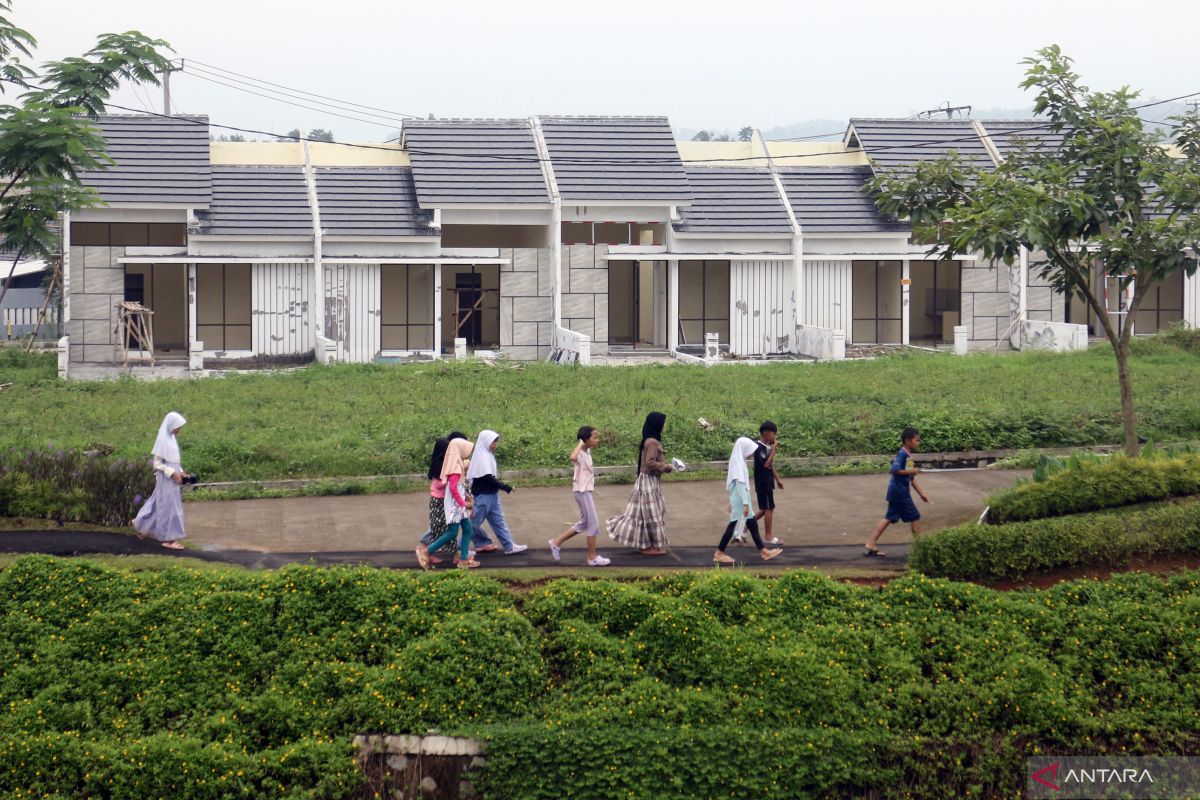
The disparity between income and property asset prices in Indonesia has now reached a critical point that cannot be ignored. Jakarta (ANTARA) - Along major transport routes, giant billboards still faithfully display visuals of ideal homes with green gardens and minimalist fences as symbols of a successful life. However, a contrasting picture is captured in the daily lives of the younger generation, as surveys show that 59% of Gen-Z face a dead end when trying to save for a house down payment. The surge in property prices, which has reached three times the affordability standard relative to wages as reported by the World Bank, creates a real anomaly in urban areas. This sociological reality is complicated by the fact that 47% of young people are hindered by wage growth that is powerless to catch up with asset inflation. This financial pressure is slowly shifting life priorities from the ambition of ownership to the mere need to access space. The disparity between income and property asset prices in Indonesia has now reached a critical point that cannot be ignored. Based on average provincial minimum wage (UMP) data in major cities ranging from Rp4 million to Rp5.2 million, the healthy maximum instalment capacity is around Rp1.5 million per month. Meanwhile, the lowest price for landed houses in Jakarta’s outskirts is Rp500 million, requiring mortgage instalments of about Rp4 million per month with commercial interest rates. The debt-to-income ratio exceeding 50% is mathematically impossible to meet without sacrificing basic consumption. As a result, government subsidy allocations through the Housing Finance Liquidity Facility (FLPP) scheme often miss the mark because the maximum income limit for subsidy recipients cannot reach the rising unit prices due to land speculation. This economic gap runs parallel to a fundamental change in viewing the meaning of housing. For students or young workers accustomed to digital ecosystems, a house is no longer a representation of moral stability or an anchor of adulthood as it was for previous generations. Quoted from a scientific journal on modern urbanism, the social interactions of today’s youth have shifted to cyberspace, so geographical ties with conventional neighbours are no longer an existential need. The function of housing is then reduced to a minimal self-recovery zone, while other aspects of life are conducted in public spaces or co-working areas. This transformation of values explains why land ownership is starting to be seen as a burden that limits career mobility in the digital nomad era. Reorientation of space function