
The Demise of Banknotes Everywhere, But Developed Countries Opt for the Old Way
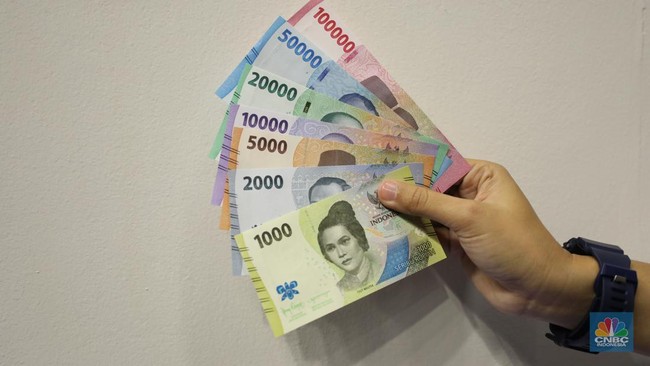
Jakarta, CNBC Indonesia - The development of the global digital industry has also changed people’s behaviour in conducting financial transactions. The emergence of mobile banking, digital wallets, and QRIS payment services has made everyday transactions increasingly practical.
Various such services can be accessed through applications on mobile phones, allowing payments for goods or services to be made via transfer without needing to visit an ATM. People no longer need to carry paper money constantly for shopping.
This phenomenon has led to a decreasing dependence on paper money. It is no surprise that the digital era is said to bring the ‘doomsday’ for banknotes.
Nevertheless, a unique phenomenon is occurring in developed countries. Throughout last year, the use of mobile payment applications in Switzerland was reported to have stagnated, according to a survey by the Swiss National Bank (SNB).
The use of cash is said to remain popular for shopping for goods or paying for services directly. The majority of survey respondents said they prefer to continue using cash.
Only 2% intend to switch to digital payments. This is because respondents claim that digital payments are actually impractical and are widely used for illegal activities, quoted from Reuters, Tuesday (31/3/2026).
Mobile payment applications such as Switzerland’s Twint or Apple Pay were used in 17% of transactions throughout 2025, according to the SNB study. This figure declined from 18% throughout 2024.
Debit cards remain the most popular payment method, used in 37% of purchases. In second place is payment with cash at 30%, equivalent to the percentage in 2024.
“People like the anonymity of cash,” said Marcel Stadelmann, a payment researcher at Zurich University.
“Some people do not like leaving a trail in the digital world when they pay with cards or mobile applications,” he explained.
Stadelmann mentioned that government measures during the Covid-19 era made some people more aware of privacy issues. The growth of digital payment applications, according to Stadelmann, has stalled because most Swiss people need additional conveniences to be interested in using them.
“With instant payments, something is needed to make payments faster, easier, more comfortable, or give people more control over their spending by providing immediate feedback if they have overspent,” he said.
This month, the SNB announced the designers of the next banknotes, which will begin circulating in the 2030s. Stadelmann said people like the act of spending cash because they feel they have control over it.
“Physical cash will remain important in Switzerland for some time,” he said.