
The 'Curse' of the US-Israel–Iran War Hits Global Energy Markets
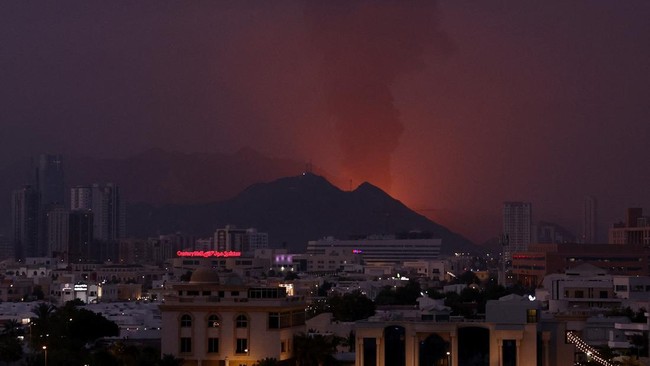
Jakarta, CNBC Indonesia - A fresh conflict has been underway for about a week between Iran and the United States–Israel coalition, triggering major shocks in global energy markets. Analysts warned that even if hostilities were to end soon, the impact on fuel prices could persist for weeks to months.
Disruptions to energy facilities, infrastructure damage, and heightened shipping risk in the Gulf region are disrupting global oil and gas supply chains. This could push consumers and businesses in various countries to face higher energy prices for an extended period.
Additionally, the situation poses political risks for the US ahead of the midterm elections. Energy price increases could become a sensitive issue for President Donald Trump, given that voters typically pay close attention to daily energy costs and tend to disapprove of overseas military engagements.
Analysts at JPMorgan note that market dynamics have shifted. They say market participants are no longer merely pricing geopolitical risk, but are also facing real operational impacts.
“The market has shifted from simply pricing geopolitical risk to dealing with real operational disruptions, as refinery shutdowns and export restrictions begin to disrupt crude processing and regional supply flows,” wrote JPMorgan analysts in a research note, cited by Reuters, Sunday (8 March 2026).
Global Energy Supply Disruptions
The conflict has disrupted around a fifth of the world’s crude oil and natural gas supplies. This occurred after Iran targeted ships in the Strait of Hormuz, a vital shipping lane between Iran and Oman, and attacked energy infrastructure in the region.
The direct impact is evident in global markets. World oil prices rose by about 24% this week, breaching US$90 per barrel. If this trend continues, the rise would mark the largest weekly jump since the Covid-19 pandemic.
That surge in oil prices has in turn driven higher fuel prices in various countries.
The worst disruption occurred as almost all shipping activity through the Strait of Hormuz came to a halt. This forced major oil producers in the region—such as Saudi Arabia, the United Arab Emirates, Iraq, and Kuwait—to halt shipments in large volumes.
Total delayed shipments are estimated at around 140 million barrels of oil, or about 1.4 days of global oil demand.
As a result, oil and gas storage facilities in the Middle East Gulf region are filling up rapidly. This has forced some oil fields in Iraq to cut production, while Kuwait and the United Arab Emirates are likely to take similar steps in the near term.
“At some point in the near future, all producers will also stop production if ships do not come,” said a source at a state-owned oil company in the region who asked for anonymity.
Production Recovery Could Be Slow
The shutdown of oil fields due to disrupted shipments could also have long-term effects on energy production.
Amir Zaman, head of the Americas commercial team at Rystad Energy, said production recovery cannot always be quick even after the war ends.
“The conflict may end, but the recovery of production could take several days, weeks, or even months, depending on the type of field, its age, and the type of production halt that must be implemented before production can return to previous levels,” he said.
On the other hand, Iranian forces have also been reported to target various energy infrastructure in the region, including oil refineries and export terminals. Some facilities have been forced to halt operations, while others sustained damage requiring repairs before they can resume operations.
Qatar, one of the world’s largest gas exporters, has even declared force majeure on its gas exports on Wednesday following Iranian drone strikes. Reuters sources said production is unlikely to return to normal for at least a month.
Qatar itself supplies around 20% of the world’s LNG needs.
In Saudi Arabia, the giant Ras Tanura refinery and export terminal owned by Saudi Aramco has also been reported to halt operations due to the attack. Details on the extent of the damage have yet to be released.
The White House previously confirmed the attack on Iran on grounds that the country posed a direct threat to the United States. However, the US government did not provide further details on the threat.
President Trump has also expressed concerns about Iran’s efforts to obtain nuclear weapons.
Threats in the Strait of Hormuz
If the conflict can be brought to a rapid end, energy markets are likely to stabilise. However, restoring supply and prices to pre-war levels is expected to take weeks or even months.
This will depend heavily on the extent of energy infrastructure damage and the security of shipping routes.
“Looking at the physical damage from Iranian strikes, so far we have not seen damage that could be considered structural, although the risk remains as long as the war lasts,” said Natixis CIB energy analyst Joel Hancock.
One of the key determining factors is the security of the Strait of Hormuz, a vital shipping route for global energy deliveries.
Trump has offered naval escorts for oil tankers transiting the area. The US government has also pledged insurance support for ships operating in the region.
Yet security in that sea lane remains far from assured. Military and intelligence sources said