
The Cost of Making the Kiswah, the Kaaba's Gold-Embroidered Covering
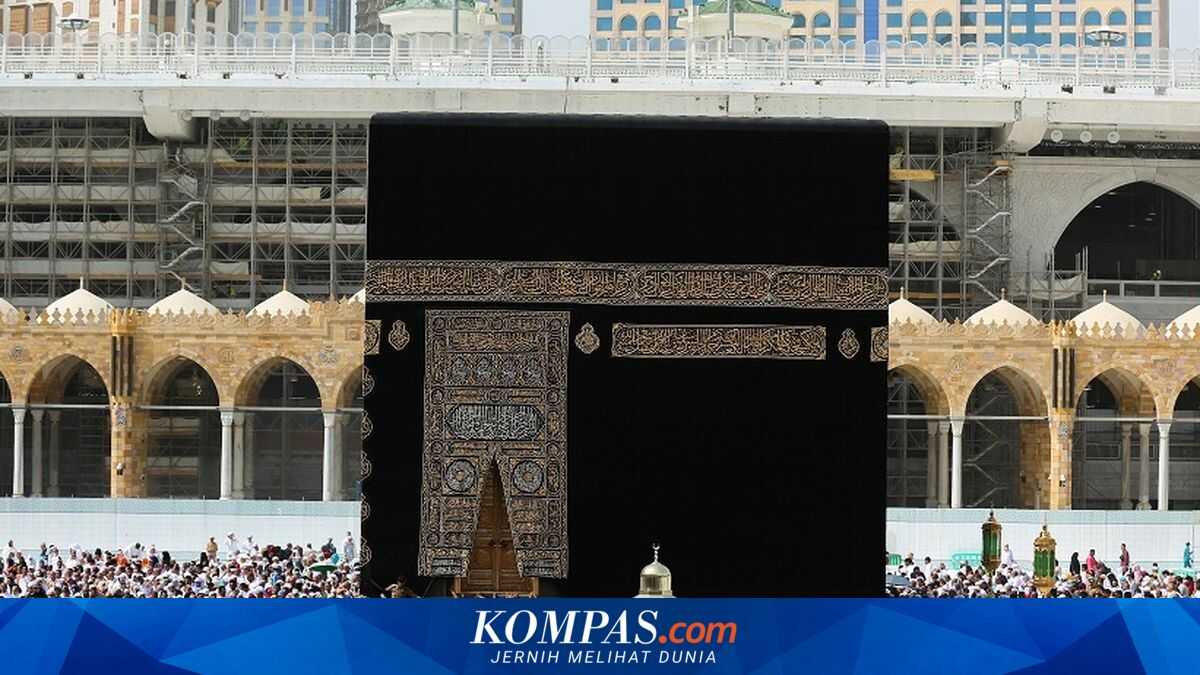
Every year, the Kiswah—the Kaaba’s black covering adorned with gold calligraphy— is replaced through a special ceremony at the Masjid al-Haram in Mecca. The Government of the Kingdom of Saudi Arabia sets that the Kiswah is handed over to the Haram administration on Eid al-Adha (10 Dhu al-Hijjah). The annual replacement takes place on 1 Muharram.
After production is completed, usually in the middle of Dhu al-Qa’dah, an annual ceremony is held at the Kiswah factory before the fabric is officially handed over.
According to the Saudi Ministry of Media’s 2022 page, the annual cost of Kiswah production is reported to exceed SAR 20 million, which in rupiah is around Rp 89.97 billion (exchange rate Rp 4,490).
The Kiswah weighs about 980 kilograms in total, consisting of 760 kg of black silk, 120 kg of gold wire, and 100 kg of silver wire.
The cloth is produced in 47 separate pieces, each measuring a width of 98 centimetres and a height of 14 metres, before being sewn into a single seamless covering that drapes the entire Kaaba.
The modern management of Kiswah began during the era of the Kingdom’s founder, Abdulaziz Ibn Saud. In 1927 he ordered the establishment of a Kiswah factory in the Ajyad area of Mecca.
The complex became the hub for all production stages until the annual replacement.
The Kiswah production involves around 220 artisans and technicians who work across the various artistic and operational departments.
The production stages start with dyeing natural silk as the base material. After that, the threads are processed through automatic weaving machines to form the base fabric with the calligraphic patterns of Quranic verses.
The laboratory department then conducts quality testing, including tensile strength and resistance to erosion. This stage ensures the silk and cotton meet the standards set.