
The Collapse of Islamabad Diplomacy: Unravelling the Stalemate in Iran-US Peace Efforts
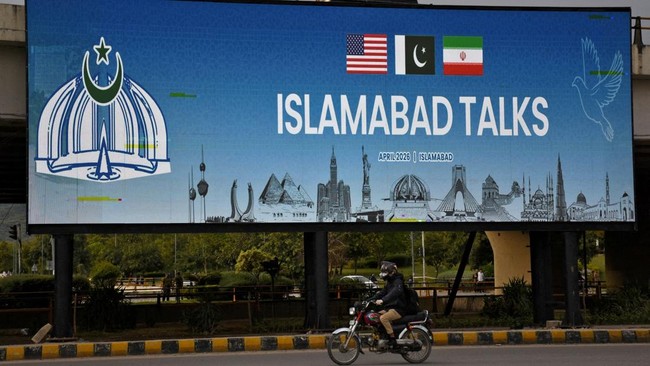
The soothing luxury of the Serena Hotel in Islamabad, with its rooftop pool and shady oasis, stands in stark contrast to the harsh geopolitical realities being dissected in its conference rooms. Last weekend, Pakistan’s capital served as the stage for the highest-level face-to-face meeting between the United States (US) and the Islamic Republic of Iran since the 1979 Revolution.
However, the 21 hours of marathon negotiations marked by high tension ultimately failed to produce a historic peace agreement. US Vice President JD Vance boarded Air Force Two leaving Islamabad empty-handed, while the Middle East was left staring once again into the abyss of escalation.
The failure of this Islamabad dialogue forum is not an anomaly born from weak diplomatic articulation or negotiator carelessness. On the contrary, this stalemate stems from deep-rooted structural barriers, chronic trust deficits, and an absolute clash between Western hegemony and Iran’s existential sovereignty defence.
From the outset, the negotiation atmosphere was overshadowed by a highly asymmetric bargaining position. The US arrived with a proposition they considered a golden path out, namely comprehensive economic sanctions relief, reintegration of Iran into the international community, and even prospects for strategic partnership.
In Washington’s eyes, after six weeks of war devastation that began on 28 February 2026 and the loss of Iran’s Supreme Leader Ayatollah Khamenei, Tehran was assumed to be at its nadir and ready to kneel.
However, this assumption proved to be a miscalculation. The 15-point proposal put forward by Washington—which demanded a 20-year moratorium on uranium enrichment, dismantling of major nuclear facilities, shipment of 440 kilograms of highly enriched uranium stockpile abroad, and total cessation of funding for regional proxies—depicted a negotiation draft unacceptable to Iran, as the offer constituted an instrument of capitulation.
The departure of the US delegation led by JD Vance was a “classic walk-out” highly identical to the negotiation playbook of the Donald Trump era. This step ignored the fundamental principle in conflict resolution diplomacy, a necessity for both parties to save face.
As analysed by many foreign policy thinkers, forcing a country with deep civilisational roots and strong national pride to appear to surrender completely in the eyes of its own people is a political impossibility. For Tehran, the regime’s credibility at home and abroad is a non-negotiable matter of life and death.
On the other side of the table, Iran did not feel defeated. Tehran’s leadership believes they still hold an asymmetric advantage, particularly through absolute control over the Strait of Hormuz. For Iran, this strait is not merely understood as a geographical waterway but as the lifeline of the global economy. The fact that Iran feels it has a strategic edge makes them reject submitting to what they consider “excessive demands” and impositions of will.
The Paradox of Nuclear Knowledge and the Collapse of Trust
If there is one variable most lethal to the success of Islamabad diplomacy, it is the trust deficit that has reached an irreversible point. Mohammad-Baqer Qalibaf, Iran’s Parliamentary Speaker who led the delegation, summed up this reality bluntly, stating that the US side fundamentally failed to gain Iran’s trust.
Tehran’s reluctance to compromise stems from the historical trauma of the unilateral withdrawal by the first Trump administration from the Joint Comprehensive Plan of Action (JCPOA) in 2018. At that time, the International Atomic Energy Agency (IAEA) had verified Tehran’s full compliance. This diplomatic betrayal was exacerbated by US and Israeli military strikes on Iranian nuclear facilities in mid-2025, as well as unilateral bombings in February 2026 while Oman was attempting mediation.
For Tehran, nuclear concessions are not just about dismantling centrifuges. The issue is rooted in the physical and intellectual paradox of nuclear knowledge itself. The US demands a permanent end to Iran’s potential to produce nuclear weapons.
However, technical expertise and scientific knowledge are not like geographical territories or trade embargoes that can be surrendered or revoked. Knowledge about enriching uranium to weapons-grade purity cannot be “forgotten” or destroyed by bombs.
Therefore, when the US demands that Iran disarm its enrichment capacity, Iran faces the risk of making permanent concessions without guarantees that the US or Israel will not attack them again once their defence capabilities are crippled.
In an anarchic international system, surrendering the only deterrent instrument without existential security guarantees is strategic suicide. Iran views the right to uranium enrichment for civilian purposes as a manifestation of their absolute sovereignty.
Israel’s Veto Right and the Complexity of Proxy Wars
Furthermore, the Islamabad failure proves that bilateral negotiations between Washington and Tehran were never truly just between two parties. There are external powers with a de facto “veto right” over Middle East stability, namely Israel.
Tehran’s demands at the negotiating table were not limited to asset unfreezing or sanctions easing. They also set an absolute condition for the cessation of Israeli aggression against Hezbollah in Lebanon, a condition flatly rejected by Washington.
While the negotiations were ongoing, Israeli Prime Minister Benjam