
The Collapse of Indonesia's Retail King as Matahari Falls into the Hands of the Riady Family
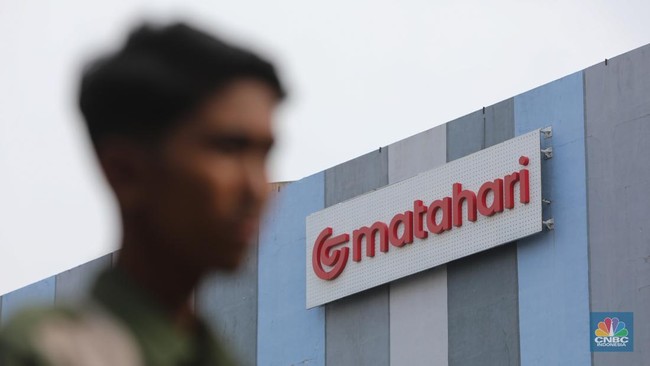
Matahari has become embedded as one of Indonesia’s favourite shopping destinations. As a retail giant, Indonesia’s largest retail platform operates 155 outlets across 81 cities throughout Indonesia.
It is worth noting that Matahari’s founding has a long history. Originally, Matahari was a clothing store called Micky Mouse in Pasar Baru, established by Hari Darmawan in 1960. Micky Mouse sold imported clothing and its own manufactured brands under the MM Fashion label, produced by Hari’s wife.
In fact, Micky Mouse’s business thrived during its first five years because they had their own market. However, Hari harboured resentment towards the neighbouring shop called De Zion, as this store was always busy and frequented by wealthy customers.
Attempts to emulate De Zion’s success were constantly made, but produced no results. Eventually, the desire to acquire the store resurfaced in 1968. Word came that De Zion’s owner wanted to sell his shop. Immediately, Hari hurried to purchase it.
According to Kristin Samah and Sigit Triyono’s “Matahari Business Philosophy” (2017), with a US$200 million loan from Citibank, Hari successfully acquired two De Zion stores in Jakarta and Bogor. De Zion was immediately renamed “Matahari”.
“De Zion in Dutch means Matahari [sun],” said Hari Darmawan, as quoted by Muhammad Ma’ruf in “50 Great Business Ideas From Indonesia” (2010).
To develop his new store, Hari emulated the Japanese retail chain Sogo Department Store. He wanted Matahari to be like Sogo, selling the widest variety of clothing so that consumers could choose the best and cheapest products.
As a result, thanks to mimicking Sogo’s strategy, Matahari attracted many visitors. Matahari subsequently experienced rapid expansion throughout the 1970s and 1980s. Its outlets expanded beyond clothing to sell jewellery, bags, shoes, cosmetics, electronics, toys, stationery, books and more.
This rapid growth enabled Hari to open outlets outside the capital in the 1990s. Matahari stores could be found in nearly every city across Indonesia. No one was unfamiliar with Matahari. So successful was Matahari that it was confident enough to list on the stock exchange.
In 1989, PT Matahari Department Store Tbk officially sold its shares to the public under the ticker symbol LPPF.
Nevertheless, Matahari’s dominance did not make Hari complacent. Although already a king, he wanted to make Matahari a major retail business centre in Indonesia. His ambition was grand: creating 1,000 Matahari outlets.
At the same time, this ambition reached the ears of James Riady, a young banker and son of conglomerate founder Mochtar Riady of the Lippo Group. James intended to provide Hari with a loan of 1.6 trillion rupiah.
Hari agreed and received the loan at a low interest rate. However, this is where the problem lay, something Hari never anticipated.
Still citing “50 Great Business Ideas From Indonesia” (2010), shortly after the loan was disbursed, James Riady decided to enter the retail business himself. He brought a major American retail brand to Indonesia: WalMart.
Interestingly, WalMart was established right in front of Matahari. So, whenever there was a Matahari, there was a WalMart nearby. The situation was similar to Indomaret and Alfamart, which are always located close to each other.
The emergence of WalMart was clearly a red flag for Matahari’s competitive position. However, Hari refused to lose to his competitor and creditor.
He remained focused on running Matahari. And in reality, WalMart lost the competitive battle and Matahari remained king.
However, in 1996, shocking news arrived. Hari and Matahari, which were at the height of their success, suddenly received a purchase offer for Matahari from James. This meant that from that point on, Matahari, which had a turnover of 2 trillion rupiah, officially became part of the Lippo Group.
The sale sparked wild speculation. Many were puzzled because Matahari was then very successful and thriving. Hari could not possibly have gone bankrupt as Matahari was guaranteed to continue operating.
Since the acquisition, Matahari officially became the property of the Lippo Group. Hari Darmawan’s name gradually began to fade.