
The 'Cockroach' Movement Gains Momentum in India
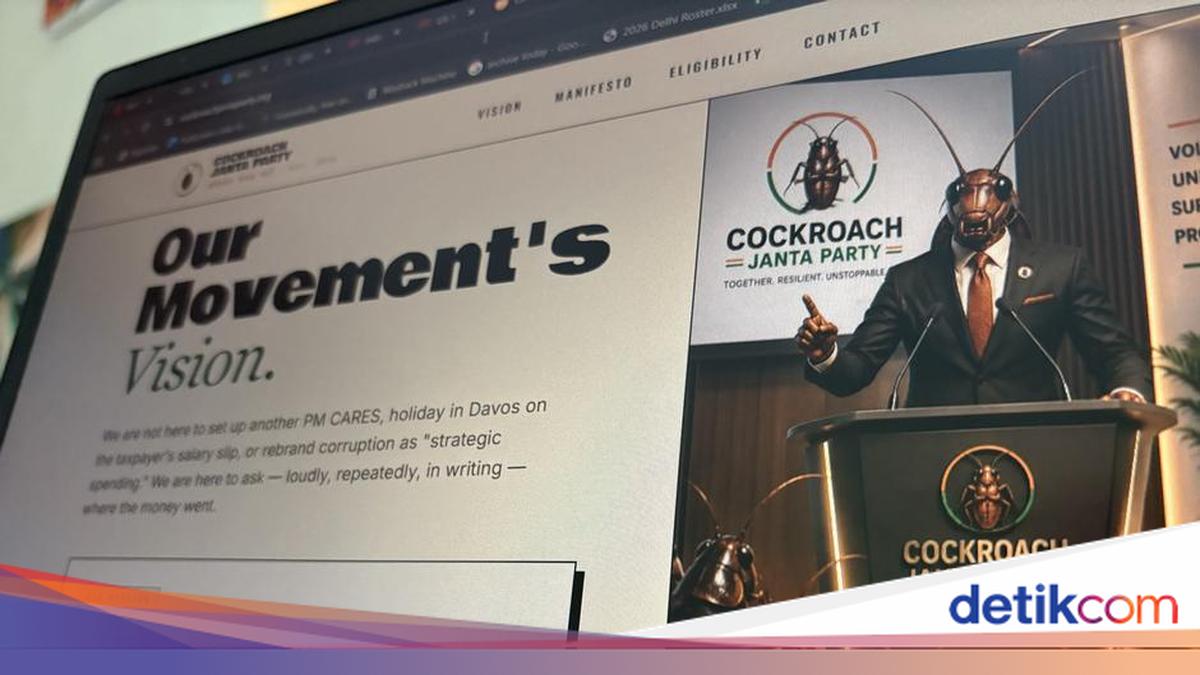
The ‘Cockroach’ movement began on 15 May 2026 when India’s Chief Justice criticised Indian youth, equating some of them with parasites and cockroaches during a hearing on fake degrees. ‘There are young people like cockroaches who do not get jobs… some become media, some become social media users, some RTI (Right to Information) activists, and they start attacking everyone,’ he said.
Abhijeet Dipke, founder and chair of the Cockroach Janata Party, asked, ‘What if all cockroaches unite?’
On Instagram and X, users shared memes identifying themselves as cockroaches. Several members of India’s opposition parties and former civil servants have expressed a desire to join the party online.
Support continued to flow even though it began as an internet joke. It reminded many of Gen Z resistance movements that have toppled governments in countries such as Nepal and Bangladesh.
However, Dipke had no such plans.
‘Let me be clear. Do not insult or belittle Gen Z in India by making such comparisons. The youth of this country are far more mature, aware, and politically conscious than many people realise. They understand their constitutional rights and will voice their dissent through peaceful and democratic means,’ he wrote in a post on Tuesday (19 May).
The movement is planning its first virtual conference for more than 350,000 registered members.
There have been attempted hacks
Dipke and other party members said there were several attempts to hack the party’s Instagram account. In response to the attacks, Dipke posted a reel accusing a ‘vishwaguru’ or ‘global leader’ who fears youths aged 20 to 21. That was a veiled dig at Prime Minister Modi, who has often said that India has grown into a ‘vishwaguru’ under his government and his Bharatiya Janata Party (BJP).
The hacking attempts were met with a post captioned: ‘BJP afraid of cockroaches?’
The governing BJP has not commented on the formation and movements of this satirical group.
The founder of the Cockroach Janata Party told DW reporter Shalu Yadav that while the movement started from one idea, it is now ‘no longer satire or a joke.’ ‘This is becoming very serious,’ Dipke said. In several exchanges with Indian youths, he has heard frustration and despair at India’s political system.
‘There is now a platform for us. A place to channel our anger. I feel this did not happen suddenly, and it is not only aimed at the Chief Justice of India,’ he said.
‘I think this is more about the broader political scenario, the political situation in which for years people have been afraid to speak out against those in power. Now they have finally found a place to vent their anger,’ Dipke told DW.