
The Challenges of Transforming Traditional Islamic Boarding Schools
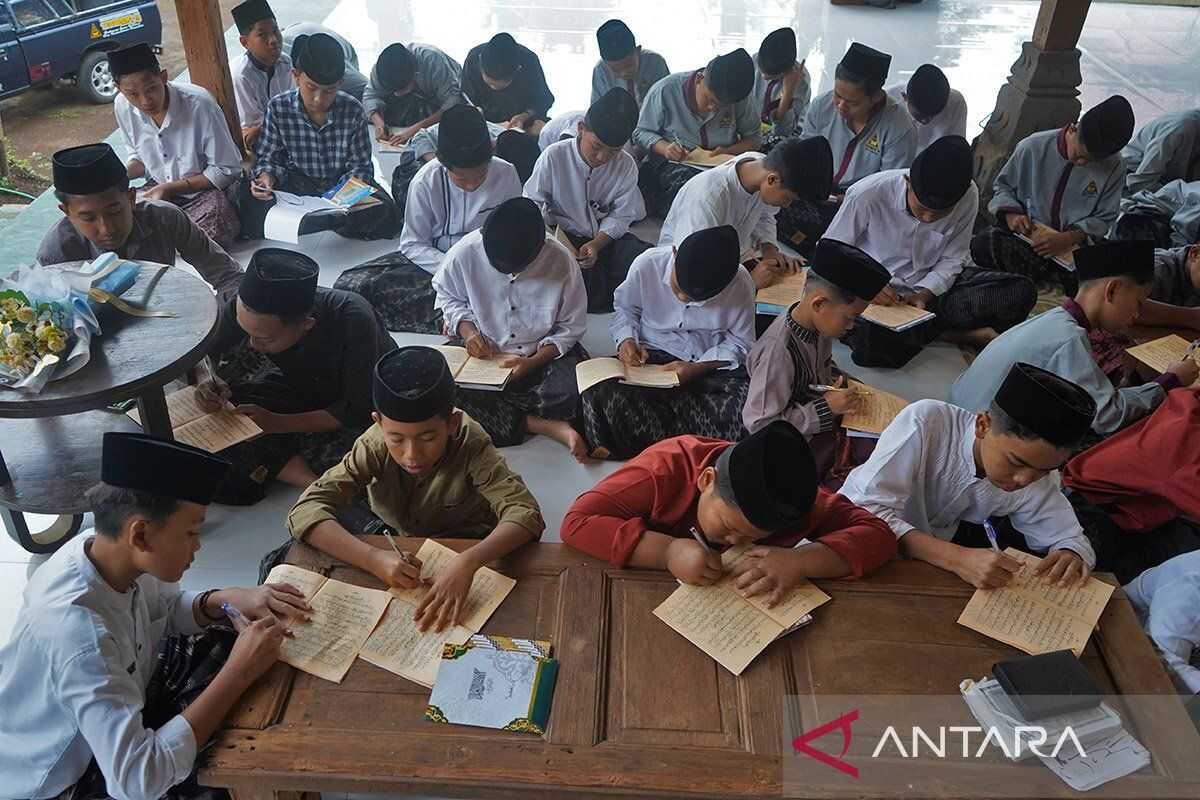
The transformation initiated by Wahid Hasyim demonstrates that pesantren can adapt to the needs of the times without losing its traditional roots.
Jakarta (ANTARA) - The month of Ramadan always brings a unique atmosphere to pesantren. The tradition of ‘ngaji posoan’ with the ‘bandongan’ system remains intact amidst the rapid modernization of pesantren.
‘Bandongan’ is an educational heritage that has lasted for centuries, demonstrating the strength of pesantren traditions as the oldest educational institution in the archipelago since the 15th century.
Pesantren not only teaches religious knowledge. It also passes on educational systems, ideologies, philosophies, and traditions that are deeply rooted in society. In its history, pesantren has never been colonized by the colonial system. In fact, it became a pioneer and base for community resistance against colonialism. Its contribution is monumental, intertwined with the pulse of society and nationalism.
Pesantren, in accordance with its basic principles, is an institution for ‘ta’lim wa ta’allum li tafaqquh fi al-din’ (teaching and learning to deepen religious knowledge) and tarbiyah; educating noble Muslim personalities. All of this is done in accordance with the traditions of teaching and educating students, passed down through generations based on the lineage of teachers and their predecessors.
Transformation based on tradition
However, as time progresses, there is a growing need to broaden the horizons of students so that they can not only become religious scholars or preachers but also play a role in society at large. This awareness prompted KH Abdul Wahid Hasyim, the son of KH Hasyim Asy’ari, the founder of the Salafiyah Syafi’iyah Tebuireng pesantren in Jombang, to make a major breakthrough in the pesantren’s education system.
After studying in Mecca and absorbing the socio-political dynamics of the Muslim world, in 1934 Wahid Hasyim proposed changes to the learning system at Tebuireng. He initiated the ‘madrasah nidzamiyah’ with a classical curriculum that combined 70 percent of general subjects, including English, politics, economics, biology, history, and culture.
The ‘bandongan’ method was replaced with a more constructive and enjoyable systematic tutorial. The focus is clear: to produce students who are broad-minded, independent, optimistic, and willing to explore knowledge without fear of making mistakes.
Students still maintain their pesantren identity with sarongs and caps, but they are more disciplined and have greater literacy through classical texts, reading books, magazines, and newspapers. This innovation initially created a dichotomy between traditional and modern systems within the pesantren environment.
However, KH Hasyim Asy’ari eventually integrated the ‘madrasah nidzamiyah’ into the Salafiyah Tebuireng system, resulting in an integration of old traditions (bandongan, sorogan, wetonan, mudzakarah) with general subjects. Tebuireng then became a model for other pesantren in developing their education systems.
The transformation initiated by Wahid Hasyim shows that pesantren can adapt to the needs of the times without losing its traditional roots. Hasyim Asy’ari’s approval of this idea emphasizes the importance of balance between preserving traditions and educational innovation. Pesantren is not only a center for ‘tafaqquh fi al-din’ (deepening religious knowledge) but also a vehicle for forming national cadres who are knowledgeable, have good character, and are ready to face social challenges.
Lessons from the pesantren transformation