
The Catfishing Deepfake Scam Has Many Victims: Here's How to Avoid It
Jakarta – CNBC Indonesia. Amid advances in technology that facilitate social interaction, cybercrime threats are evolving with increasingly sophisticated modus operandi. One form of digital crime that is now becoming more prevalent and threatens the security of data and the privacy of internet users is catfishing. This crime not only causes emotional harm but also has the potential to drain assets and damage reputations of individuals or institutions.
In simple terms, catfishing is a type of online fraud in which the perpetrator builds a fake identity that appears convincing to form a relationship with the victim. Often, catfishing masquerades as a romantic relationship, friendship, or professional relationship.
The core of this modus operandi lies in the use of fake visual material as the main lure. The perpetrator will create an imaginative persona who is attractive, pleasant, or even authoritative solely to gain the victim’s trust.
To realise this fake identity, the scammers use a variety of increasingly hard-to-detect methods. Most take real images or photographs belonging to others from social media, public photo galleries, or results of searches on search engines such as Google.
But as technology evolves, many perpetrators now utilise artificial intelligence or generative AI. This technology enables them to create faces, bodies, or scenes that are identical to real photos of people, even though the person does not exist in reality.
The main aim of this catfishing scam is not merely to seek friends or a partner, but to obtain unlawful access to the victim’s electronic devices, such as a mobile phone or computer.
The perpetrators will first build emotional closeness, then persuade the victim to download certain apps, visit specific websites, or send files that actually contain malicious software. Once access is obtained, the scammer promptly acts to steal personal data, financial information, identity data, and even confidential company data belonging to the victim’s employer.
The danger of this modus is not limited to individuals. The perpetrators often attempt to infiltrate both the victim’s social circle and their professional environment. If the victim works at a company or holds a senior position, the security of the company’s data is also threatened. Business data, trade secrets, or access to the company’s systems can become easy targets, ultimately harming many parties and disrupting operational stability.
Because the losses can be enormous, vigilance is the key. Here are practical and effective steps to protect yourself from catfishing traps, as summarised from Sun Sentinel and various cybersecurity observers:
- Push for video conversations
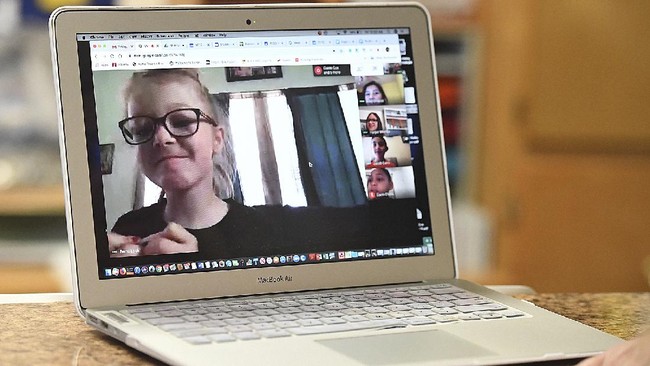
One of the simplest yet most effective methods is to insist on direct communication via video chat. Fraudsters typically try to avoid this for various reasons, from claiming they are busy, poor network, to health reasons or device problems. If someone you know online continually delays or refuses to communicate via video, that is a very real danger sign that the person may be fake.
- Scrutinise profile picture details for AI traces
Although AI-generated imagery can look very realistic, the technology still has flaws that can be identified with careful scrutiny. Examine the profile photo or image sent. Usually, AI-generated images have imperfections in small details, such as irregular finger shapes, asymmetrical eyes, odd shadows, or a background that appears blurred and unnatural. These small tells are indications that the person is a machine-made creation.
- Be wary of stories that provoke emotion
Catfishing perpetrators are adept at exploiting human empathy. They often tell sad stories, tales of suffering, or significant life problems to arouse sympathy and empathy. The aim is for you to feel pity, trust, and eventually to help, whether by giving money or divulging personal information because you feel you have a relationship. Stay logical and critical; do not let feelings override caution.
- Never share any personal data
This is the most important rule in digital security. Keep your personal information very tightly. Data such as identity numbers, financial card details, home address, office address, and even personal history should not be shared with anyone you have only just met online, no matter how close the relationship. The information you provide, however small, can be used by the perpetrator to commit identity theft or financial crime.
- Verify the authenticity of images via reverse image search
Make use of reverse image search features provided by search engines such as Google. This method is a powerful way to determine the origin of a photo. Simply upload the image sent by the person to the image search feature, and the system will show whether the photo has appeared on other sites, belonged to someone else, or was taken from public sources. If the image turns out to belong to someone else or is used by many different accounts, that is surely a fake identity.
In a world that is becoming increasingly connected, interacting with new people online is normal. However, remember to stay vigilant, careful, and not to place complete trust in what you see on the screen. Data security and personal identity are in each person’s hands.