
The Bustle of Beijing's Niujie Muslim Quarter During Ramadan
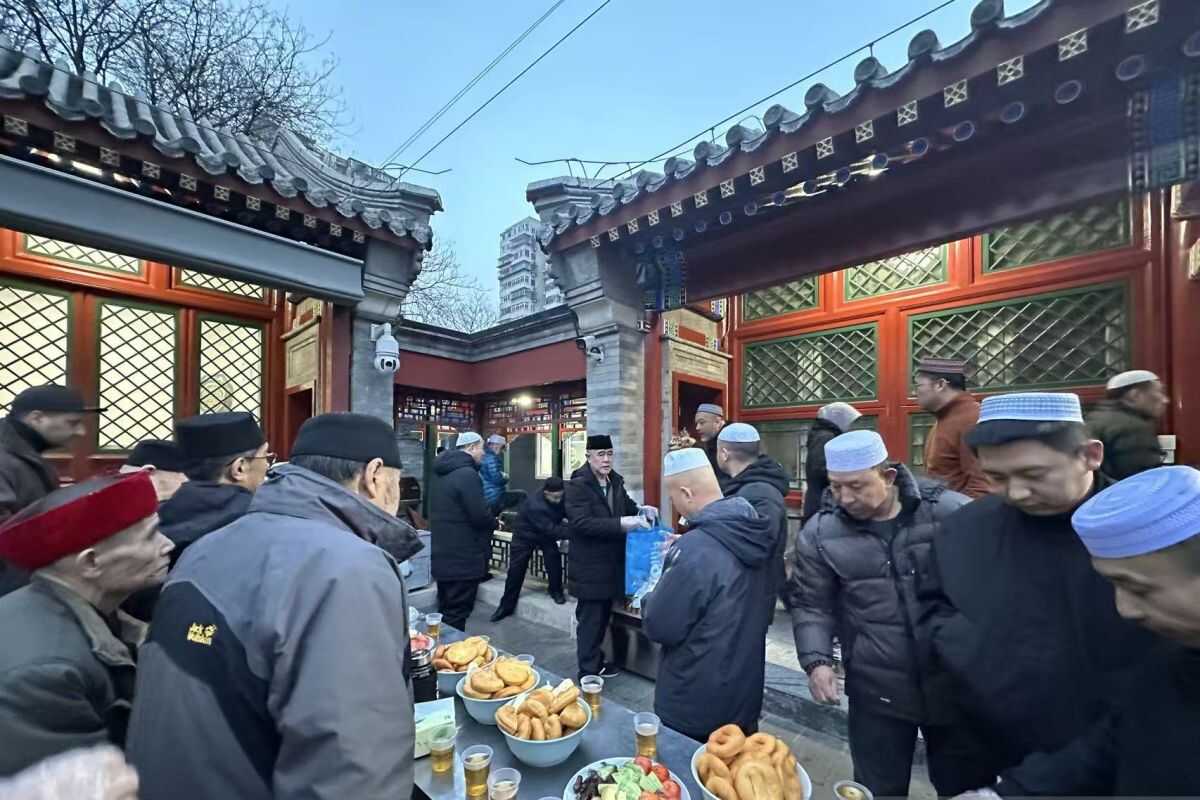
Beijing – The Niujie Muslim Quarter, in Xicheng District, about five kilometres from the city centre, grows livelier during Ramadan with halal food stalls and worship activities at the capital’s oldest mosque. Niujie has long been known as Beijing’s Muslim neighbourhood for more than a thousand years, with a population of around 10,000 Muslims from the Hui ethnic minority who maintain Chinese cultural traditions in their daily lives.
‘There are many halal foods along Niujie Street, and the atmosphere is like a Ramadan bazaar in Indonesia, but with Chinese halal dishes. We also want to feel the iftar and Maghrib prayers at the first mosque in Beijing,’ said Akbar Rayzen, a Master’s student at Tsinghua University from Bandung, who spoke to ANTARA in the Niujie area last week.
Akbar arrived with two friends from Solo and Riau. He said he was keen to feel the bustle of searching for takjil and the sense of togetherness while breaking fast with the local Muslim community, which is not often met in Beijing.
Along about one kilometre of streets in the area, halal shops and eateries line up offering various Hui ethnic dishes such as beef noodles, lamb-filled buns, lamb kidney satay, and mooncakes filled with five types of nuts. Prices start from six yuan, about Rp14,000.
The scent of sweet pastries mingled with the aroma of meat wafts from shop windows, evoking memories of takjil bazaars in various Indonesian cities.
Male vendors were seen wearing white or black peci hats known as Huíhuí mao, similar to the songkok in Indonesia, while female vendors wore Hui-style headscarves or gaïtóu with small floral patterns and lace edging.
Long queues of customers, dominated by local Chinese residents, added to the atmosphere ahead of the fast-breaking time.
A sense of togetherness also extended to the Niujie Mosque, Beijing’s oldest and largest mosque, which serves as the centre of worship for the area’s Muslims. The mosque, built in 996, features Chinese-style wooden architecture dominated by red, green, blue and yellow with touches of Arab style. The complex covers about 6,000 square metres and can accommodate up to 1,000 worshippers.
In the prayer hall, Arabic calligraphy in Chinese style decorates the walls and roof-supporting beams, alongside traditional paintings such as floral motifs, calligraphy brushes, vases, scrolls and Ming Dynasty porcelain.
As the time to break the fast approached, worshippers gathered at the tables provided. A siren was sounded to mark maghrib before the worshippers ate the meals prepared for breaking fast.
Although most worshippers speak primarily Mandarin, the warmth remained through smiles and friendliness, including helping to serve meals to foreign worshippers.
Different from Indonesian practice, the azan for maghrib at Niujie Mosque is proclaimed after worshippers have finished breaking their fast, followed by ikama about a minute later.
After the maghrib prayers, some worshippers were seen chatting. A Muslim from Xinjiang even approached ANTARA and some Indonesian worshippers who were praying in the mosque, offering free beef noodles. He said he recognised the Indonesian worshippers from social media that often features Indonesian Muslims.
That simple, warm gesture showed that Ramadan’s warmth transcends cultural boundaries and reflected the emotional closeness among Muslim communities around the world.