
The Bright Prospects of the Data Centre Business in Indonesia
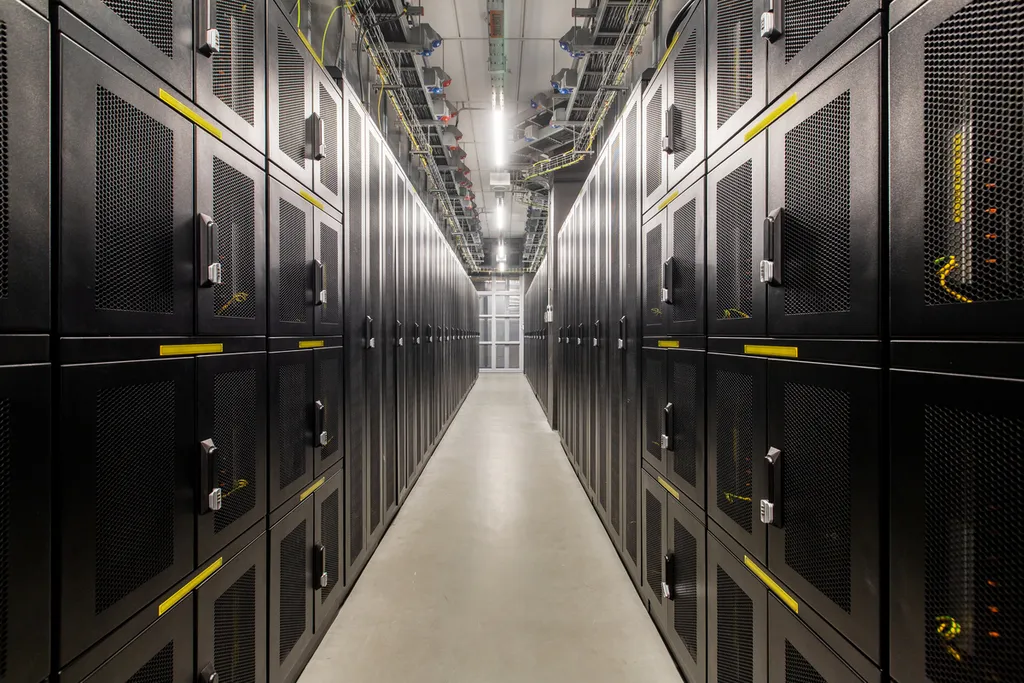
The business prospects for data centers in Indonesia are becoming increasingly bright. Data center companies are also expanding their computing capacity. However, there are still several challenges.
By Abdullah Fikri Ashri
01 Apr 2026 06:59 WIB · English
The business prospects for data centers in Indonesia are predicted to become increasingly bright in line with the rapid adoption of digital technology, particularly artificial intelligence (AI). Several data center companies are also expanding their computing capacity. However, its development is still overshadowed by various challenges.
Every click, from online shopping to banking transactions to video streaming services, is inextricably linked to the role of data centers. These facilities, housed within concrete buildings with multi-layered security, store and manage vast amounts of data non-stop.
In this facility, which houses data from e-commerce companies to banking companies, power outages are prohibited. If the power goes out, online shopping and bank transfers can be disrupted. Data centers are like the “heart” of economic activity that utilizes digital technology.
With data centers, companies do not need to build high-computing facilities that are very expensive to store and process data. Companies can simply store it in data centers provided by digital technology companies, both domestic and international.
One of the data center companies in Indonesia is Digital Realty Bersama (DRB). DRB is a joint venture between Digital Realty (a global data center provider) and Bersama Digital Data Centre (a data center company whose shares are held by Saratoga, Provident, and Macquarie).
Launched in March 2025, DRB has two strategic data centers in Jakarta, namely the CGK10 facility in Daan Mogot and CGK11 in the Cawang area. These data centers have been certified Tier 3 and Tier 4, which are international standards with adequate infrastructure, such as reliable electricity.
Andha Yudha Permana, Business and Commercial Director of DRB, stated that the rapid adoption of digital services in Indonesia is one of the reasons for DRB’s expansion into Indonesia. A survey by the Indonesian Internet Service Providers Association, for instance, recorded that internet penetration in the country reached 80.66 percent.
This means that approximately 229.4 million Indonesians use the internet, whether to access social media, watch streaming videos, or utilize banking applications. This widespread use of digital technology naturally requires infrastructure, such as data centers.
“In the Asia Pacific region, Indonesia is transforming into a major, independent and strategic digital hub, particularly in accommodating large-scale computing workloads amidst land and energy constraints in the region,” Yudha said in a written statement to Kompas on Monday (March 16, 2026).
With the vastness of land, the significant potential for renewable energy, and the rapid adoption of digital technology, the data center business in Indonesia has the opportunity to grow. “The prospects for the data center industry in Indonesia are very bright with the potential for exponential growth,” Yudha stated.
Moreover, the data center capacity ratio in Indonesia is low, at around 1 watt per capita. In contrast, the capacity of data centers in other countries, such as Singapore and Japan, reaches 10-100 watts per capita. This means that the potential to develop the data center business in the country is still wide open.
This business potential is evident, among other things, in the increasing number of financial, banking, and e-commerce companies using DRB’s data center services. He claimed that the server facilities at CGK10 were fully occupied, while the occupancy rate at CGK11 was around 50 percent.
Observing the momentum of demand from users of the data center, the company is preparing to move to the second phase of development at CGK11. This development is projected to significantly increase its computing capacity from the current 6.5 megawatts (MW) to 27 MW.
Yudha did not specify when the development of the second phase would begin. However, this step represents DRB’s commitment to continue providing high-capacity digital infrastructure to support the operational needs of customers in Indonesia.
“We project the coming decade as a key acceleration phase (data center), where the demand will multiply in line with the wave of AI, the commercialization of 5G networks, and the maturity of the national digital economy,” Yudha stated.
The widespread adoption of AI in Indonesia is reflected in research conducted by International Business Machines (IBM) in 2025. The multinational information technology company noted that 85 percent of 502 business leaders from various sectors surveyed have utilized AI and experienced its benefits.
The widespread adoption of AI has also led Equinix, a global digital infrastructure company operating in Indonesia, to increase its server capacity. Since May 2025, Equinix has partnered with PT Astra International Tbk to build the International Business Exchange or JK1 in Jakarta.
Haris Izmee, President Director of Equinix Indonesia, stated that the power density capacity of cabinets and racks in data centers has increased from 1-2 kilowatts (kW) per rack to 10-30 kW per rack. This increase is to accommodate AI workloads.
“Last year, many companies were still in the experimental stage and training AI models. Now, it is time for the implementation of applications or their usage. Therefore, the demand for data centers will certainly increase,” he stated. For this reason, his party will develop the capacity of the JK1 data center facility.
Currently, JK1 has 550 cabinets with 70 customers operating in the fields of telecommunications, internet service providers, banking, and pharmaceuticals. Although it has not yet reached full occupancy, it is said that this number of customers is quite good for the first year of operation. Occupancy is also expected to increase.
Wi