
The Bekasi Timur Train Tragedy, Railvolution, and the 'SDG' Strategy
Around a decade ago, we witnessed a fundamental change in Indonesia’s railway world. The practice of passengers riding on train roofs is no longer seen, accident rates have significantly decreased with the construction of double and quadruple tracks, and the implementation of electric signalling systems. Modernisation of ticketing systems and various other innovations have further strengthened this transformation. In my book Revolution of Transportation (2014), I referred to this phenomenon as “Railvolution”, an important phase in the advancement of Indonesia’s railways.
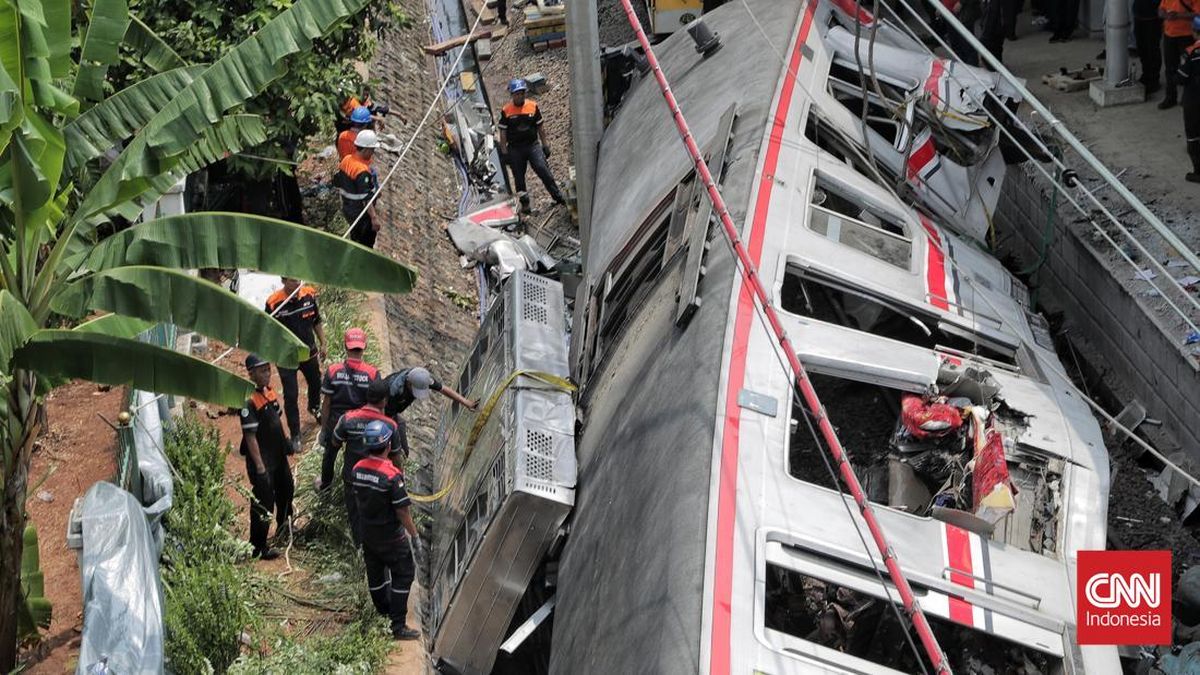
The accident between the KA Argo Bromo Anggrek and KRL in Bekasi Timur on Monday, 27 April 2026, serves as a reminder that amid advancements in transportation technology, there are still urgent tasks at hand. This incident shows that increasingly modern systems still require ongoing evaluation, particularly in ensuring the integration and reliability of all components.
Global experiences indicate that train accidents are generally not caused by a single factor, but rather a combination of several aspects. Human factors often become the main contributors, including compliance with procedures, levels of fatigue, and consistency in operational decision-making. On the other hand, external factors such as level crossings and interactions with the community also pose non-trivial challenges.
In addition, infrastructure and facility aspects require continuous attention. The condition of rails, electrical systems, and fleet readiness must always be at optimal standards through consistent, data-based maintenance. This is important to ensure that capacity increases are accompanied by improvements in system reliability.
Various countries have developed different approaches to improving safety. Japan, for example, emphasises precision technology and AI-based fail-safe systems. On the commuter line (Yamanote Line), Japan integrates cameras and artificial intelligence to monitor pantographs in real-time. Such measures can significantly reduce the time for accurate problem detection. Additionally, Japan uses drone fleets for track inspections to make them faster and more accurate.
Meanwhile, India takes a more pragmatic approach, focusing on managing human interactions with railway lines through fencing and building safer crossing facilities. Physical separation and human behaviour become the main focus of the safety approach. Trespassing phenomena become the greatest threat faced.
India has conducted a massive national fencing campaign covering more than 16,000 km. These efforts are also combined with the construction of underground pedestrian crossings to make them more pedestrian-friendly. Another unique strategy taken is applying industrial lubricant (grease) to fences to prevent people from climbing.
Both approaches in these two different countries show that safety solutions need to be tailored to the socio-cultural characteristics of the community, utilising appropriate AI-based technology that remains humane.
In the Indonesian context, it is important to view the railway system holistically through three main dimensions: hardware, software, and brainware. In the hardware aspect, guarantees are needed that physical infrastructure and supporting systems meet high safety standards. In the software aspect, integration of control systems, real-time monitoring, and early detection capabilities become very crucial. Meanwhile, in the brainware aspect, strengthening competencies, discipline, and a safety culture throughout the organisation become the main foundation.
These three aspects are interconnected and cannot be separated. Therefore, an integrative and systemic approach becomes the key to strengthening the overall system. The efforts that have been made so far are important steps, and going forward, they need to be continuously refined to address increasingly complex challenges.
The government’s plan to expand the railway network to various islands outside Java is a strategic step that deserves appreciation. Rail-based transportation development has great potential in supporting national logistics efficiency and strengthening intermodal connectivity. Integration between road, rail, sea, and air transportation becomes an important agenda in realising a more efficient and sustainable intermodal transportation system.
Therefore, in terms of governance, there needs to be a clear and firm division of tasks regarding duties and responsibilities between regulators and operators. PT Kereta Api Indonesia as the main operator is expected to continue its transformation towards a smart, humane technology-based company. Strengthening digitalisation, data utilisation, and improving human resource capacity will be determining factors for future success.
On the other hand, the role of the Ministry of Transportation as a regulator is very strategic. Strengthening safety standards, improving technically based supervision quality, and cross-sector coordination with ministries and local governments become important parts. This is a main element to ensure overall system safety and reliability, including the elimination of level crossings.
Going forward, Railvolution can be interpreted as an ongoing process that requires an adaptive roadmap to developments in the times. An approach prioritising the “SDG” strategy—Sustainable, Digitalise, and Governance—becomes relevant in the current context and to address future challenges.
Strengthening humane technology, good governance, and involvement of all stakeholders will be the key to realising an increasingly reliable, safe, and efficient Indonesian railway system.