
The aspiration for food self-sufficiency and the resulting consequences
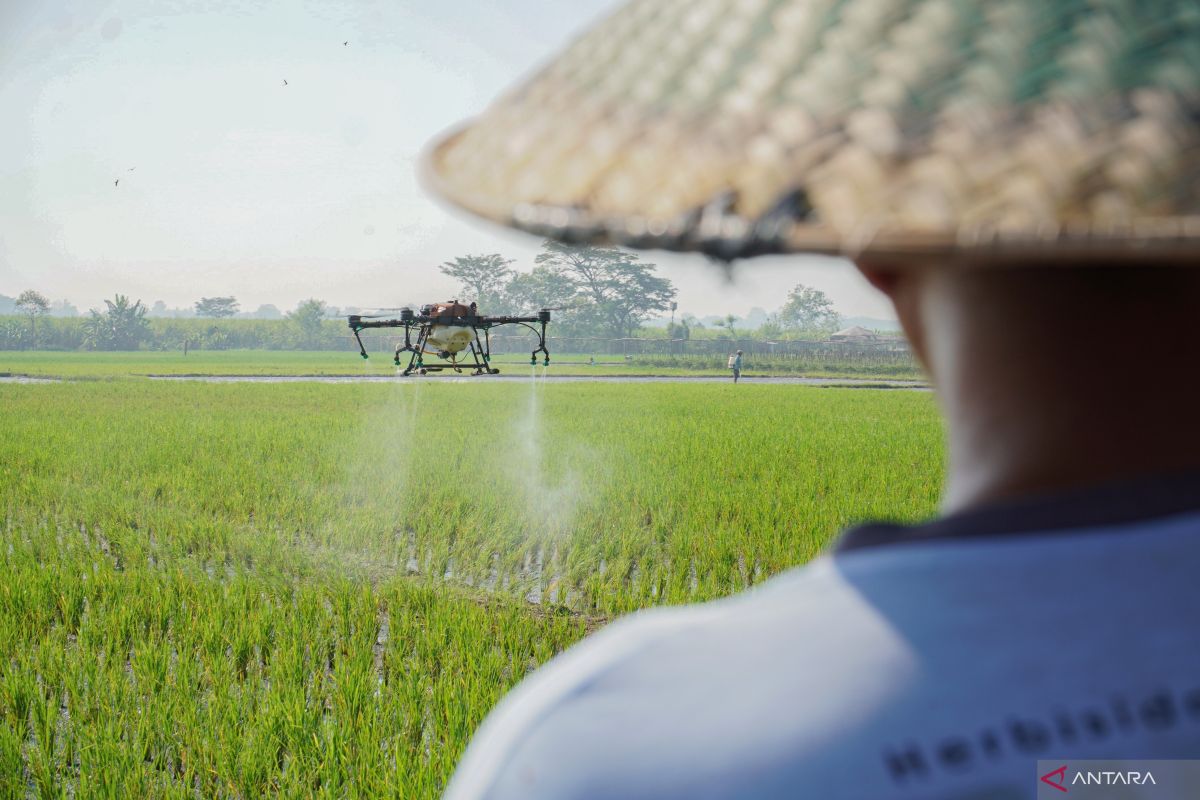
Food self-sufficiency is a legitimate and strategic policy choice. However, the public needs to be engaged to understand that independence does not always equate to low prices.
Jakarta (ANTARA) - The aspiration of President Prabowo Subianto-Vice President Gibran Rakabuming Raka to realise food self-sufficiency is proving to be genuine.
The President is not only asking the Ministry of Agriculture (Kementan) to oversee food self-sufficiency but also involving the Indonesian National Armed Forces (TNI) and the Indonesian National Police (Polri) to achieve this noble aspiration.
These two institutions are even recruiting employees with backgrounds from secondary agricultural schools to agricultural graduates, so as to have stronger capacity in understanding and managing food issues.
The results are starting to show. Indonesia has once again recorded the achievement of food self-sufficiency, particularly rice as the main staple food. In the first week of April 2026, the Minister of Agriculture/Head of the National Food Agency announced that the government’s rice reserves have exceeded 4.5 million tonnes, the highest figure in history.
This is an achievement that deserves appreciation. Ensuring the availability of rice for a country with the fourth largest population in the world is clearly no simple matter.
In fact, at present, even the most critical observers acknowledge that Indonesia is able to maintain rice stocks at the highest level in history, with relatively stable prices.
This article is not to criticise this noble aspiration, but to show the consequences that Indonesia must accept when food self-sufficiency can be achieved, which may not necessarily align with expectations, but could instead take the form of anomalies.
In truth, there are economic consequences that do not always align with classical economic theory.
Generally, an increase in the quantity of goods in the market should suppress prices. The law of supply and demand explains that, assuming other factors remain constant, when supply is abundant, prices tend to fall.