
The Architecture of Redistribution in Islamic Economics
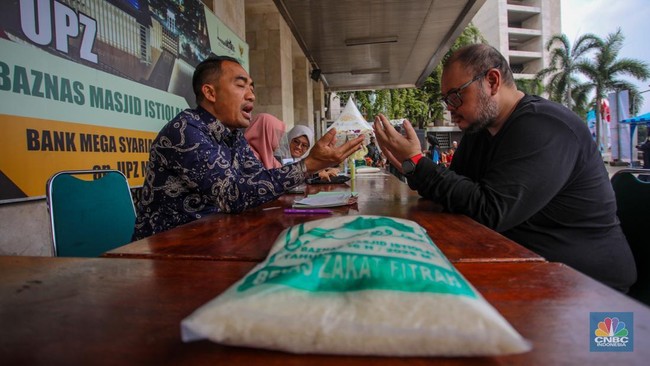
Three previous articles by the author in CNBC Indonesia, namely “Business Competition from an Islamic Economic Perspective” (2/3/2026), “A Healthy Market, A Truly Free Market” (11/3/2026), and “Hisbah 4.0 for a Fair Market” (17/3/2026), have outlined how Islam normatively prohibits all forms of market distortion.
However, one fundamental question remains unanswered: if the market mechanism is already operating perfectly, is that sufficient to realise a just and prosperous society?
The answer, from the holistic perspective of Islamic economics, is no. Even the fairest market, operating on principles of healthy competition, lacks the inherent ability to correct inequalities that are structurally entrenched historically. Initial injustices in asset ownership cannot be resolved merely by allowing the market to run freely.
This is where Islamic economics holds strategic instruments that are often overlooked in modern Indonesian economic policy discourse. In fact, these are the most relevant instruments for our current socio-economic reality. Islamic economics does not only regulate how to compete in the market arena but also rearranges the “starting point” so that the competition truly contributes to the welfare of the ummah, not just a handful of capital owners.
The Fundamental Limits of the Market and the Reality of Wealth Inequality
The entire edifice of modern economic theory, particularly the mainstream school, rests on the fundamental belief that if the market works perfectly, resources will be allocated efficiently. However, it must be understood deeply that allocative efficiency is not identical to distributive justice.
The market may be highly efficient in producing goods, but it often fails in distributing welfare. Thomas Piketty (2013) has empirically proven that wealth inequality will continue to widen structurally as long as r > g. In this variable, r represents the return on capital, while g is the economic growth rate.
When initial asset owners receive returns that consistently exceed economic growth, wealth accumulation will automatically concentrate in a small segment of the population without any need for foul play. This is not a market failure but the market working according to the internal logic of capitalism.
The current inequality condition in Indonesia is at an alarming level. With a wealth Gini coefficient of 0.70-0.82 according to Credit Suisse data (2023), we face extreme economic polarisation.
Billions of honest market transactions occurring daily still cannot correct the fate of individuals who start the competition with zero or negative capital. This happens because asset owners receive returns faster than the national economic growth rate, while the non-asset group only relies on wage growth that tends to stagnate.
This is where Islamic economics offers redistributive instruments that are not merely social patches or charity, but an integral part of its system architecture. This system is designed to prevent wealth accumulation at one point (hoarding) and ensure the circulation of wealth occurs evenly. Without strong redistributive intervention, national economic stability will be vulnerable to social shocks due to economic envy.
Revitalising Islamic Economic Instruments
Islamic economics offers three main solutions to break through these inequality limits. The first solution is Zakat. Unlike conventional income tax, which is generally levied on income flows, zakat mal is imposed on wealth stocks (assets). The requirements are that the assets have reached the minimum amount (nisab) and have been held for one year (haul).
Its economic implications are revolutionary: zakat forces capital owners to ensure their assets are productive beyond the 2.5% rate to avoid erosion. On a macro level, zakat works through strong Keynesian logic. Zakat recipients (mustahik) have a marginal propensity to consume (MPC) close to one.
This means that every rupiah of zakat distributed will directly return to the real economic circulation, creating a multiplier effect far greater than if the money were stagnant in the accounts of the wealthy group with low MPC.
The national zakat potential reaching Rp 327 trillion is only realised at around 12.5% in 2024. This low figure is due to unappealing fiscal incentives for zakat payers. Currently, zakat only serves as a reduction in taxable income (tax deduction).
To achieve a major leap, the government needs to change its status to a direct tax burden reduction (tax credit). With a tax credit system, every rupiah of zakat paid will directly reduce the state tax obligation on a one-to-one basis. This scheme will create massive incentives for citizens to channel zakat officially through formal institutions.
The second solution is Waqf. If zakat functions as a social safety net for urgent needs, waqf is a sustainable social capital instrument that builds the future. Legally, waqf operates on the logic of an endowment fund, as applied by world-renowned universities, where the principal value is strictly preserved while the management yields are used for public benefit.
With the potential for cash waqf in Indonesia reaching Rp 180 trillion per year, this instrument can become a self-financing engine for social infrastructure. As a result, the development of UMKM training centres, hospitals, and quality schools can be realised sustainably without burdening the state budget (APBN).
The third solution is Islamic banking, an institution that h