
The Ambiguity of Power in Iran and Its Implications for Indonesia
When conflicts in the Middle East intensify, Indonesia often feels sufficiently distant from the epicentre of the crisis. However, in the case of Iran post-Khamenei, geographical distance is deceptive. Every uncertainty in Tehran today has the potential to directly impact energy prices, fiscal stability, and domestic purchasing power. What appears as an elite crisis in Iran could become a household issue for many Indonesian families.
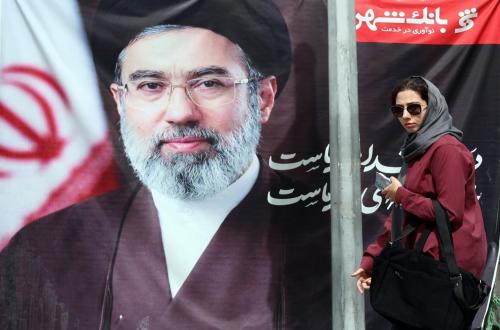
Since being appointed as Iran’s Supreme Leader in March 2026, Mojtaba Khamenei has never appeared in public. There have been no direct speeches, no video recordings, and not even visual confirmation of his condition. Official messages are conveyed only in textual form, read out by state media. In a political system that heavily relies on the symbolism of personal authority, this absence is not merely an anomaly; it is a puzzle of power.
This situation becomes even more pronounced amid a dramatic transition. Mojtaba rose to the pinnacle of power after his father, Ali Khamenei, was killed in an airstrike during the ongoing war. The succession process unfolded rapidly under the pressure of conflict and internal instability. Yet since then, the new leader has vanished from the public sphere. Even his first message was present only in textual form, without voice or face.
Official explanations from Tehran vary, from security reasons to reports that Mojtaba sustained injuries from the previous attack. However, this inconsistency only fuels speculation: is Iran being led by a truly active figure, or by a network of power operating behind his name?
This is where ambiguity becomes key to reading the situation. In politics, lack of clarity does not always signify weakness. It can be a strategy. By not displaying the leader directly, the regime creates space for interpretation while avoiding pressure on a single figure. In crisis conditions, this can serve as a survival mechanism.
However, this ambiguity also coincides with the strengthening role of the Islamic Revolutionary Guard Corps (IRGC). Several reports indicate that the centre of decision-making in Iran is increasingly shifting to military and security actors. Leadership no longer seems to rest on one figure but is dispersed within a more closed network of elites.
This change is important not only for Iran but for regional stability. When power becomes opaque, the risk of miscalculation increases. In an already tense conflict situation, one uncoordinated decision can trigger broader escalation.
For Indonesia, the implications are very real. Around one-fifth of the world’s oil supply passes through the Strait of Hormuz, a narrow route heavily dependent on Iran’s stability. Even the slightest disruption in the region would directly drive up global oil prices. As a country that still imports more than half of its energy needs, Indonesia is in a vulnerable position. A surge in oil prices is not just about numbers in international markets; it will be felt in the form of pressure on the state budget, rises in fuel prices, and inflation affecting basic necessities.
At this point, the leadership crisis in Iran can no longer be viewed as a distant issue. It becomes a variable that influences Indonesia’s domestic economic stability.
Beyond the energy aspect, the ambiguity of Iran’s leadership also complicates diplomatic channels. Indonesia has long played the role of a country with an independent and active foreign policy and holds an important position in the Islamic world. However, diplomacy requires clear partners, actors with mandates who can make decisions. When the power structure in Tehran becomes blurred, the space for diplomacy also narrows.
Furthermore, this lack of clarity is reflected in Iran’s foreign policy, which appears inconsistent. On one hand, there are signals of readiness to negotiate. On the other, military actions and confrontational rhetoric continue. This contradiction indicates internal fragmentation, where various factions operate without fully centralised coordination.
In the short term, ambiguity may help maintain Iran’s internal stability. However, in the long term, it risks eroding legitimacy. A political system unable to explain who is truly leading will ultimately face a crisis of trust, both from its own society and from the international community.
For Indonesia, this situation demands a more active and measured response. Three steps need to be considered.
First, the government must strengthen energy resilience with more concrete measures: accelerating supply contracts with producers outside the Gulf region, such as Australia and West Africa, while building national strategic oil reserves, which remain very limited to date. This crisis should serve as a reminder that energy transition is not merely a climate agenda but a national security imperative.
Second, Indonesia needs to optimise its role as an honest broker in regional diplomacy. Through the OIC or other international forums, Indonesia is in a unique position: it has no direct interests in the Iran-Israel-US conflict, and precisely because of that, its voice can be trusted. In a situation where dialogue partners in Tehran are unclear, a multilateral approach involving multiple parties becomes the only sensible path.
Third, the government needs to prepare an economic response that goes beyond mere fiscal adjustments. Indonesia should promote ASEAN coordination to collectively address energy volatility arising from this crisis, whether through regional reserve-sharing mechanisms or strengthening collective bargaining positions in the global energy market.
In conclusion