
The Adies Kadir Controversy: From Constitutional Court Nominee to Tensions Between the DPR and the MKMK
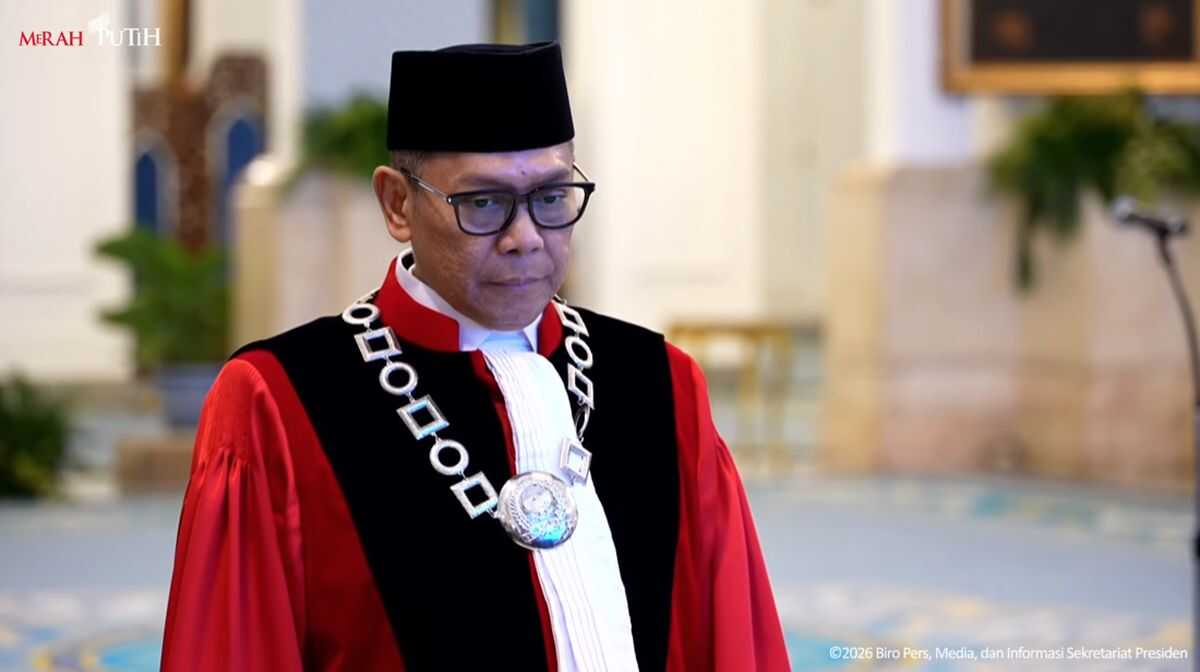
Jakarta, CNN Indonesia - The nomination process of Adies Kadir as a Constitutional Court Judge, proposed by the DPR, has been met with controversy. The nomination of Adies has been rejected by various parties due to concerns about potential issues from the outset. Now, the DPR is in conflict with the Constitutional Court’s Honorary Council (MKMK).
This issue began in conjunction with the upcoming retirement of Constitutional Court Judge Arief Hidayat in February 2026. The DPR then proposed a replacement for Arief. In August 2025, the DPR had approved Inosentius Samsul to replace Arief. Samsul was approved during the third plenary session of the first period of the 2025-2026 session, chaired by Deputy Speaker of the DPR, Cucun Ahmad Syamsurizal, on Thursday, August 21. The day before, he had undergone a fit and proper test at the DPR’s Commission III. At that time, Samsul was the only candidate proposed by the DPR to replace Arief.
In a surprising turn of events in January 2026, the DPR reversed its decision and nominated Adies Kadir as the replacement for Arief. Before being appointed as a Constitutional Court candidate, Adies was an active Deputy Speaker of the DPR from the Golkar Party faction. His name became a focus during the DPR protests in late August 2025. Adies was suspended by his party following public pressure due to his statements about DPR housing allowances, which became a point of contention. However, the DPR’s Ethics Council (MKD) stated that Adies was found not guilty and returned to his active role. However, since his return, he has not appeared in public or given media interviews. He is also said to have resigned from the Golkar Party before running as a Constitutional Court Judge. The proposal of Adies as a candidate for the Constitutional Court was approved by eight factions of the DPR’s Commission III. The fit and proper test was held briefly without in-depth examination by the members or participants of the meeting. The fit and proper test meeting, as well as the plenary session to appoint Adies, was quite quick. The meeting lasted no more than 30 minutes in the DPR’s Commission III. “We already know him,” said a member of the DPR’s Commission III, Safaruddin, after the meeting at the DPR, Monday, January 26. Shortly after, the DPR, through a plenary session on Tuesday, January 27, approved Adies as a candidate for the Constitutional Court Judge. After the appointment of Adies, Deputy Speaker of the DPR, Saan Mustopa, said that Adies was academically and experientially qualified to be a Constitutional Court Judge. He said that Adies had been a member of the commission in charge of legal affairs in the DPR for a long time. In addition, Saan said that the nomination of Adies was also in accordance with the applicable mechanisms. “Mr. Adies is a professor of law, a doctor of law, and his academic work is indeed in law, and in the DPR he is also in Commission III. So, from the beginning, he has been a member of Commission III and the head of Commission III. In terms of experience and academic track record, I am sure that Mr. Adies is very qualified to be a Constitutional Court Judge,” said Saan at the parliament complex, Jakarta, Tuesday, January 27. A few days later, Adies read his oath of office as a Constitutional Court Judge before President Prabowo Subianto at the State Palace, Thursday, February 5. After the event, Adies declined to comment on the process, which was considered controversial. He stated that the matter could be asked to the DPR, which carried out the nomination process for the Constitutional Court Judge. “That can be asked to the DPR, because Commission III conducted the fit and proper test and it has been approved in a plenary session. Please ask the leaders of Commission III and the leaders of the DPR. I just followed the process carried out by the DPR,” said Adies. In addition, he also stated that he was ready to withdraw from the panel of judges in cases related to the Golkar Party. Adies also said that there are rules in the Constitutional Court that regulate that judges involved will withdraw if there is a potential conflict of interest. Reported to the MKMK regarding code of ethics Only a day after reading his oath, Adies was reported to the Constitutional Court’s Honorary Council (MKMK) for alleged violations of the code of ethics. The report was filed by 21 experts in constitutional law who are members of the Constitutional and Administrative Law Society (CALS). CALS stated that the selection process for Adies as a Constitutional Court Judge was considered unusual. One of the members of CALS, Yance Arizona, said that there were many things that were considered inappropriate and violated the procedure in the process. He stated that one of them was the process of Adies replacing Inosentius Samsul, who had previously been nominated by the DPR as a Constitutional Court Judge. In addition, CALS believes that Adies’ background as a Golkar politician and Deputy Speaker of the DPR has a strong potential for conflict of interest. He stated that Adies’ position has a very high potential for conflict of interest in almost all cases in the Constitutional Court. Yance highlighted that Adies did not have a break between being Deputy Speaker of the DPR and Constitutional Court Judge. He argued that this further increases the potential for conflict of interest. “So, if in that context he cannot participate in the judicial review of laws in which the Golkar Party has a large contribution, or in presidential election disputes, or in disputes over the results of general elections, then why should he be a Constitutional Court Judge?” he said. The DPR’s conflict with the MKMK The DPR, as the institution that nominated Adies, also did not remain silent seeing Adies’ position shaken. Commission III invited the Chairman of the MKMK, I Dewa Gede Palguna, to attend a meeting to discuss this issue on Wednesday, February 18. In the meeting, several members of the DPR’s Commission III criticized Palguna for not disclosing the status of the report regarding the appointment of Adies Kadir as a Constitutional Court Judge proposed by the DPR. They asked Palguna to disclose the report. However, Palguna refused. He emphasized that the confidentiality of the substance of the report was part of the independence of the MKMK. He stated that he would rather resign if he had to disclose the details of the report in front of the members of the council. Palguna emphasized that the substance of the report on Adies was confidential between the reporter and the MKMK. “If that is what you ask, I would rather ask to be dismissed as a member of the council.”}