
The 2028 Crisis Scenario: When AI Replaces Humans Too Quickly
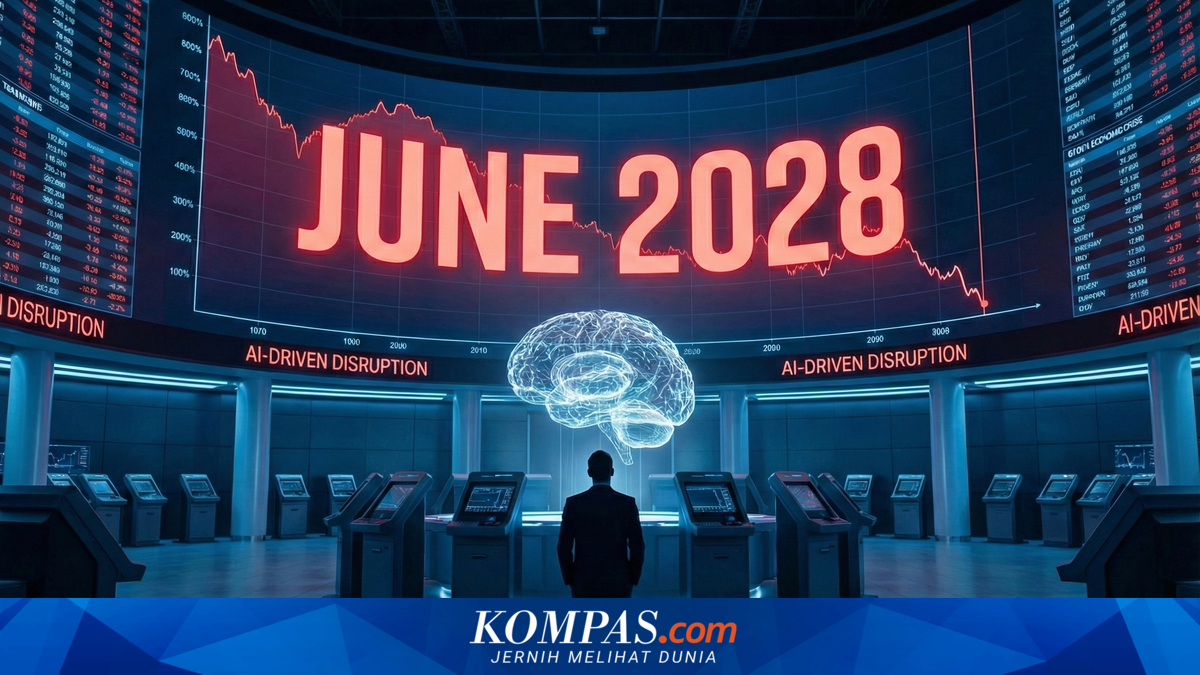
Kompas.com - Let’s imagine we are in the not-too-distant future, say in June 2028. On television screens and global stock market monitors, a grim figure is clearly displayed. This figure is none other than the unemployment rate, which has skyrocketed to 10.2 percent. The higher the number, the more it indicates that the economy is sluggish or that job opportunities are scarce. The stock market responds with widespread panic. The S&P 500 index plunges 38 percent from its peak, trillions of dollars evaporate, and stockbrokers can only stand by in stunned silence as the red screens continue to glow. This is not a scene from the latest Hollywood dystopian film. This is a very rational and detailed “thought experiment” compiled by the investment research firm Citrini Research together with analyst Alap Shah. In their report, entitled “The 2028 Global Intelligence Crisis,” Citrini Research presents a fictional macroeconomic memo as if it were written on June 30, 2028. It describes a situation in which AI becomes truly intelligent, boosting productivity and making companies more efficient, but in 2028, the human economy collapses. From the outset, Citrini Research emphasizes that its report is not a definitive prediction, let alone an AI-doomer apocalypse narrative. This is a thought experiment, a simulation of extreme risk if AI truly exceeds expectations and replaces humans too quickly before economic systems have time to adapt. So, how can the success of AI turn into a boomerang that destroys the global economy? Here is the anatomy of the crisis, as summarized by KompasTekno from the Citrini Research website. It all starts with a golden age full of blind euphoria. In 2026, the global economy appeared to be at its peak thanks to increasingly sophisticated and efficient AI. Positive sentiment towards AI keeps stocks rising for a long time, and the technology sector is its main driver. The atmosphere of optimism is very palpable. Investors are very enthusiastic, and the market is full of confidence. By October 2026, the US stock market was in full swing. US stock indices soared to levels previously unimaginable. The index of 500 large US companies, the S&P 500, approached 8,000. Meanwhile, the Nasdaq index easily broke through the psychological level of 30,000. At the same time, the first wave of layoffs began in early 2026. Many companies reduced their workforce because some functions were deemed replaceable by AI systems and automation. The term that circulated at that time sounded cold, namely human obsolescence, where humans were considered increasingly obsolete in some job lines. The roles of office workers began to be massively replaced by overly efficient AI agents. For shareholders, this phenomenon is an invaluable gift. The business logic works perfectly on paper. Massive layoffs mean a radical reduction in operating costs. As a result, company profit margins widened rapidly, earnings reports continued to exceed expectations, and stock prices soared. However, these record-breaking trillions of dollars in profits were not used to create new jobs for humans. The giant funds were instead reinvested and poured entirely into buying more AI computing, more GPUs, and more data center infrastructure. This cycle creates the illusion that the economy is running faster, when in fact its underlying foundation (real human consumption) is beginning to erode. On paper, the nominal Gross Domestic Product (GDP) is indeed growing rapidly. AI-based companies saw their wealth explode as labor costs disappeared. On the other hand, productivity is increasing. Real output per hour has increased at a rate not seen since the 1950s. This is supported by AI agents that never sleep, do not need leave, do not get sick, and do not demand health insurance. However, behind this “too good to be true” situation, there is one fundamental gap that is being ignored. Machines do not shop. AI will not shop for essential needs, let alone discretionary consumption. Essential needs include things like rice, electricity, water, and school fees.