
The 10 Largest Asian Countries by Area: What Is Indonesia's Rank?
Asia is so vast that one country within it spans 11 time zones. In another part of the same continent, there is an archipelagic nation with more than 17,000 islands, the largest desert expanse on Earth, and mountainous regions that are home to the highest peak on the planet. It is hard to appreciate Asia’s scale from a map alone, as the continent feels like a collection of worlds within a single region. Yet the sizes of Asian countries are not just about land area. Many of them play a crucial role in global population, trade routes, energy, and geopolitics. From Russia, which stretches from Europe to the Pacific, to China and India with billions of inhabitants, to Indonesia at the crossroads of two oceans, Asia’s biggest countries help shape the direction of the global economy and the dynamics of the world today.
- Russia
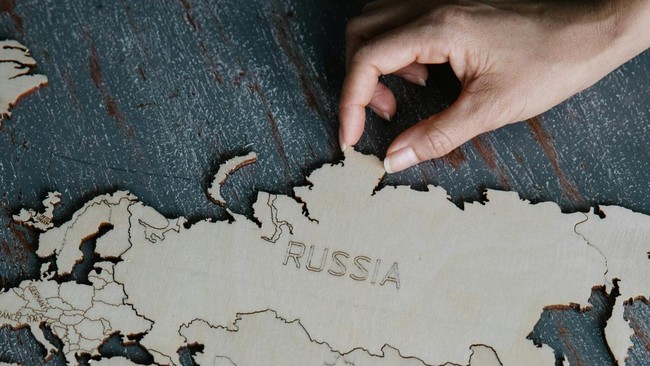
Russia remains the largest country in Asia as well as the largest in the world, with about 13.1 million square kilometres of its territory located in the Asian region. The scale is so vast that the country spans 11 different time zones, from Eastern Europe to the Pacific. Behind its size, Russia also plays a key role in global energy and geopolitics through its natural gas, oil reserves, and strategic routes connecting Europe and Asia.
Although it is often regarded as a European country in political and cultural terms, Russia is actually an ‘Asian giant’ geographically. About 77% of Russia’s territory lies on the Asian continent, especially across Siberia to the Russian Far East. However, uniquely, about 75% of Russia’s population lives in European Russia, including major cities such as Moscow and St. Petersburg. This makes Russia a transcontinental country, located in two continents: Europe and Asia. Historically, Russia’s culture and geopolitical orientation have been closer to Europe. But in terms of land area, Russia’s geographic dominance lies in Asia.
- China
With an area of nearly 9.6 million square kilometres, China is the second-largest country in Asia and one of the world’s most diverse landscapes, from the Gobi Desert to the Tibetan highlands. The country also once hosted the world’s largest population before being overtaken by India in 2023. A combination of vast territory, around 1.4 billion people, and its manufacturing power has made China a centre of global economic influence today.
- India
India may not be as large as Russia or China, but it is now home to the largest population in the world with around 1.45 billion people. Its territory stretches from the Himalayas in the north to the southern shores of the Indian Ocean, creating high population density and economic activity in many areas. In recent years, economic growth, the tech industry, and the large number of people of working age have made India more frequently described as one of the world’s next global powers.
- Kazakhstan
Kazakhstan holds a unique record: the largest landlocked country in the world. Much of its territory lies in Asia, stretching across vast steppes, one of the largest dry grasslands on the planet. With a population of around 20 million people across a huge area, Kazakhstan is strategically positioned due to its borders with Russia and China, two global powers.
- Saudi Arabia
Most of Saudi Arabia’s territory is desert, including the Rub’ al Khali or Empty Quarter known as the world’s largest desert. Behind that harsh landscape, the country holds one of the world’s largest oil reserves and for decades has been a major player in the global energy markets. With an area of more than 2.1 million square kilometres and a population of around 36 million, Saudi Arabia shows how a seemingly ‘empty’ area on the map can carry enormous economic influence.
- Iran
Iran covers about 1,648,195 square kilometres (636,372 square miles), making it the sixth-largest country in Asia and the second-largest in the Middle East after Saudi Arabia. The capital is Tehran. Iran’s population is estimated at around 89 million. The country has coastlines on the Persian Gulf, the Gulf of Oman, and the Caspian Sea, with the Zagros and Alborz mountain ranges encircling the Iranian Plateau inland. Iran has 28 UNESCO World Heritage Sites, one of the highest numbers in Asia, reflecting its long civilisational history and sustained statehood from ancient Elamite civilisation and the Achaemenid Persian Empire through various dynasties in the Islamic and modern eras.
- Mongolia
Mongolia is one of the largest countries in Asia, but its population is only about 3.5 million, making it one of the world’s least densely populated nations. Much of its territory is covered by vast steppes and the Gobi Desert stretching to the south of the country. In many parts of Mongolia, one can drive for hours without seeing a major city, something almost hard to imagine in Asia, known for its crowded cities and traffic.
- Indonesia
Unlike other large countries dominated by a single vast landmass, Indonesia is formed of more than 17,500 islands spread between the Pacific and Indian Oceans. Its territory stretches so long that logistics and distribution pose both a challenge and a strategic strength. With a population of around 283 million, Indonesia is now the fourth-most populous country in the world and one of the most important maritime trade routes in Asia.
- Pakistan
Pakistan is often discussed from a geopolitical perspective, but geographically the country also contains extreme landscapes. In the northern part, …