
Thailand's Clean Air Bill Enters a New Phase
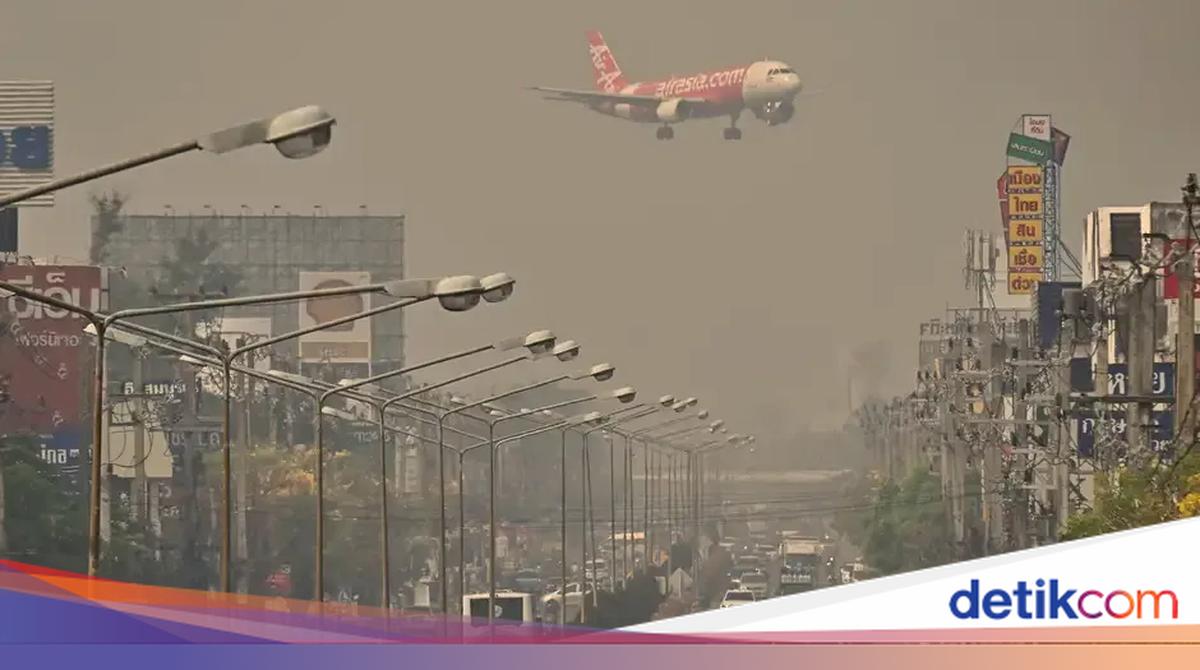
Last week, members of parliament approved the Clean Air Bill with a vote of 611 to 3. The bill now goes to the Senate for deliberation before being forwarded to the prime minister and the king.
The bill originated from a 2019 citizen initiative by a coalition of NGOs, later adopted by political parties and the government. Seven drafts were merged into one.
The rule will require industry, transportation, and farming actors to pay fees, fines, and compensation if they are proven to cause pollution.
Additionally, the bill targets the supply chain, including agricultural imports, to prevent open-burning related products from slipping under scrutiny.
Currently, air-pollution regulations in Thailand are scattered across various rules. The bill aims to unite them within a single, integrated national framework, while granting greater powers to the government.
Smog as a health threat
The air-pollution crisis in Thailand is most severe during the dry season, particularly between December and April, when land burning, wildfires, vehicle emissions, and industry mix in the air.
In 2023, around 10 million people required medical care for pollution-related illnesses. Particulate matter PM2.5, which can enter the bloodstream through the lungs, poses a major threat.
According to the World Health Organization (WHO), air pollution contributes to more than 32,000 premature deaths each year in Thailand, including heart and lung diseases.
What does this bill contain?
The bill introduces various progressive policies, including reallocation of budgets for clean-air management and the implementation of a pollution tax. The rules also open space for local ordinances, pollution-control zones, and region-based air-quality standards.
The bill will also strengthen the air-quality monitoring system, integrate cross-agency data, and grant greater authority to local governments to act when pollution is recorded above safe limits.
Its provisions include bans on open burning, stricter oversight of high-emission sectors, and cross-border pollution handling.
Additionally, it proposes the creation of a “Clean Air Fund”, a fund prepared to support pollution reduction, public health responses, and assistance to farmers who shift away from burning practices.
On the other hand, the bill promotes data- and technology-based solutions, including strengthening citizen monitoring, local monitoring networks, and community involvement in the pollution-control system.
As air quality becomes a political test
The Clean Air Bill in Thailand briefly almost passed after clearing the House of Representatives in October 2025. However, its deliberation stalled in the Senate when parliament was dissolved in December.
The new government of Prime Minister Anutin Charnvirakul, who took office in April 2026, has only limited time to revive the bill.
Nevertheless, some members of the ruling Bhumjaithai party oppose the bill for potentially imposing burdens on business and duplicating existing rules.
In early April parliamentary debate, Supachai Jaisamut, a Bhumjaithai representative, said he agreed with the bill’s principles but rejected the broad powers that could target officials, such as searches, seizures, asset freezes, and shutdowns without court approval.
Economic impact of the pollution bill
Business groups and conservative politicians warn that pollution charges, clean-air levies, and risk-guarantee schemes could add to operating costs. That is not good news in a Thailand economy that is weak.
Thailand’s economic growth prospects for 2026 remain subdued, with the World Bank projecting around 1.6%. Higher energy prices due to tensions in the Middle East also put pressure on the economy.
In mid-April, Prime Minister Anutin pledged to tighten forest-fire and PM2.5 smog control measures and expressed support for the Clean Air Bill, including restricting imports of agricultural products from neighbouring countries linked to burning practices.
The government subsequently re-submitted the bill to parliament for a second vote.
“Most likely, the Senate will request revisions, citing overlapping regulations, burdens on the business sector, and the breadth of government powers,” said Piyapong Boossabong, a public-policy academic at Chiang Mai University.
He added that the bill’s passage is unlikely to be as swift as hoped.
Enforcement challenges
Piyapong also added, “one big question is whether the rules will actually be enforced, given Thailand’s many progressive laws whose implementation is often weak.”
The main pollution problem in Thailand is PM2.5 from land and forest burning, often carried out by farmers or individuals.
Enforcement to date has been inconsistent. Some argue this is due to links to large agribusiness supply chains and locals’ livelihoods.
“Thailand’s regulatory system cannot rely solely on enforcing pollution standards independently, and it remains to be seen whether the Anutin government is truly serious about enforcing a potentially robust clean-air mechanism,” said Mark Cogan, a regional expert and professor at Kansai Gaidai University in Japan.
Conceptually, the principle of ‘polluter pays’ is common in advanced countries like the European Union. In some countries, such as Malaysia, its implementation is weak due to the difficulty of identifying polluters and inconsistent law enforcement.
According to Cogan, the mechanism could be more effective if the government shares some responsibility when polluters are hard to trace in order to protect the public.
There is also a geographical factor. The bill applies domestically, while much of the smog, especially in northern Thailand, originates from burning in neighbouring countries.
“Based on hotspot data