
Thailand's Automotive Industry at a Crossroads, Workers at Risk of Layoffs
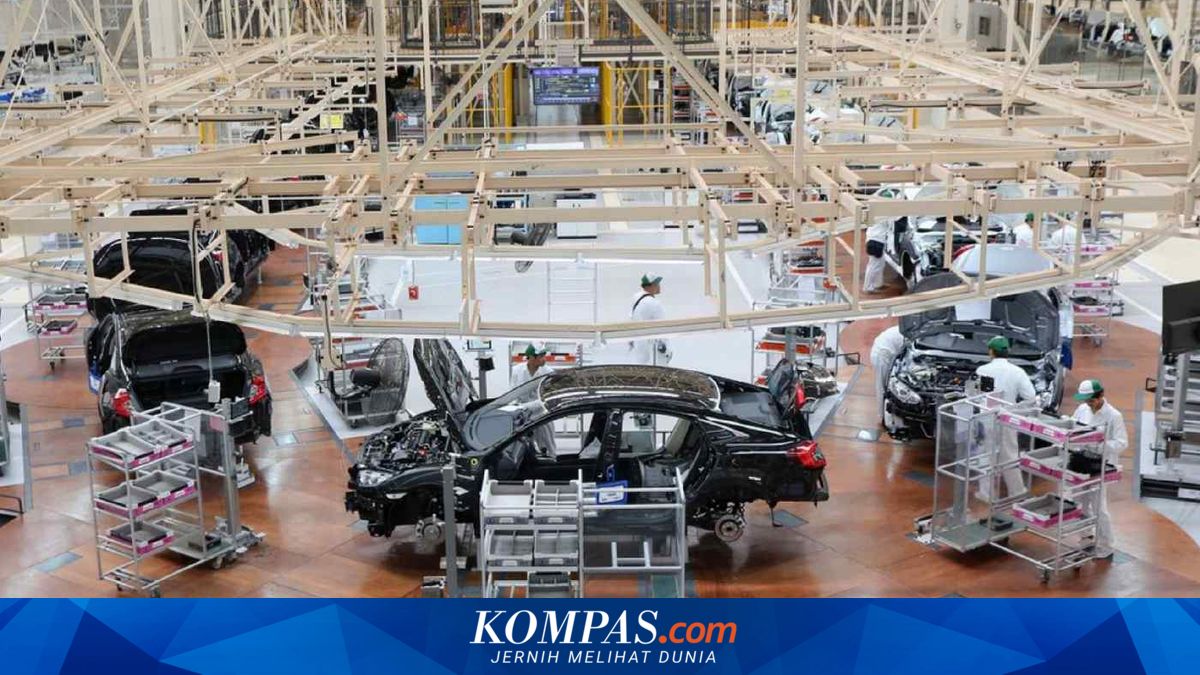
JAKARTA, KOMPAS.com - Thailand’s automotive industry is facing a major test amid the shift towards electric vehicles (EV) and increasingly widespread automation.
This change not only alters production methods but also directly impacts nearly one million workers who depend on the sector.
On one hand, the industry is required to remain competitive amid global rivalry, but on the other, a crucial question arises: how to ensure that workers are not left behind in this wave of transformation?
According to him, RBC is not merely compliance with regulations, but encompasses companies’ openness to the existence of trade unions, constructive dialogue, and fair negotiations.
“The core is to create ongoing communication between management and workers to find joint solutions,” said Leutert, quoted by the International Labour Organization, Saturday (18/4/2026).
A similar view was expressed by the Vice President of AutoAlliance Thailand, Sathirayuth Sangsuwan, who described RBC as a form of collaboration emphasising transparency, trust, and sustainable industrial relations.
In practice, companies routinely share production targets with employees and trade unions, while opening spaces for discussion to agree on strategic steps.
AutoAlliance Thailand, a joint venture between Ford Motor Company and Mazda Motor Corporation, targets production of around 150,000 units per year.
These targets are then broken down in detail to monthly planning and communicated transparently to all employees.
At the global level, the impact of the transition to EVs is already being felt.
Leutert revealed that in several advanced countries like Germany and the United States, tens of thousands of automotive workers have lost their jobs due to the shift to electric vehicles, which have simpler components.
Therefore, this situation cannot be resolved solely through financial compensation. Long-term strategies are needed in the form of retraining (reskilling) and skill enhancement (upskilling), so that workers can adapt to the needs of the new industry.
“Jobs that are lost are likely not to return, so workers must be prepared for opportunities in other sectors,” he said.